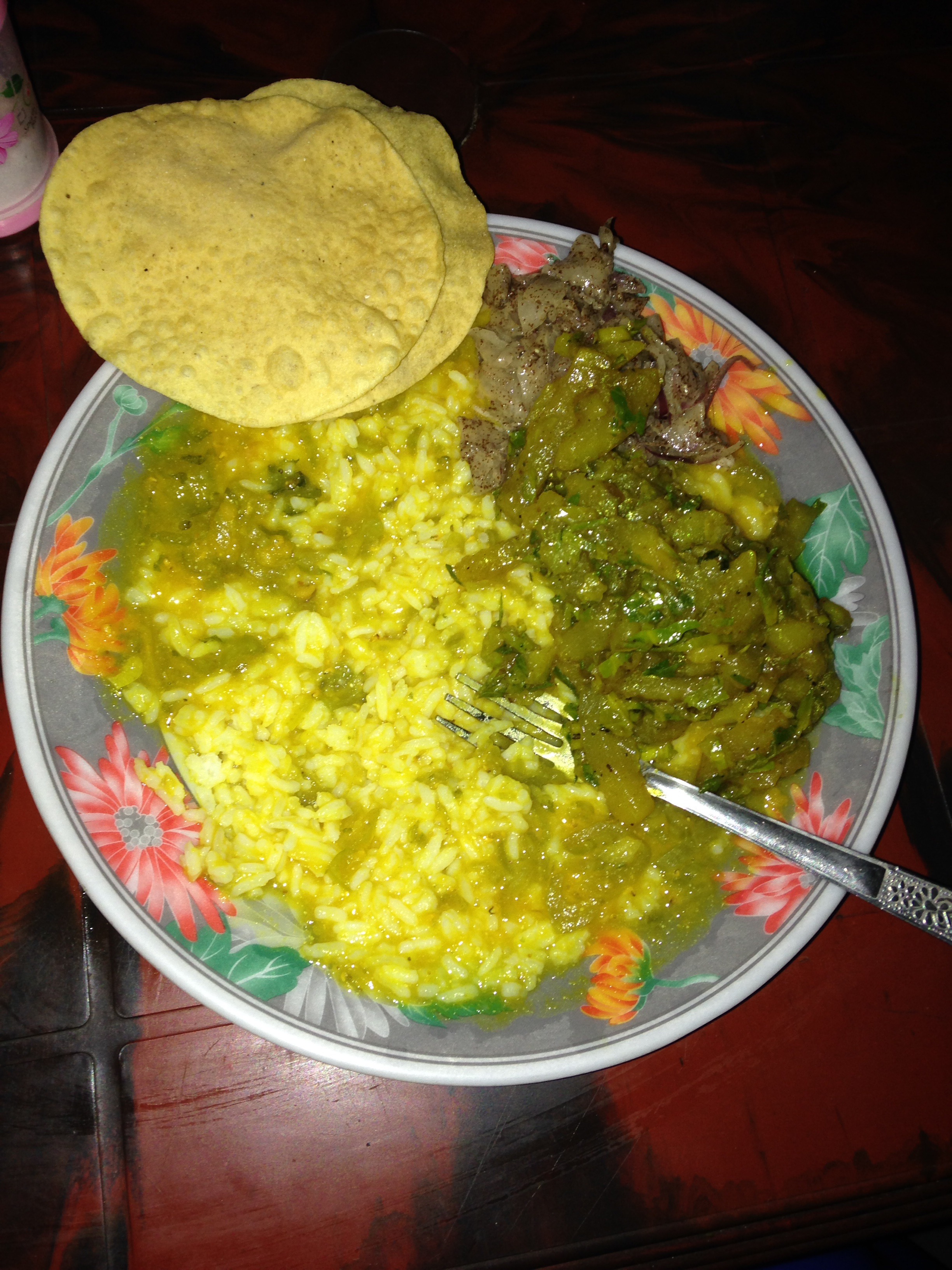
We soon got used to the rhythm of the guesthouse. Here are some facts: Byron sings like an angel. He is besotted with his wife and sings to her. He has written all this literature about the origin of Khasi people, the story of the villages, local lores, etc. He has five kids, and he sings them to sleep, serenades them, and hugs them all a lot. Amazing food is available at set times. To go to the living roots bridge which is about a 100 metres up in that village, you have to pass by Loretta’s little shack. She has amazing Khasi lunch (usually rice with a dal like thing with vegetables and sometimes, spicy chicken. She also makes Maggi like a goddess). So we ate everything, everywhere. And we alternated between spending time at the guest house and at the bridge.
The next morning, a walk up the village, was in order. Greeting people we’ve met in the last few days, we made our way to the church.

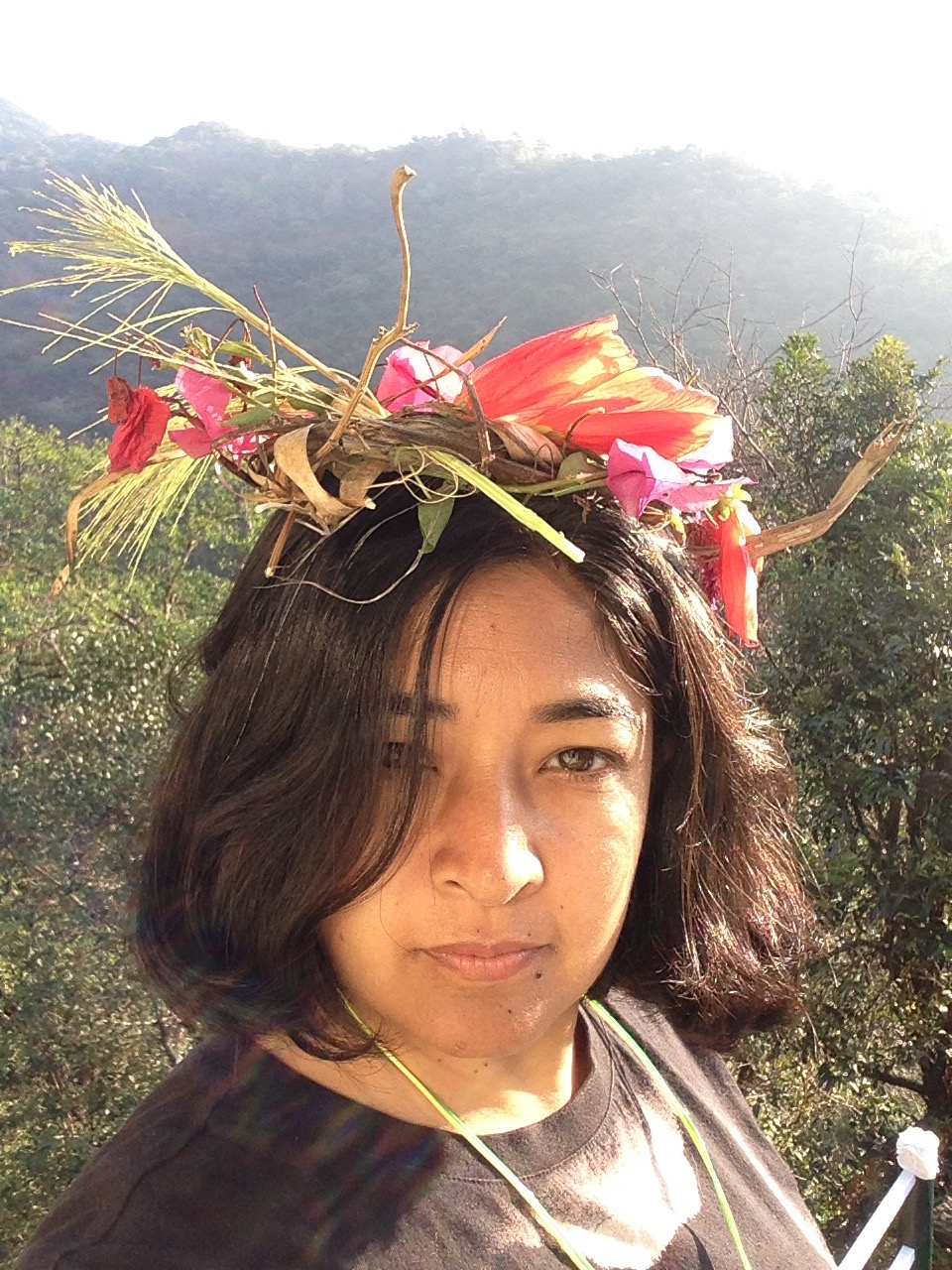
I came back and made me a “Ramanujam” wreath. We had a lazy breakfast and went to the blue lagoon. Returned and I retired to watch a family and friends game of carrom and read Byron’s account of Nongriat.
Here are excerpts from Byron’s writings:
The village is nong(short for shnong-village)+riat (cliff). The valley is called “Thied Dieng”-root+trees: people who have craft abilities with these roots and trees.
The state was ruled by 30 kings and 12 Dolois (administrators of sorts), before the accession to India in ’48.
The British called the natives “war” because of their superior martial skills.
Myth: 250 years back, the Mawphu and Nongriat tribes fought for the land. Mawphu sent a gift of sacrifice beef (poisoned), which wiped out all but 4 brothers and one sister. The families spread to 5 different areas and founded villages named after themselves. The ones I recognise are Tyrna and Mynteng. Nongriat is the only sister. So, since women inherit more property, Nongriat grew the most. Nongriat tribe was occupied by Mawphu and Thieddieng people. The two tribes members shouldn’t wed-this is held true to date.
Nongriat is a thick rainforest. It’s the source of broom plant, betel nut, honey, bay leaf, pepper. Also, many fruits including pomelo and citrons. And a host of local fruits that have no English names.
The trees used for bridges are focus elastica-rubber trees and bamboo for structural support. You tease and train the roots to grow a certain way. The entire village helped with these projects. The double decker bridge on the Umshiang river is 250 years old.
The locals are animists, believe in nature as God and the presence of benign sprites that get angry if not respected and if forest is treated badly.
The Khasis say they trace their origins to Cambodia over 10 centuries back and to the Khmers. They are called Mon Khmers. Many left the country when India said that as per “Agreement of Accession”, they will be called Meghalaya and will have rules alien to them. And that rules they had held valuable from before British times will have to be given up.
The property goes to the youngest daughter so she can take care of the entire family. Decision making rests with men to maintain power balance. There is no arranged marriage or dowry system.

And everything looks like this. Close to perfect? You bet!
 There and back again