On our last morning at Nongriat, I woke up early, and sat around and took in as much of all the sights, smells and sounds of Serenity Guest House, as possible.
A few minutes after I was up, I saw Byron’s wife with sweet sleepy eyes step out, smile and go about her day. Then, Byron pops up, and is singing a Sinatra song in his baritone, which quickly changes into “The wood is ready and we have to make tea”. Presumably, he was singing to Josephine, who was half-awake in that sling on his back, on which they carry babies and young kids. Possibly in farewell, Frankie, Freddie and a few neighbourhood kids set up a really early morning match of Carrom.
Before we left, that inveterate photo taker Reena got a picture of not just Byron and family but also everyone else staying there, kids from the village, a few other passers by. The only person missing was Serene, after whom the place is named. But I tell you where I did find Serene – inside my head. That was weird – to have a moment of utter clarity in the middle of a lot of emotional chaos. But, I took that moment for what it was – a blessing.
As we were settling up, and I went to give Byron the money, he said, “People often say, ‘Byron, you must be so rich, taking so much money from us’. I was not well off when I started this place, I am not rich now. ” Two things struck me. One, after such warm hospitality, if people grudge him the money they agreed to pay when they came to stay, that’s in really bad form. Especially so, given the fact that the daily stay rate is amazingly affordable for anyone in India choosing to travel over to Meghalaya. Two, people don’t understand working costs. I’ve seen this behaviour all too often at the store: “Oh, you sold me a 30,000 rupee bike, now you can retire in luxury”. And I’m thinking, first up, that 30,000 isn’t profit, obviously, and from that profit number, we need to figure out working costs for a business. So, I told him that I understood it takes money to maintain the rooms, launder the sheets before the next set of guests occupy the rooms, keeping it clean, building new amenities etc. Also, that food takes lots of money to make and that the effort needs to be paid for also. He seemed surprised that I grasped these simple concepts of running a business and making a living.
And then he said something that stayed with me, and with Reena I know, because she’s quoted it back to me a few times. He said, “People tell me, you are lucky to stay here where everything is perfect. It’s like paradise. What this was is an ancestral village. All we do is open our homes and hearts to people who are passing by. What makes it paradise is us meeting people like you. Paradise is not a place outside, its inside us. Paradise is where we make it” Byron, you poet, you!
Leaving Serene Homestay was tough for me. As we all got up to leave, and round-robining hugs, I teared up and so did Byron in response. So I ran downhill fast to avoid more boo-hoos. In hindsight, I should have spent a little more time tearfully hugging the children, I think.
We headed back down, and past the bridge over blue lagoon. My heart was still raw at leaving a bit of it at Nongriat.
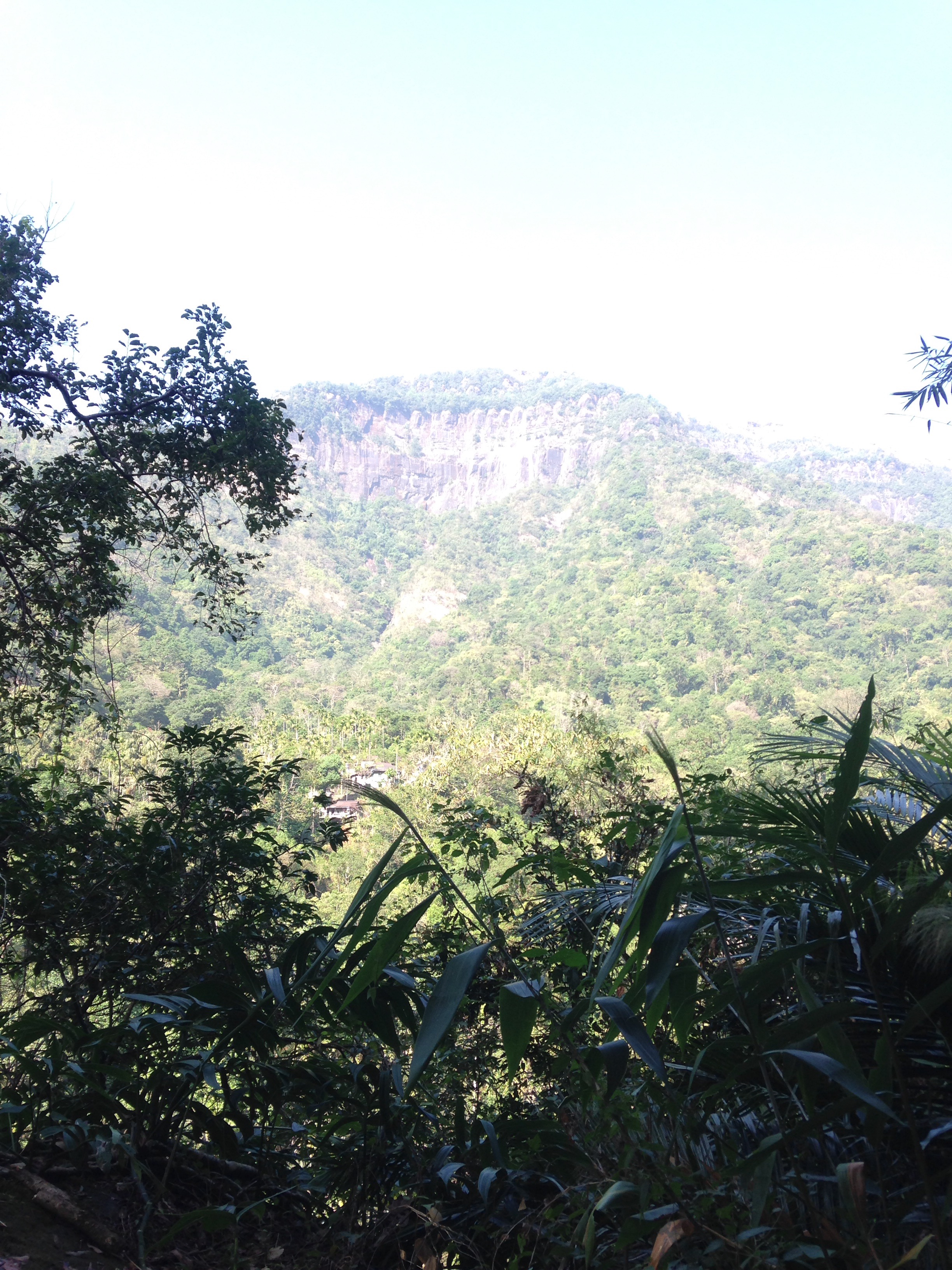
You can see the village nestled in the middle of that hill.
The climb back up wasn’t so death-causing. Reena did call her grandmum a few times, and Madiha was wondering how many more steps, a few times, but we all got back up in way better shape that we did the first time. The mountain goats, of course, made it up full speed and waited for us.

Some breaks
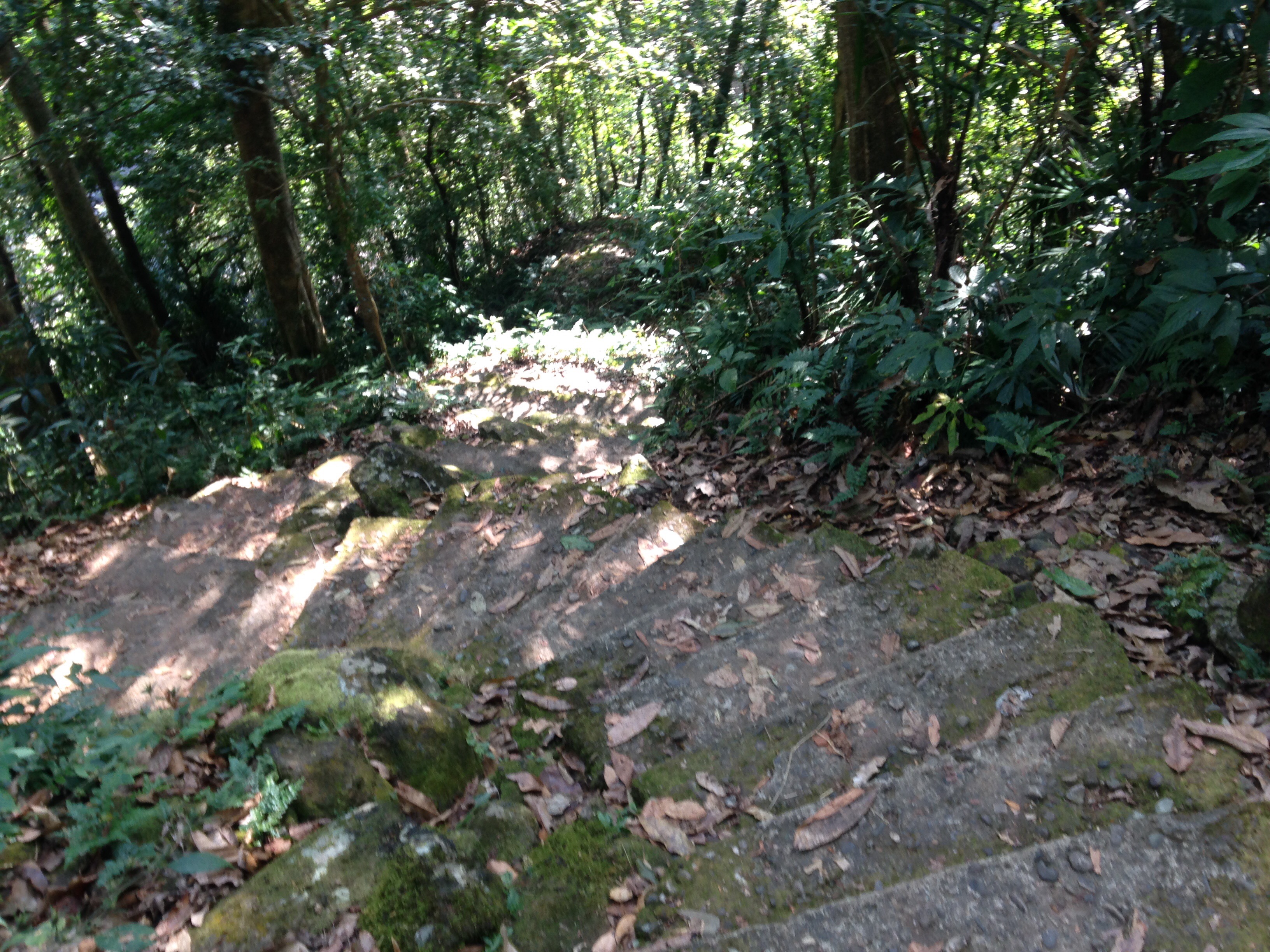
Some beauty later, we were on our way back to Sohra with Mitchell-Bith’s brother.
Here’s the story of Mitchell & Bith. We asked Bith, who said he’d be busy that day, so he’d send his brother. When we inquired about him to the brother Mitchell, he said, Bith is cleaning the roads and the countryside. Say what? So, apparently, at least once in 6 months, all the people in the village are called to clean up the roads, the countryside. These guys take a day off paying work to do community service for free. Why? Pride. They said, “Sure, its tourists from other states who throw most of this garbage, and there is plenty of proof of that, but that is no reason for us to allow the next set of tourists to see a dirty, garbage laden countryside. What’s more, cleaning it all up is good for us also.” So, we asked Mitchell to stop at ye olde alcohol shoppe on our way out of Sohra, and got Bith a bottle of his favourite hooch, stopped by the roadside, met Bith, bade him goodbye, shared the gift (all the others in the background apparently decided it was Bith’s birthday that day and a treat was in order!) Some 400 people were cleaning the entire neighbourhood up. On our trip back to Shillong, we met many others doing the same thing.

Rewinding a little, we had our last amazing Khasi lunch in Sohra town, at an unnamed place (as in, it really did not have a name). Run by a few women, there were loads and loads of options of veggies, stews, and meat for the meat eaters. We ate up everything we were served.
Despite his seemingly unending supply of dark chocolates (our trip should’ve been sponsored by Amul Dark Chocolates – the amount we consumed), Arvind was now beginning to miss the fact that there is no concept of desserts in Meghalaya cuisine. I personally think it’s a damn good situation.
 There and back again