Wherever I go, there I am!
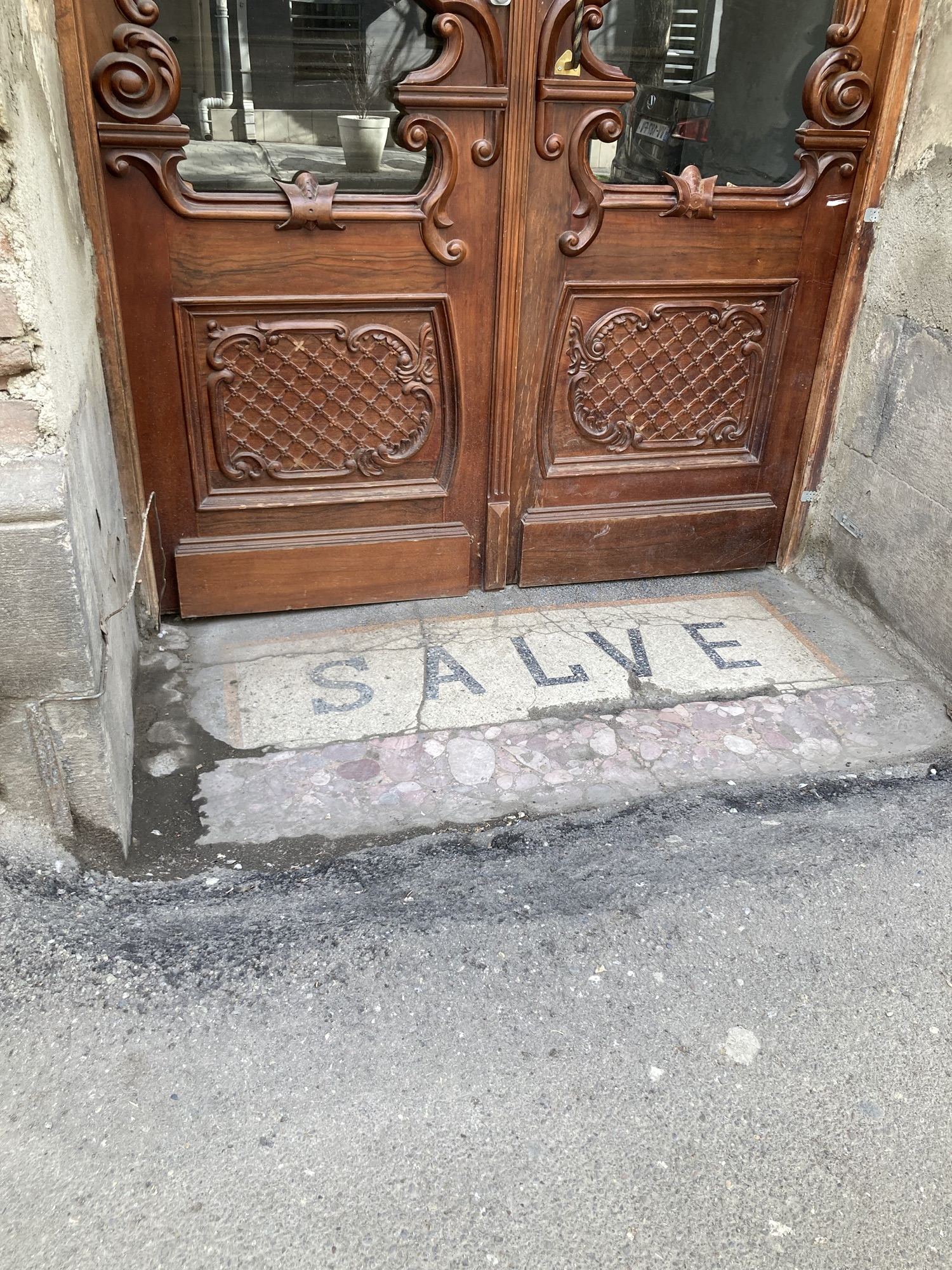
Jon-Kabat-Zinn’s kernel of truth about mindfulness is one of the places where this story begins. I left home again, chasing a new need, only to run into my many selves everywhere on this adventure.
The story begins at many other places. That is the magic of stories: multiplicity of beginnings and parallel plot lines and endings, and all to the good. One branch of the story begins on the ides of March. One minute, I was working, the next, I was checking tickets and getting a visa. With a nod to my “go with the flow” self, I cobbled together a solo travel itinerary with less than a week to plan for what to fill in my suitcase and in my head.
Another thread begins at the Life Script workshop. I faced up to the reality that a lot of what is great about me – kindness, calm, supportiveness are built on a base of the “I’m not okay, you’re not okay” life position. As do kids of trauma, I operate with frozen fear for small things, daily. I also operated from an unexamined belief since childhood, that “I must be a bad person, else why would bad things happen to me”. So, I overcorrect, hoping that the fates would leave me alone. (Never mind a world of ignoring how kind the fates have been thus far, to adult me). More, due to conditions of a lack of safety, I firmly believed that the world is unsafe. I used to breathe differently at home versus outside.

Accepting that as the starting point to changing the script, and armed with re-decisions that would hopefully re-wire beliefs, I decided to trust fall into the wild world. I wanted to revisit my “Earn it to burn it” belief. There will be tough years, like this one is being. In good years I’ve been forced to stay indoors, so let me spend some of that now. There I was, nurturing the dream to go forth and conquer.
On the home front, I could see storms brewing, there was some electricity in the air and I wanted to be away before the storms hit. This decision was very unnatural for me. I am usually the one obsessively looking at the storm path, rationing essentials, battening down the hatches and being the trooper during the storm. But here I was, being a self-aware stormtrooper saying, “Instead of being the first one to receive the pew-pews on my forehead, let me jump ship” There I was, prioritising my peace over peacekeeping.
Yet another story begins on the Vernal Equinox. Mars / Ares was beginning his red
glow across the constellations. I was journeying towards the end of this wintering season that lasted over seven years. There I was, I was going forth and embracing the spring in the landscape of my emotional life.
Most everyone asked me “Why Georgia?” Sometimes, corners of the world call to me. I figured it might be a leftover bit of some long-departed ancestor longing for one more look at the Eurasian steppes. What else do you call it when your blood sizzles at the sight of some of these locations and your soul sits down in recognition and silence. There I was, in a place that called to my blood as clearly as though I’ve been here before. Perhaps I borrowed some courage from a long-forgotten forebears who must have traversed that path.
Gaumarjos!
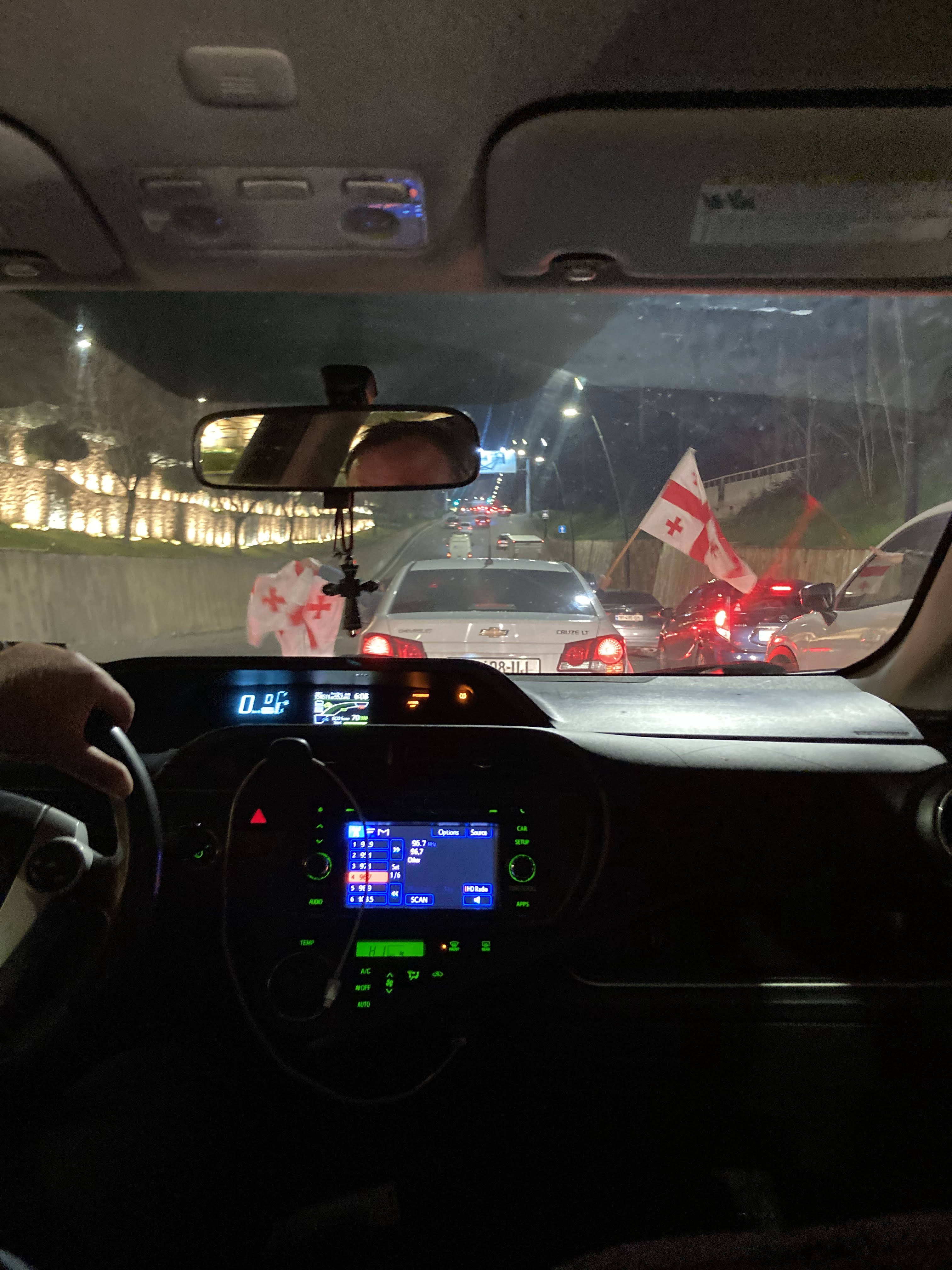
All these beginnings found me at Tbilisi airport at 1am, and as soon as I stepped into the airport terminal, violent screams! “Go some more this close to two warring zones. This is what comes of..” “Shush!” I said to my busily catastrophising voice. It’s probably a sporting event of some sort. Turns out, it was Euro 2024 qualifiers and Georgia’s historic victory in a penalty shootout against Greece that earned them a place in the tournament. Gaumarjos, Georgia, I toasted them silently. To your victory.
For once, I did not fret about landing at a new place at midnight. I assumed I would get to the hotel safely. That’s the trust part. Next was to buttress that with facts and research. Thanks to Emily Lush’s fantastic blog, I was able to find reliable tourist support everywhere, beginning with cab services like Gotrip. The bilingual Giorgi ferried me forth with warmth, professionalism and enthusiastic football joy as we drove past hordes of celebrating people and flags hanging out of cars.
Tbilisi: The warm place
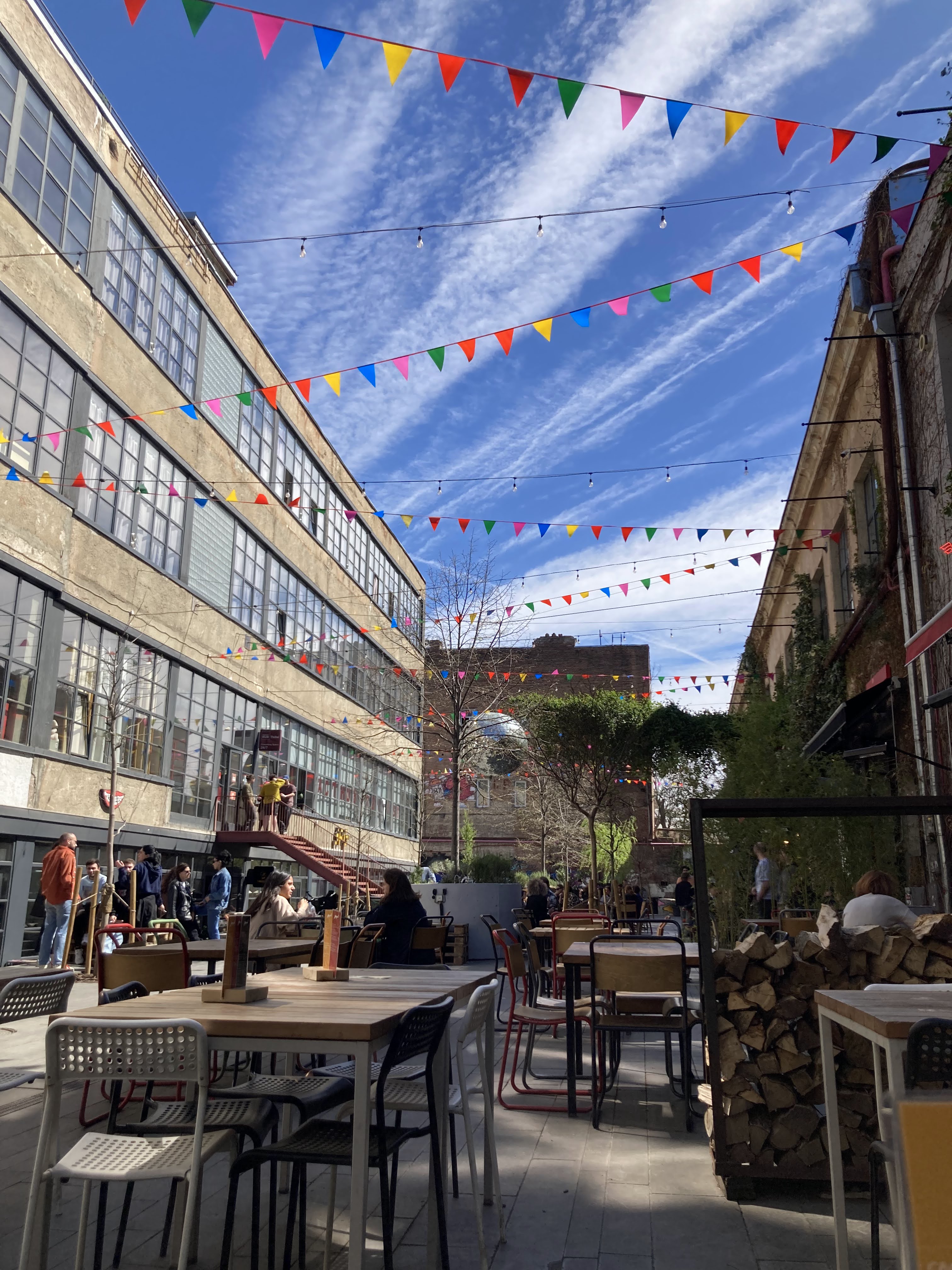
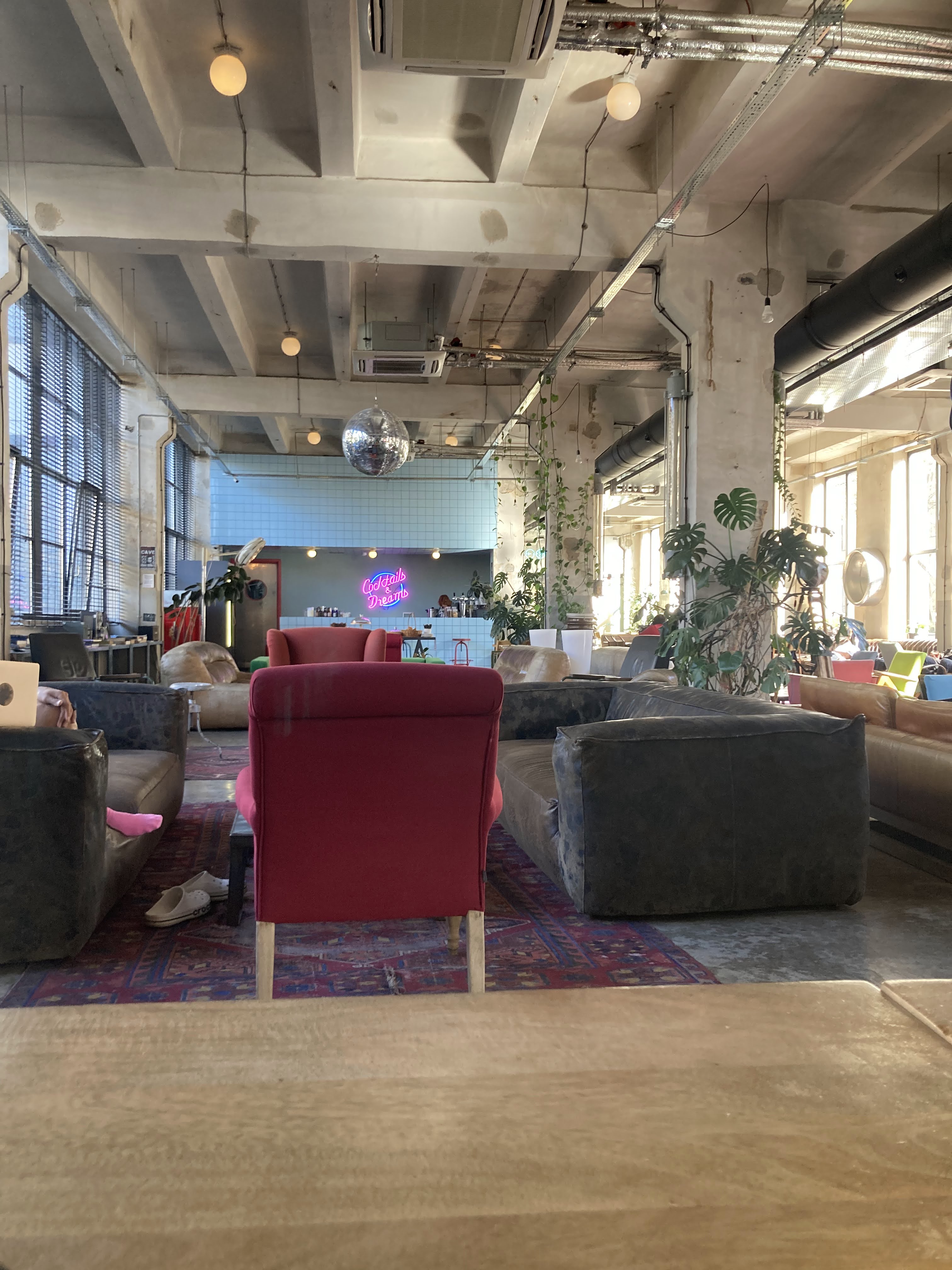
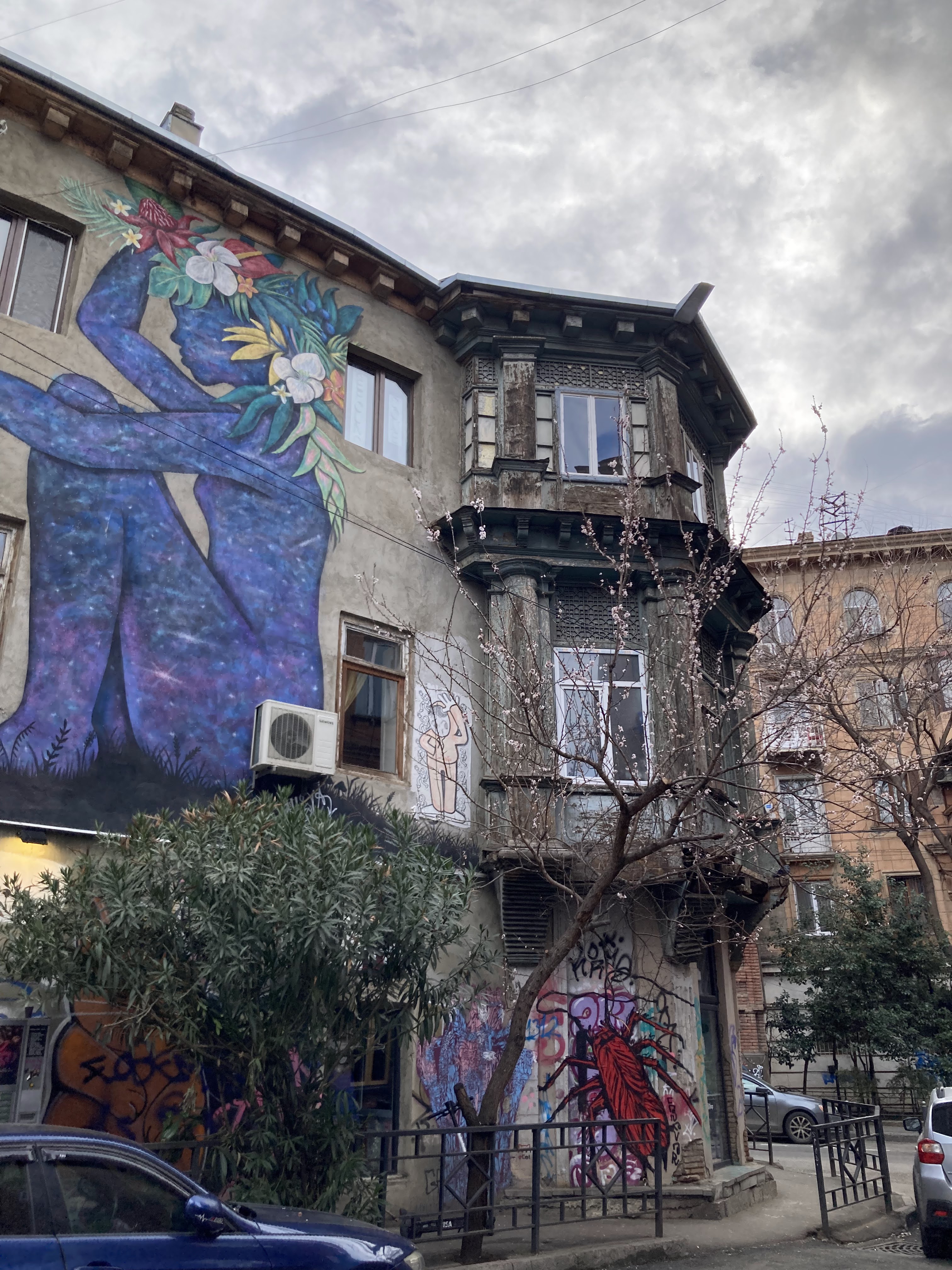


At Fabrika, my Tbilisi HQ, I checked-in, got into my room, woke up the 3 others I was sharing the dorm with and crashed. Dorm? That was another risk: from living entirely on my own and loving the heck out of it, to sharing living space with strangers. Fabrika is an erstwhile Soviet sewing factory converted to a hotel / coworking and events space / cultural centre and party hotspot. It’s like wework, Banksy and Getafix adopted a foundling and nurtured it.
It ran with an efficiency that warmed my heart. One of my least liked travel peeves is the excessive service. At home, you do your own dishes and clean your own table and suddenly a gloved person is bowing over your every need at hotels. The DIY to Duchess is too vast a shift for me to settle down into it. At Fabrika, I had that midway point: Collect my own food, and clear my table, do my own tech-support and my own laundry, but efficiency and cleanliness guaranteed.
I ended up meeting a bunch of very interesting solo travelling women that served as a counterpoint to everyone who asked, “Why travelling alone” with incredulousness. (Possibly Indian woman + woman of a certain age). All these women from Austria and Azerbaijan and Portugal and Switzerland and Turkey that I ran into, they bolstered me. One of them, Sara, who’s a school teacher in Portugal and I found out we had the same rose-tinted notions about life that are out of place for a 40 something but we make it work. We figured that we are likely to think of the other and our conversations at random points in the years ahead and feel like, “Oh, curious, there is a person on some corner of the earth, whom I met by chance and will likely not again, had the same philosophical underpinnings about life.” There I was, enjoying the cold wind on my face, setting out with my trusted down jacket and seeking new flavours.
Of walks, cats dogs and other joys


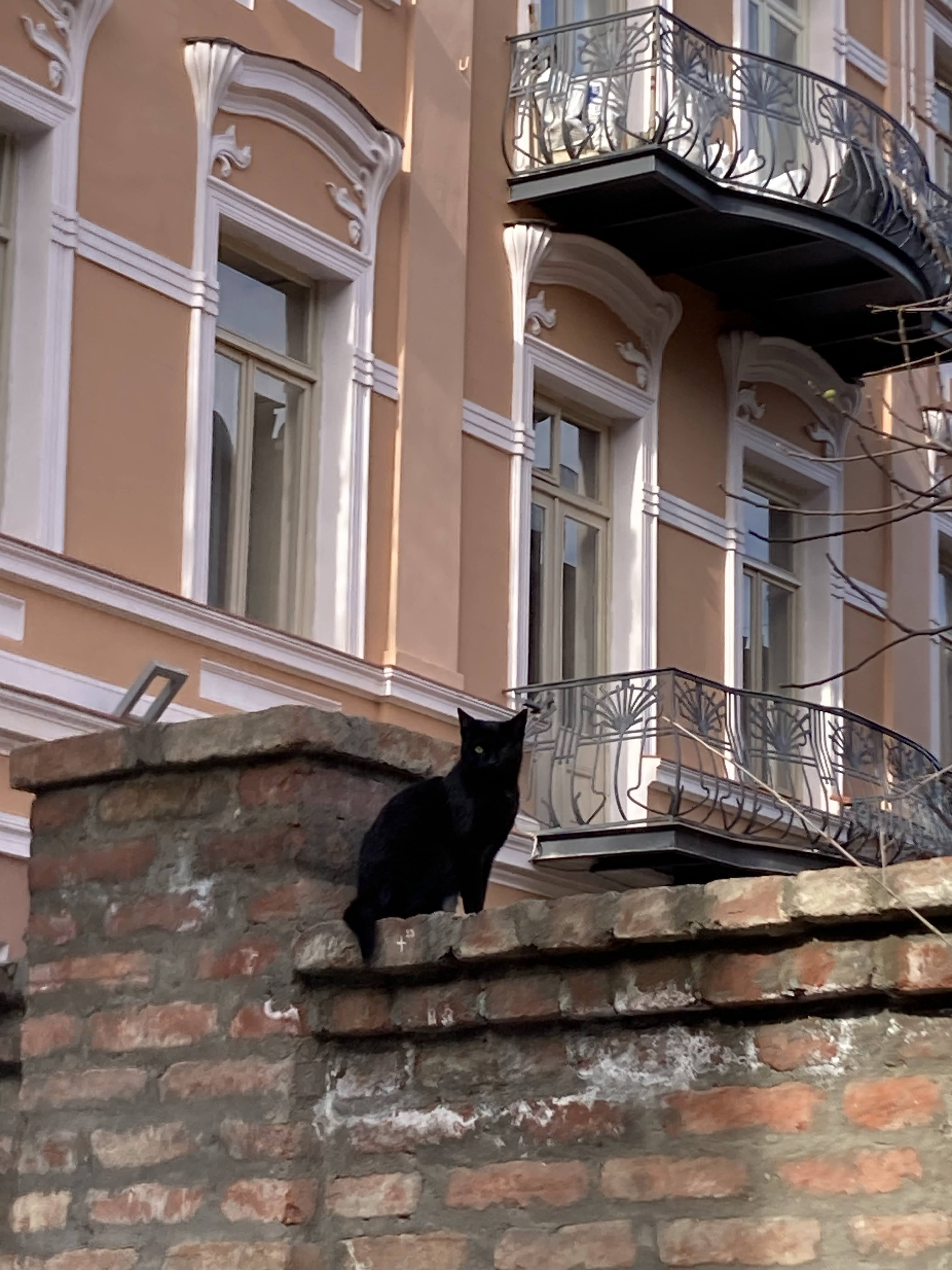
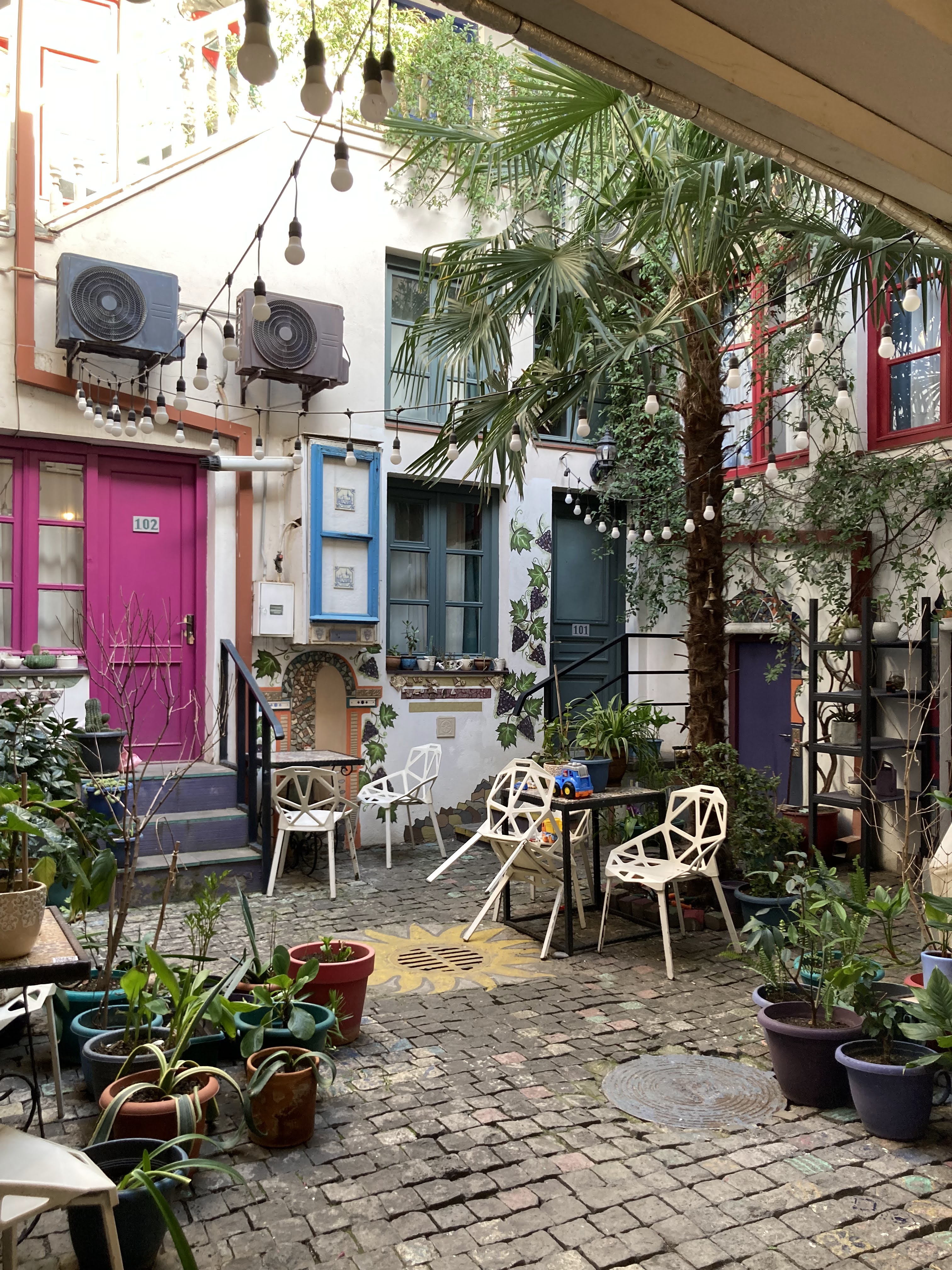

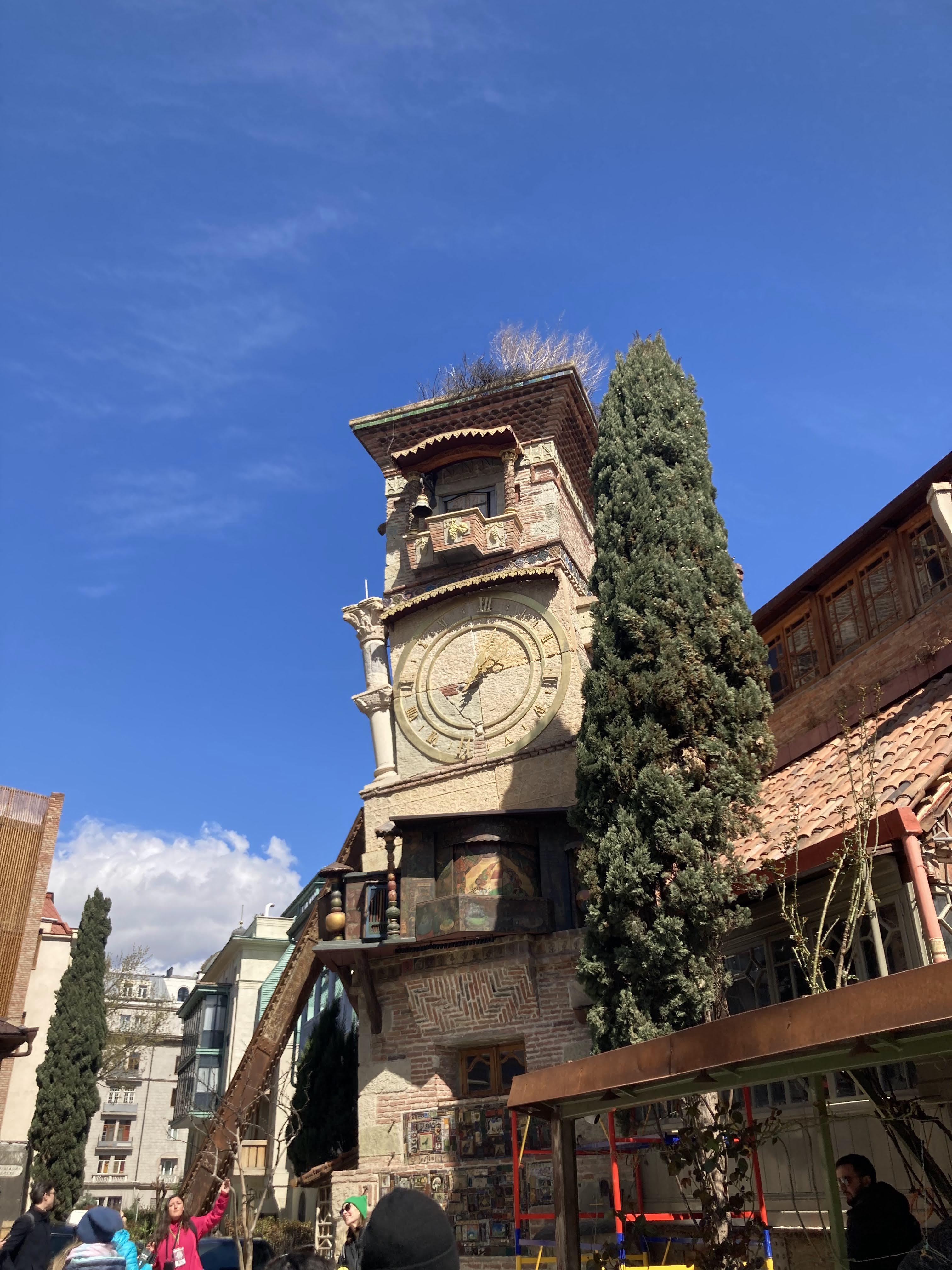
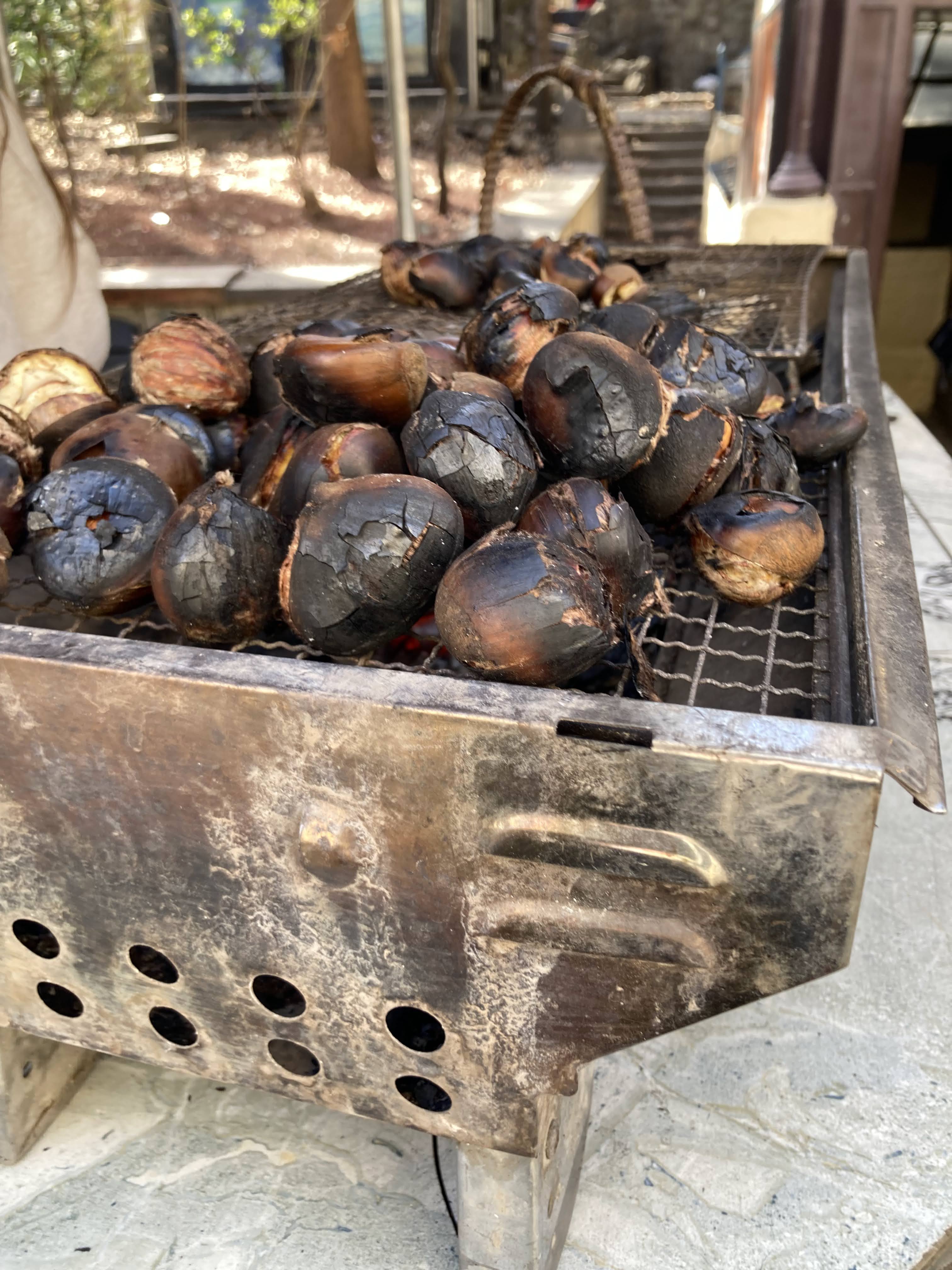
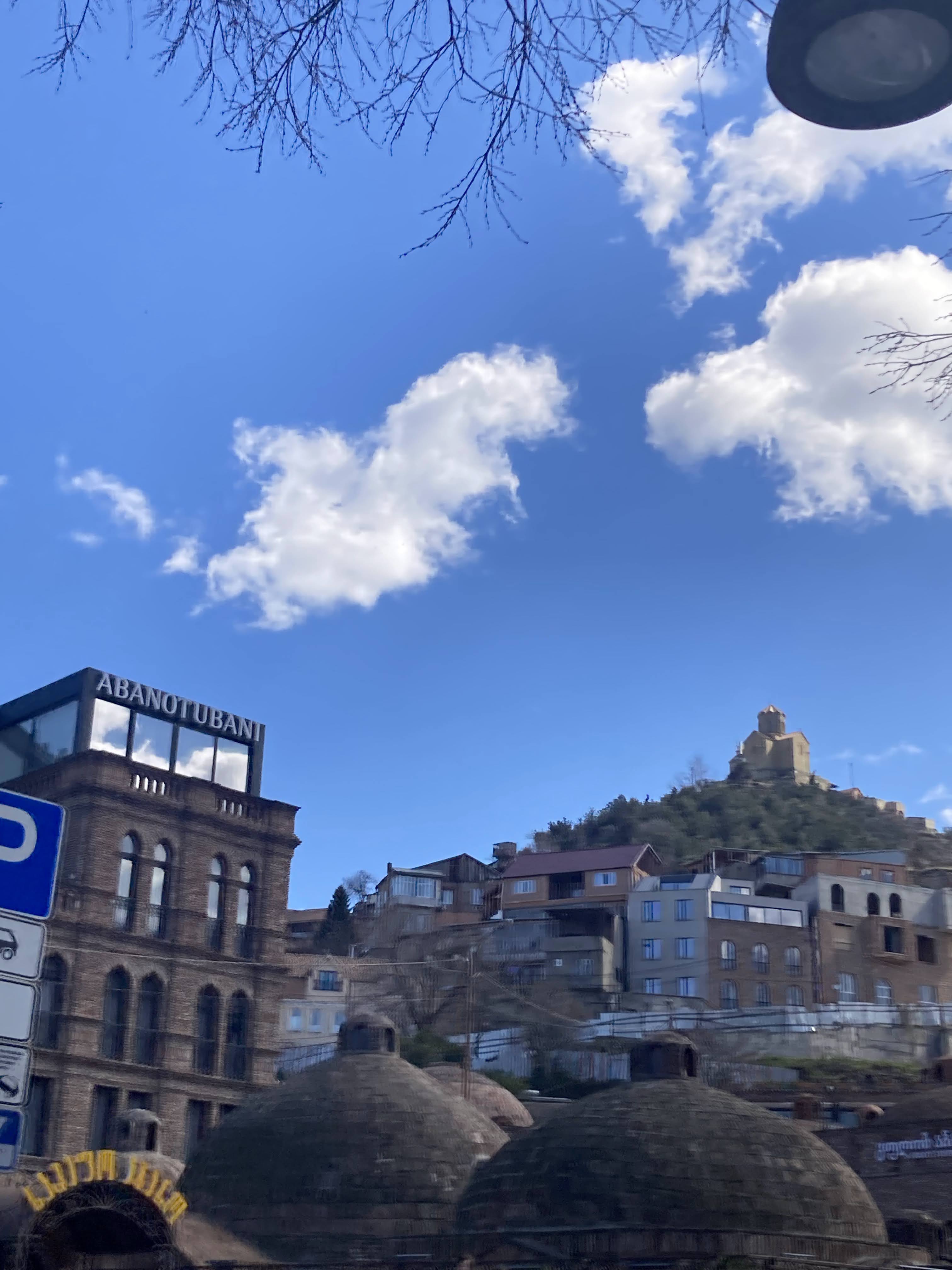


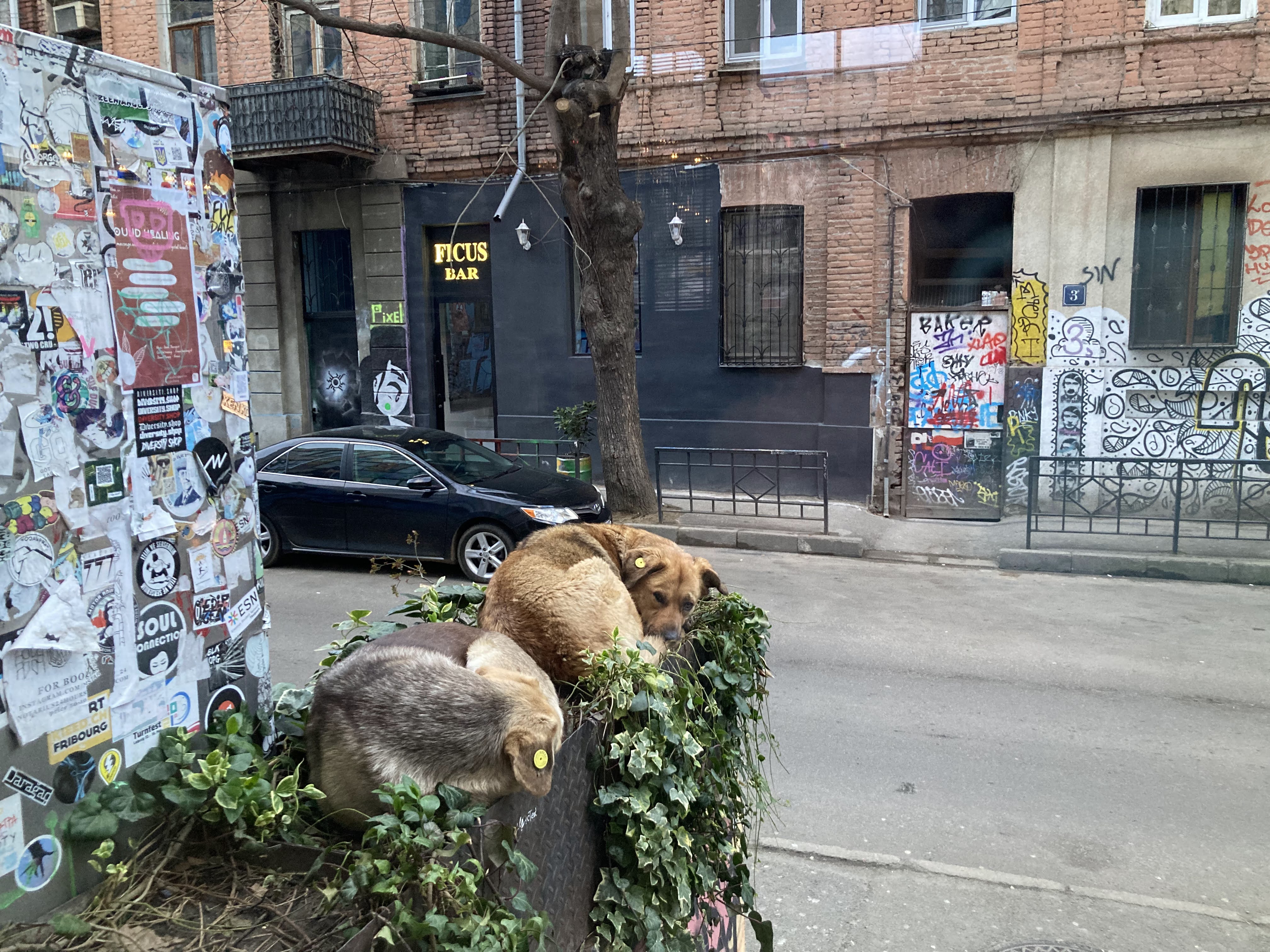
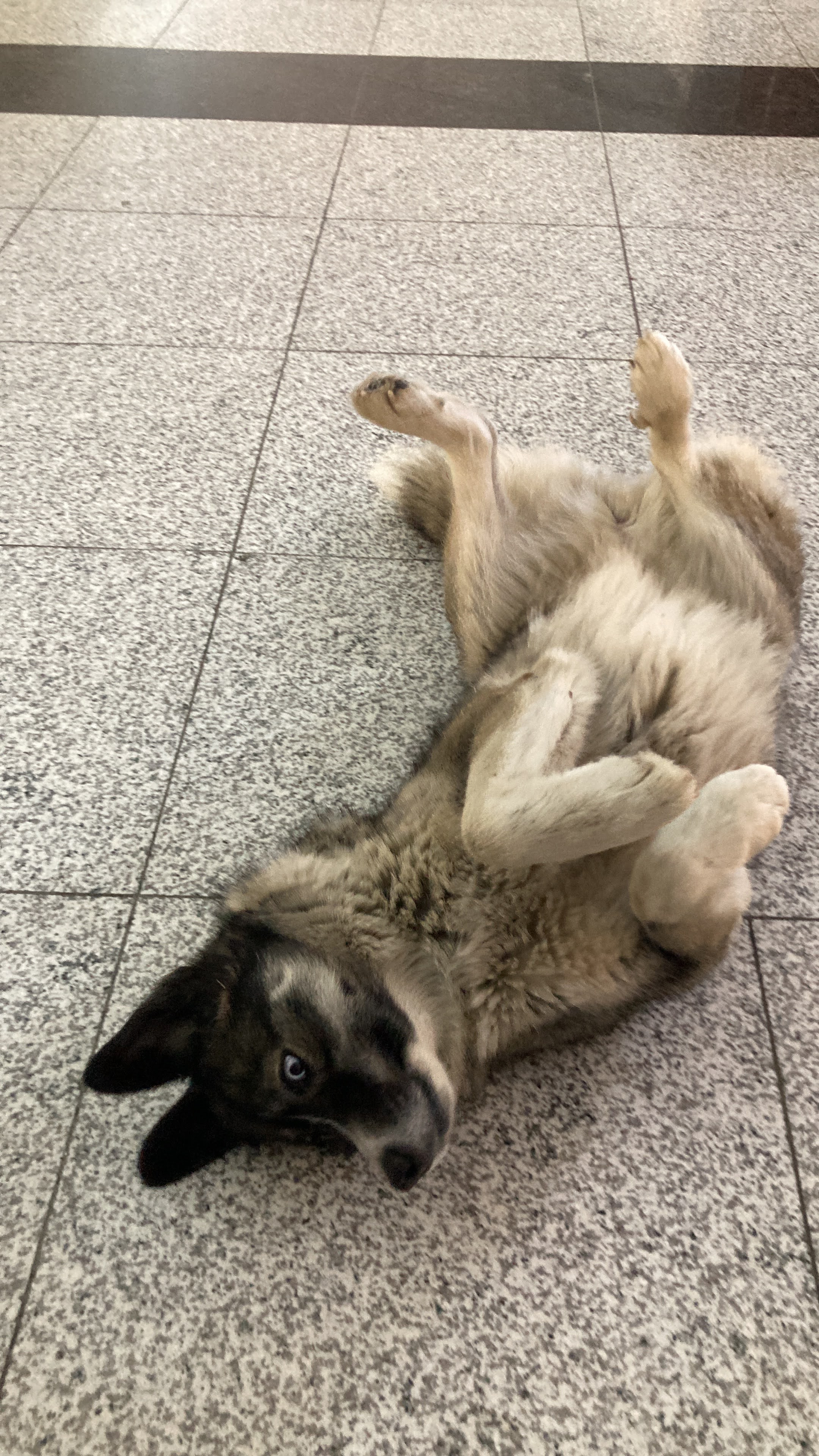
The flowering of this trip was going to be gradual and gentle and very cuddly indeed. The first couple of days in Tbilisi were all about walking around, eating food off streetside restaurants, feeding stray cats outside bakeries and petting very large Georgian Shepherds that walk with you to protect you. It was also for understanding the people, that is best achieved in fast forward via city walks. Both my walks, one with Eka of Tbilisi Walking Tours and another with Zura Balanchivadze teased out different and allied parts of the Georgian / Tbilisi experience. There I was, walking unknown streets and yearning to understand the lives of new people.
A United Nations of walkers, we explored the various centuries hidden in plain sight in the city, I sought answers to questions in my head: Why were the Georgians not as scarred and cautious as the part of my country in the Silk Route, that got invaded all the time? How’s the Russian colonisation been different for them that the British version? In what ways is it a familiar experience? One Russian on the walk chided the walk leader for not “thanking the Russians for railways and other advantages” and a Mexican / American couple verbalised what I was thinking, that we hear the same thing about the British in India, as the Mexican said, “We hear the same said about the Spanish” There I was, so at home so far away, thinking, philosophically, we are all often the same.

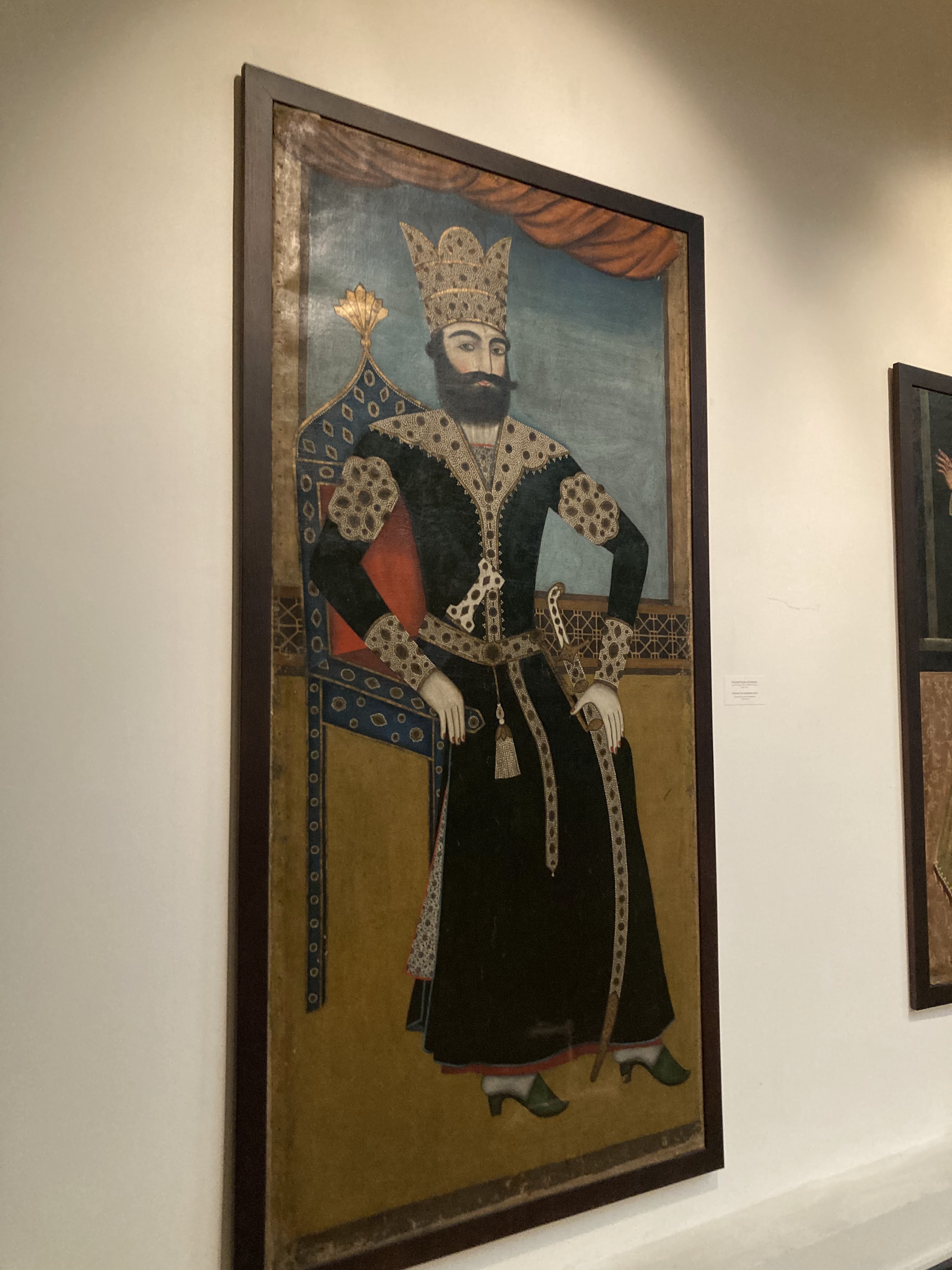
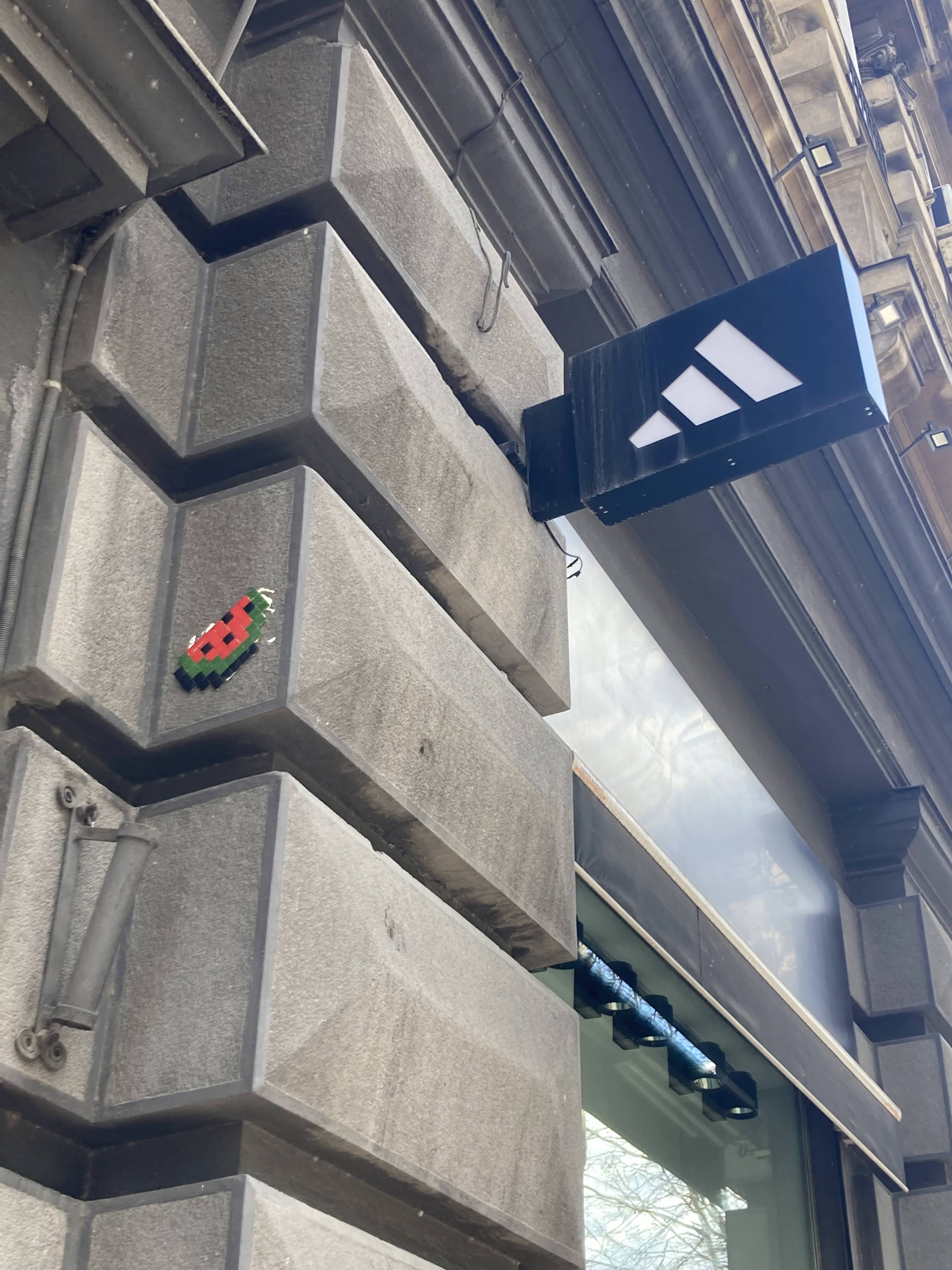
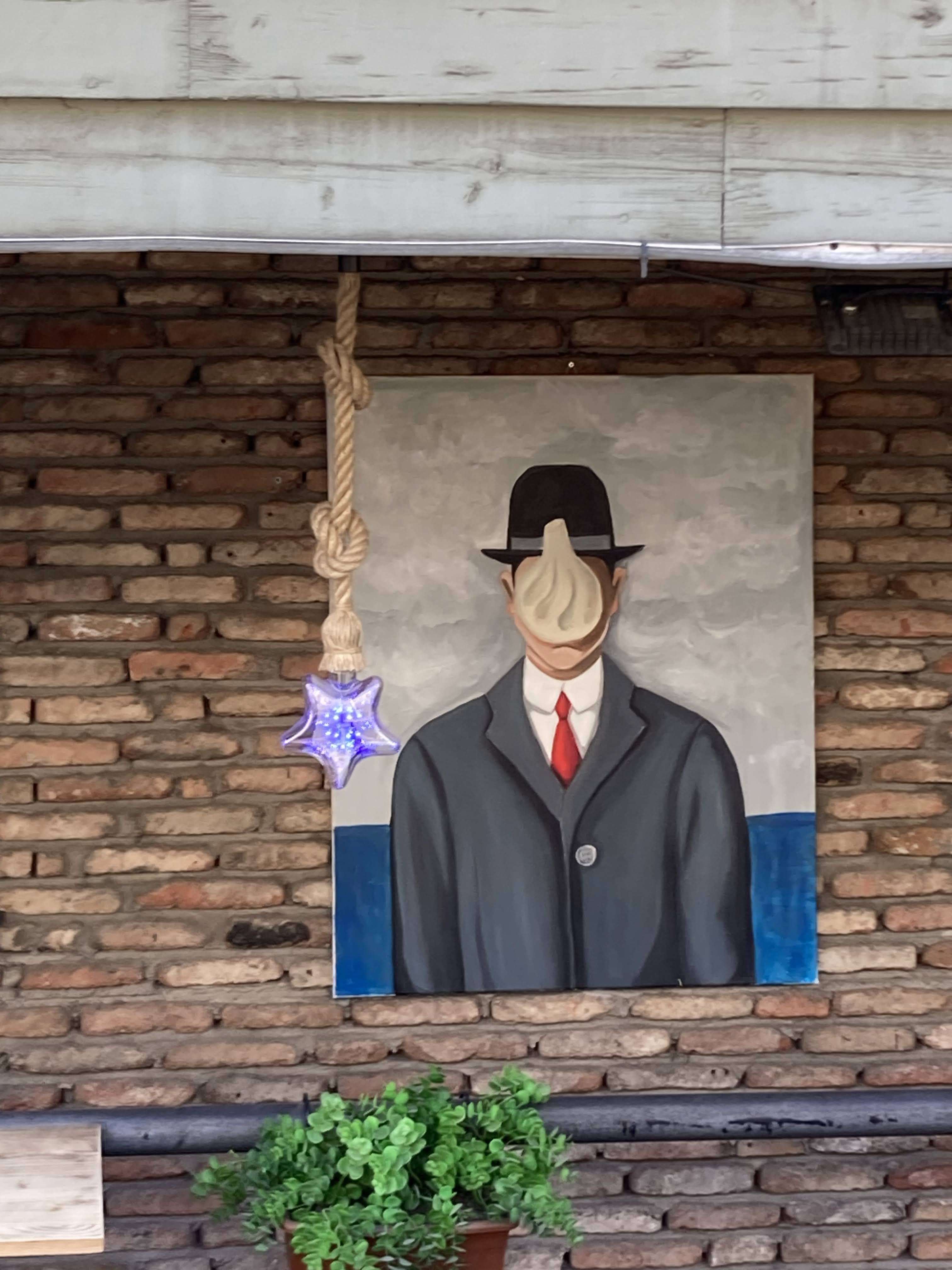

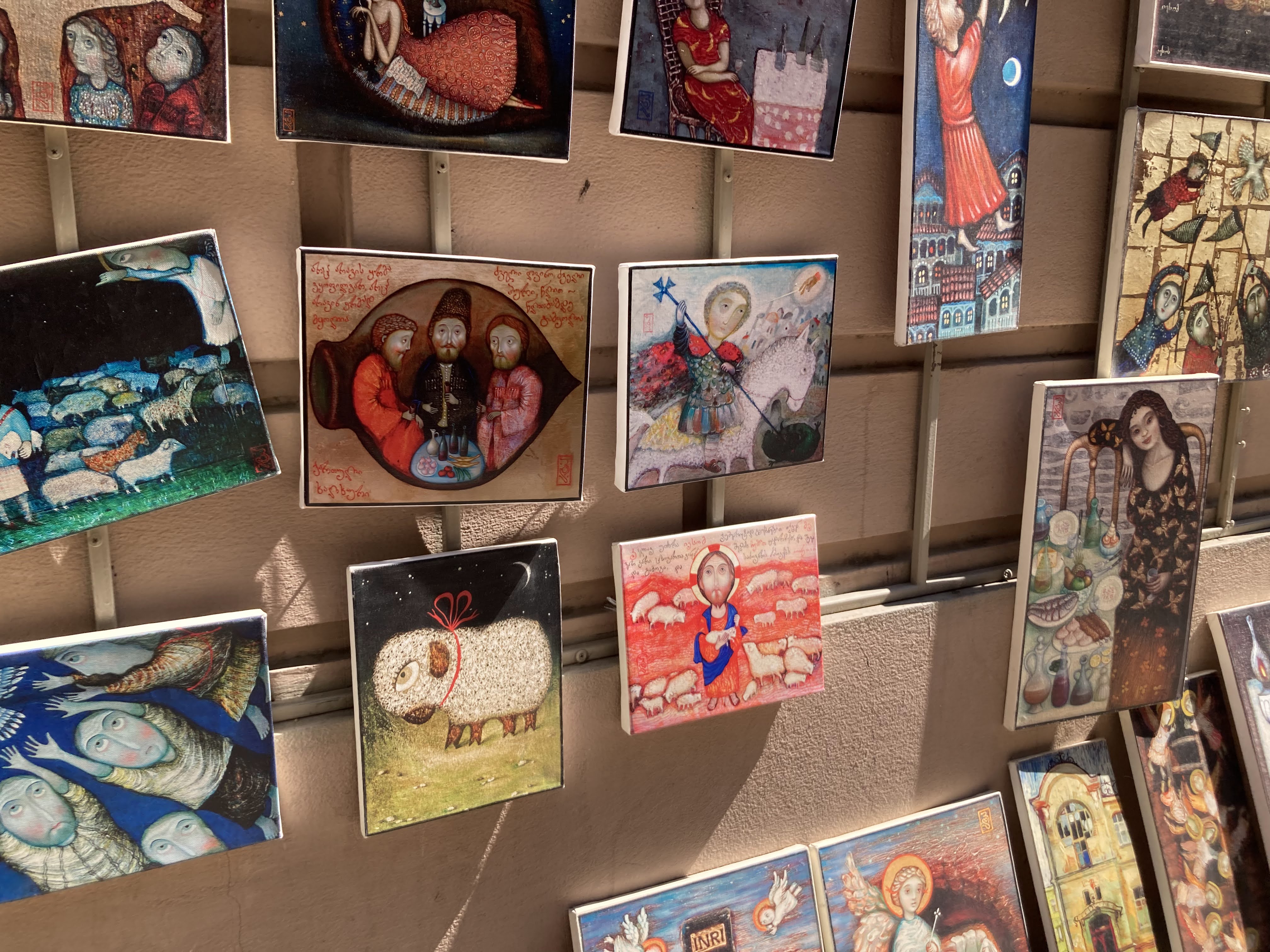

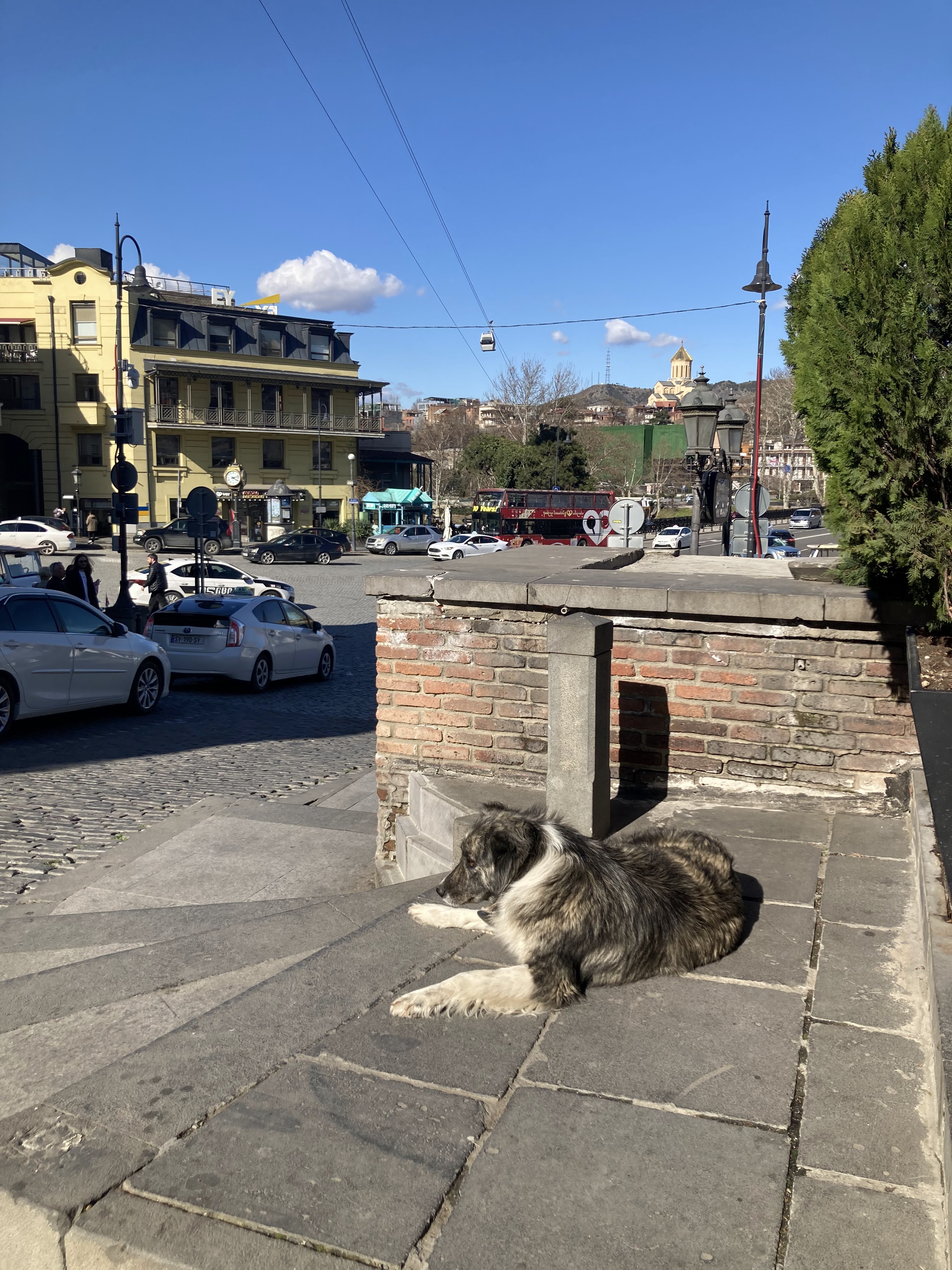


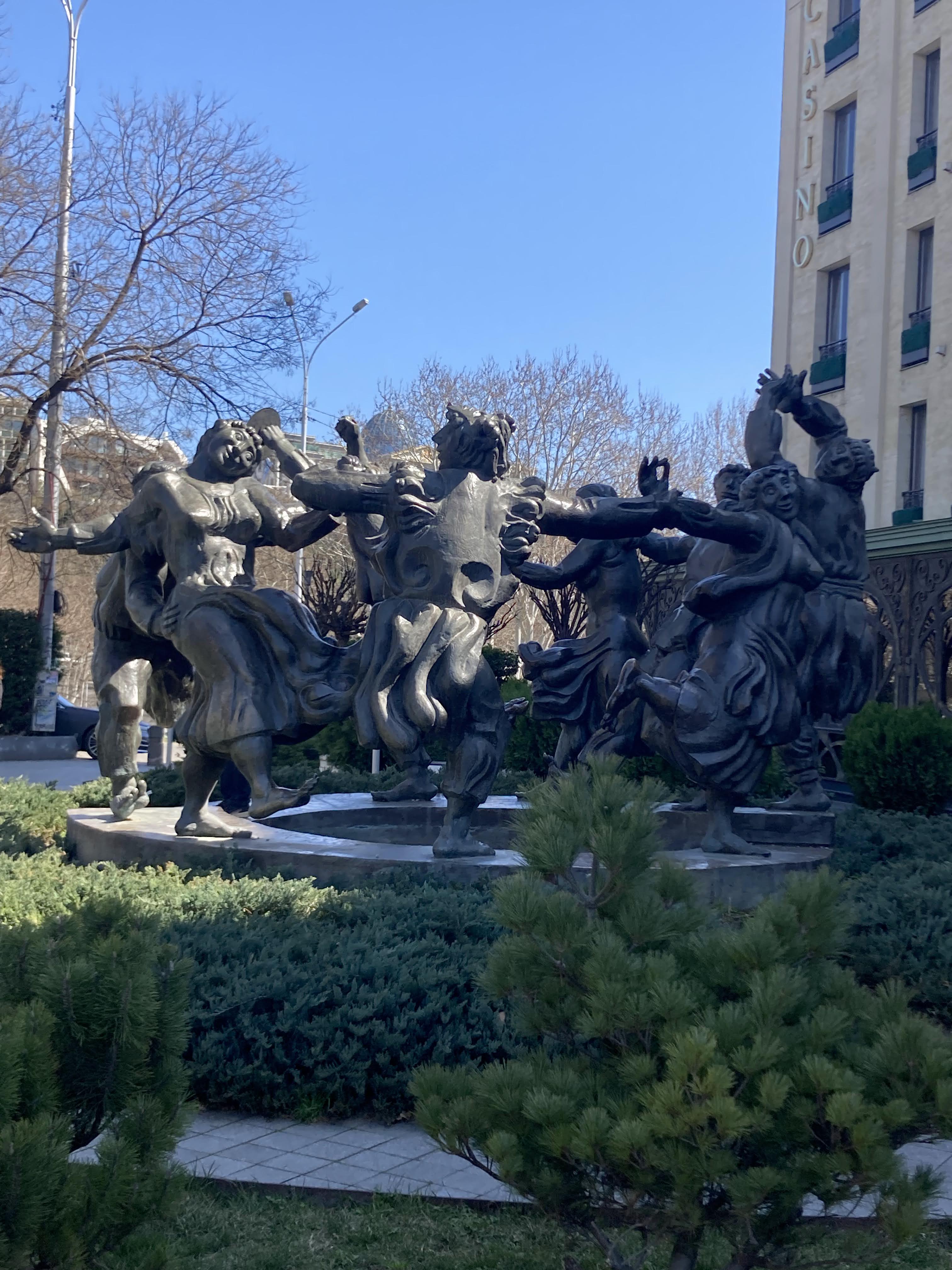

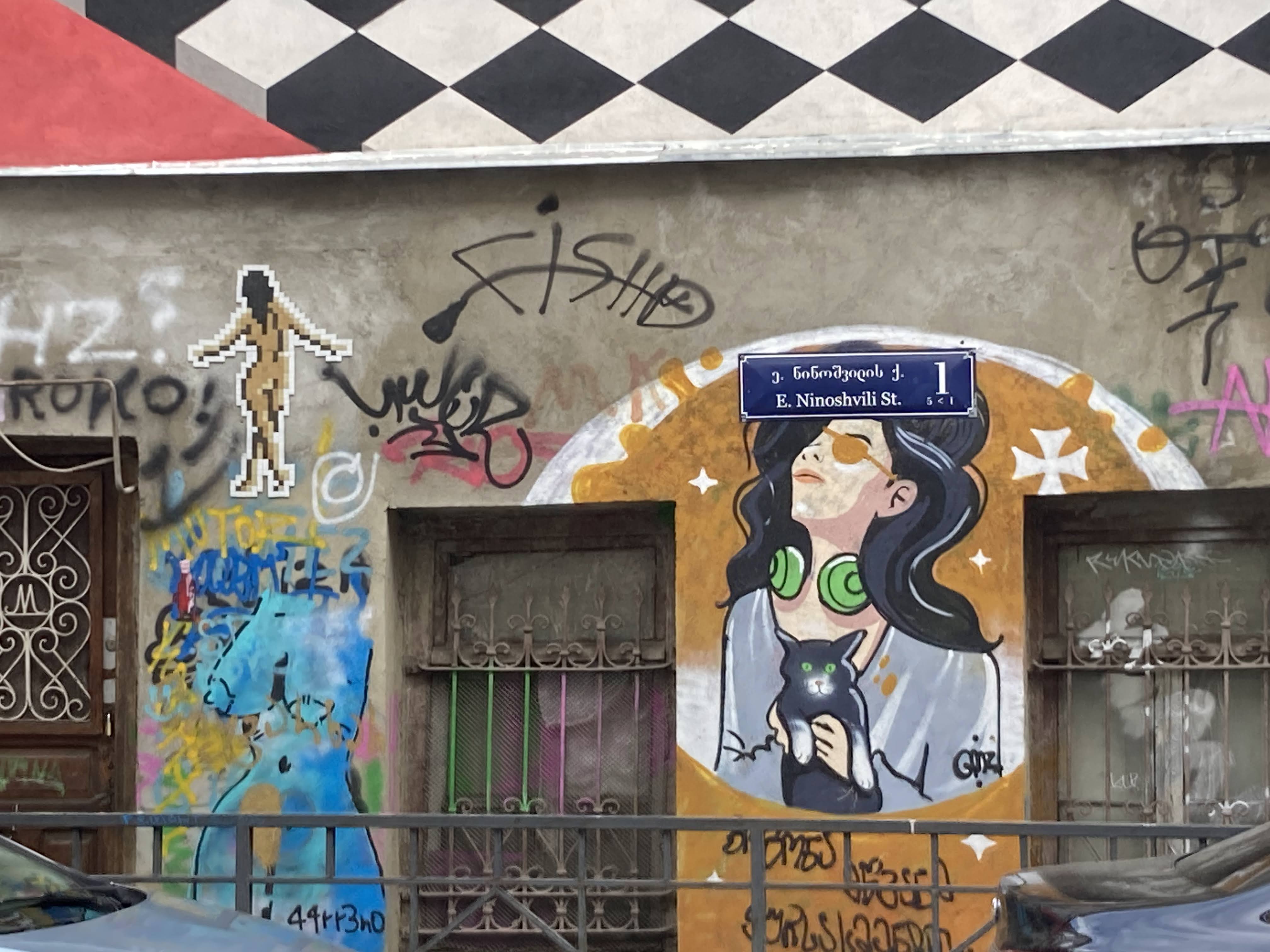
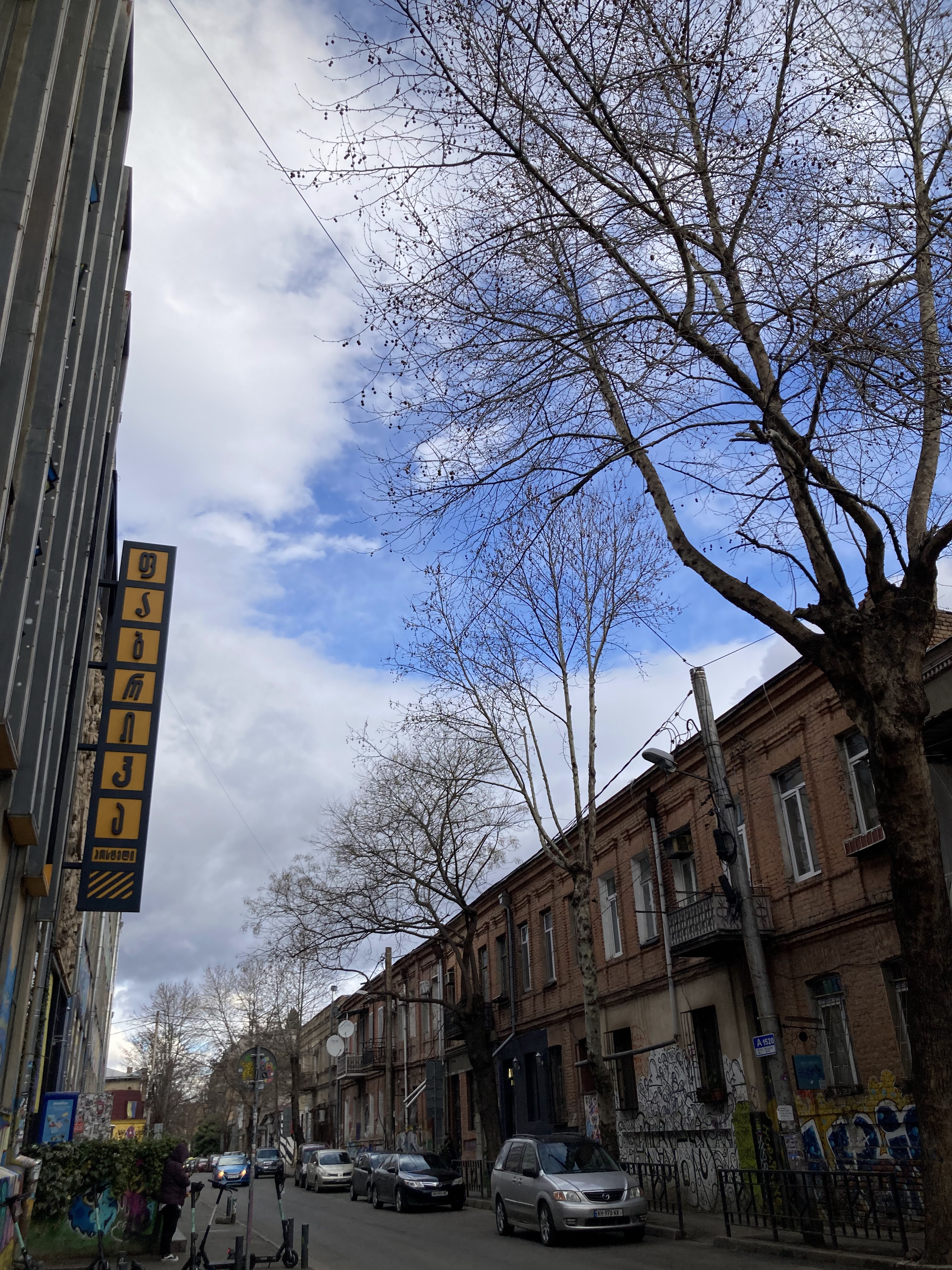
I had fun feasting my eyes on the cats, dogs, the wall art of cats and dogs, the literal political writing on the walls, the Brutalist architecture coexisting with the traditional classical, the St. George’s square and Pushkin Park, the old city with its winding streets and the little unexpected parks, chestnuts roasting over an open fire, little restaurants with locals sitting with a glass of amber wine, delicately designed turquoise (They pronounce it turk-vase, because they adopted the colour as it looked Turkish and posh, centuries ago. Reminds you of how close the two countries are and how fraught their relationships) balconies. Here too, I could see people complaining about ugly modern buildings with ugh sensibilities marring beautiful historical structures. I suppose it’s a global march, this one of blending tastes.
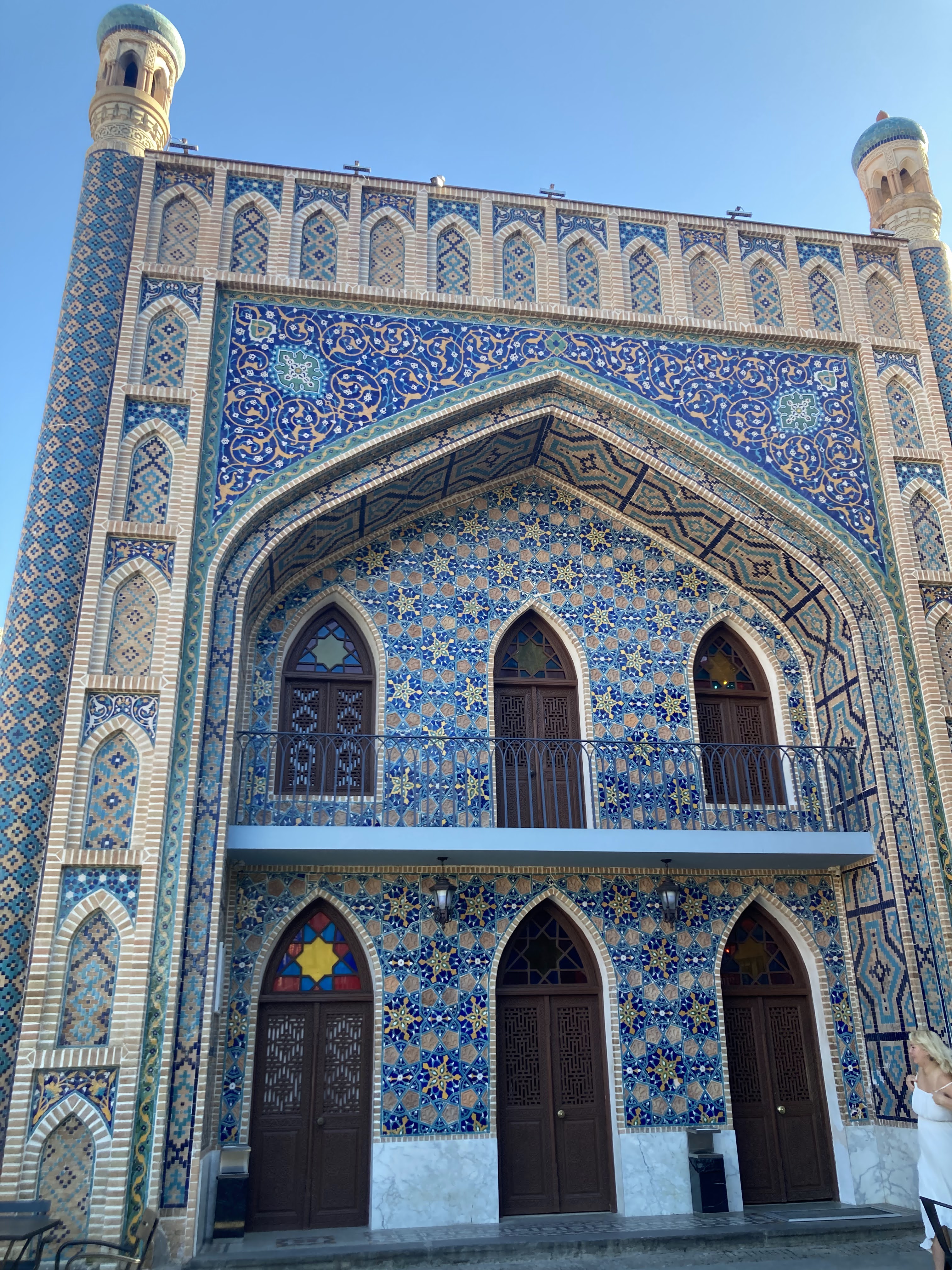

Too old-fashioned for a public hamam, The traditional hamams were gender segregated and for public use in one large sulfur pool. I considered and rejected the idea in favour of a more contemporary sulfur bath alternative, Chreli Abano. I wear the tag “old-fashioned” as a badge of honour, till Afsha pointed it out to me to look at it differently. And so now, it’s less old-fashioned as it is more a combination of cultural /family upbringing and shyness: no bad thing to embrace those too. They had private rooms and all the mod cons of a spa. I asked for a kisi, the Georgian scrub, which consists of the mekise (masseuse), putting you on a slab and scrubbing you like a potato for salad. I was told the mekise will arrive after 20 minutes of my 60 minute spa. Chilling in the sulfur bath, I suddenly got doubts, ran out to the phone in my room, called the front desk to confirm that my mekise is a woman. There I was, appropriately assessing risk without freaking out.
Carry me, caravanserai
The stop on the way back to Fabrika at a private Museum of how folks in Tbilisi lived over the years, and a wine museum, was essential because it was in one of the intact caravanserais. I picked up a steaming hot Khachapuri from a bakery that had sprung up at a place that had been a bakery when the caravanserais were functioning as part of the Silk Route. Someone very grumpy gave me one khachapuri and waited for me to get lost 😄 I am so used to understanding the lives of retail workers, I took that to be a sign of it being a bad day for her and went on my way, wishing her well silently. The caravanserai with its glass roof lent itself to the imagination that akin to the stories of the spice route that I’ve heard in my culture, the silk route also would’ve housed the world in these massive old-time hotels. I imagined my forebears, of who knows what national / cultural heritage then, coming into touch with another world and expanding their world-views. Maybe making families as they go, like I tend to do – collect friends and make them into my own little families of choice.
The next steppes


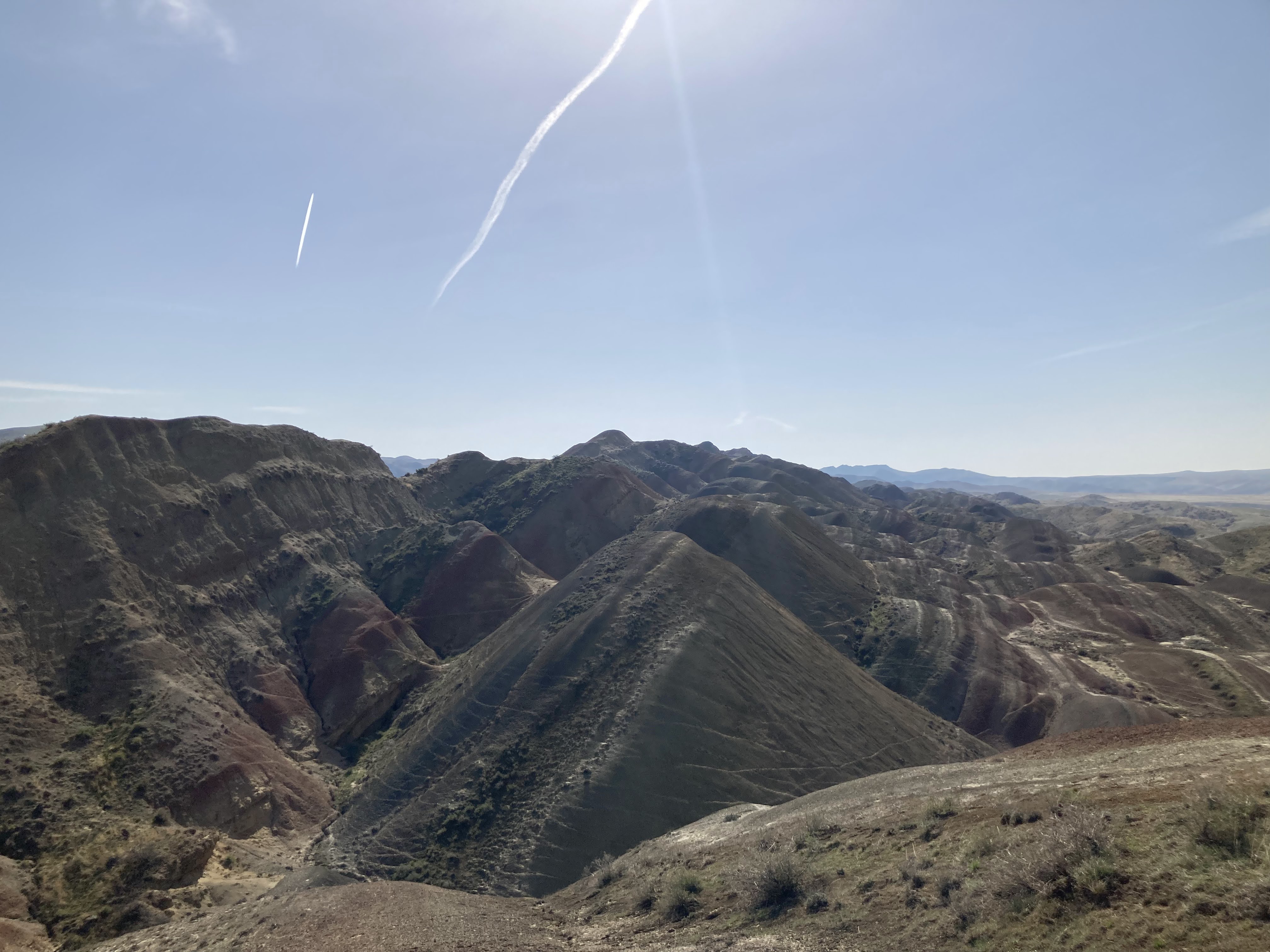
With the good folks of friendly.ge, led by the very enthusiastic and knowledgeable Ana, who gave us the lowdown on every kind of animal bird and plant possible, we set out on a 4×4 adventure to the rainbow mountains, the Natlismtsemeli and David Gareji monasteries and finally, the steppes.
The Mravaltskaro reservoir with the wind whipping up the sound of the sheep, a solitary shepherd with his crook and dogs herding the sheep made a sight that lodged right into the heart.
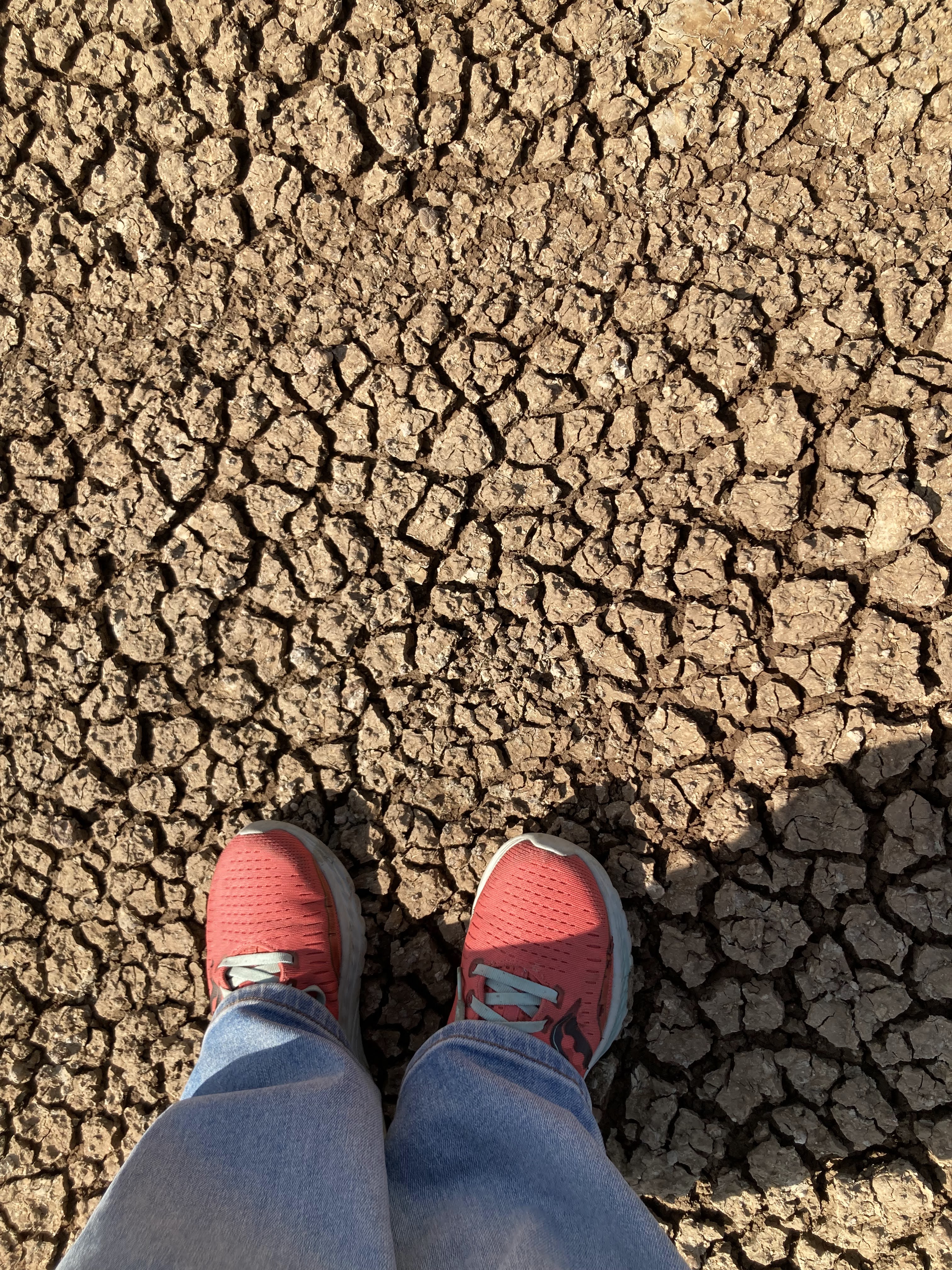
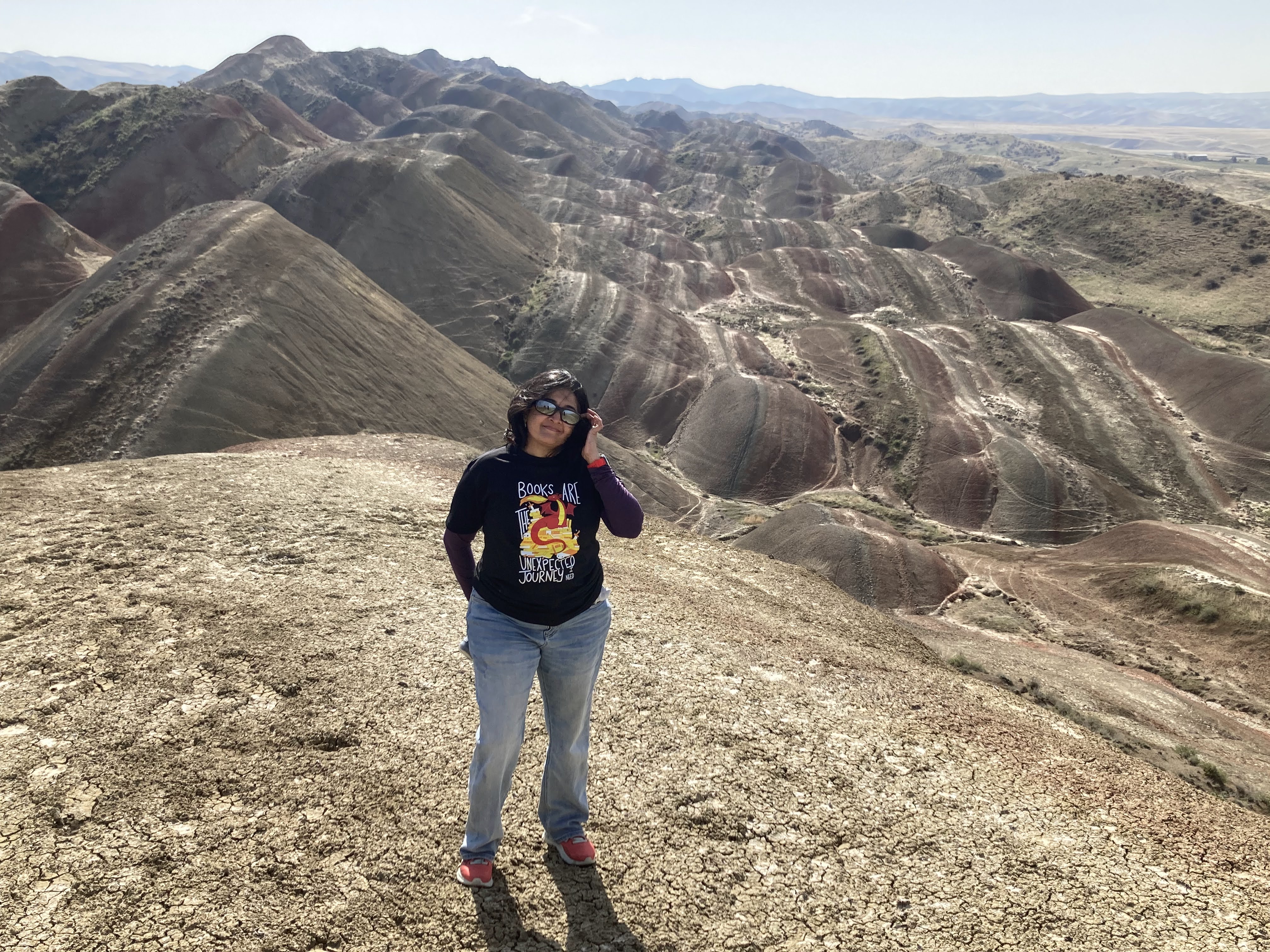
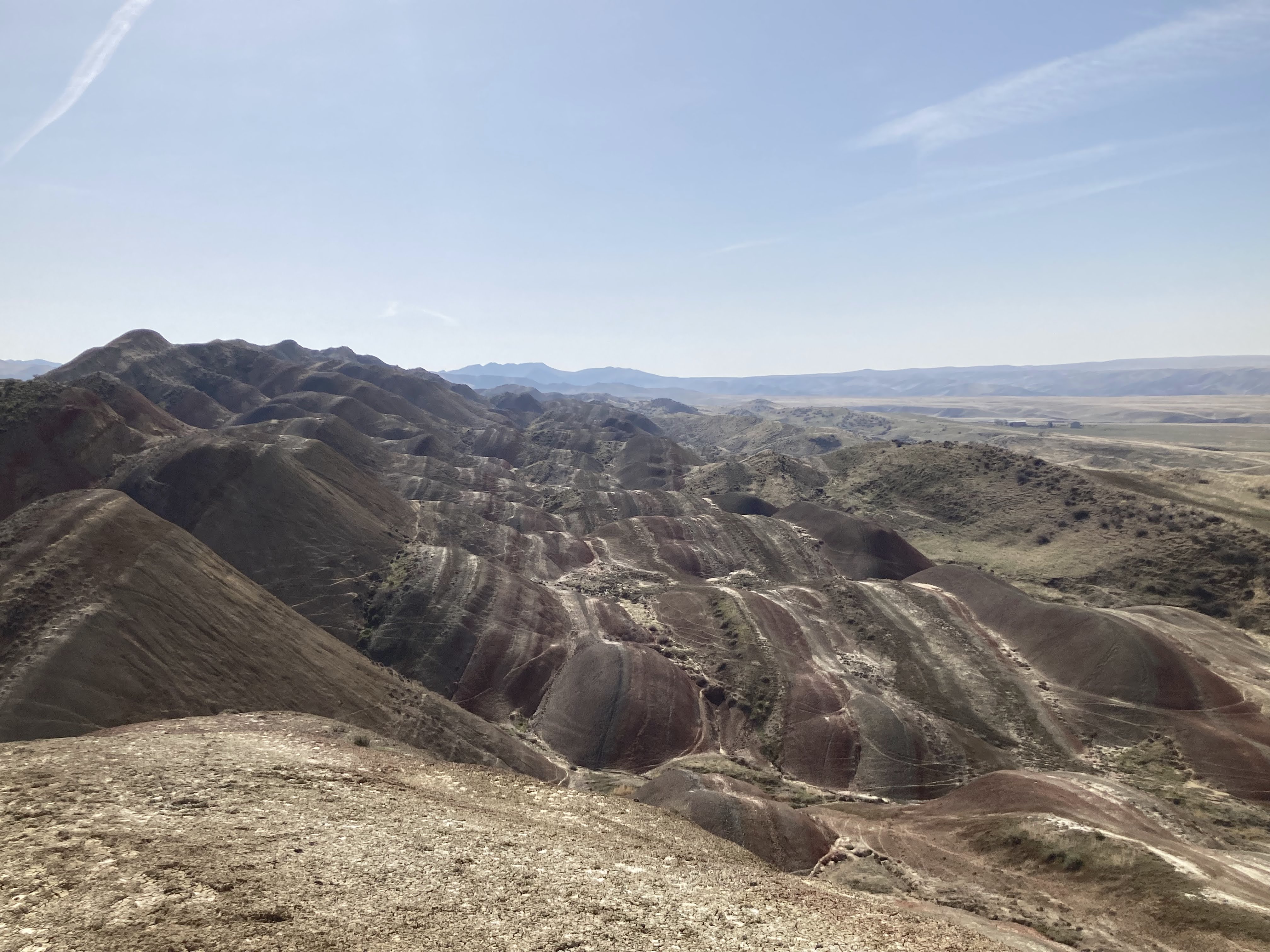


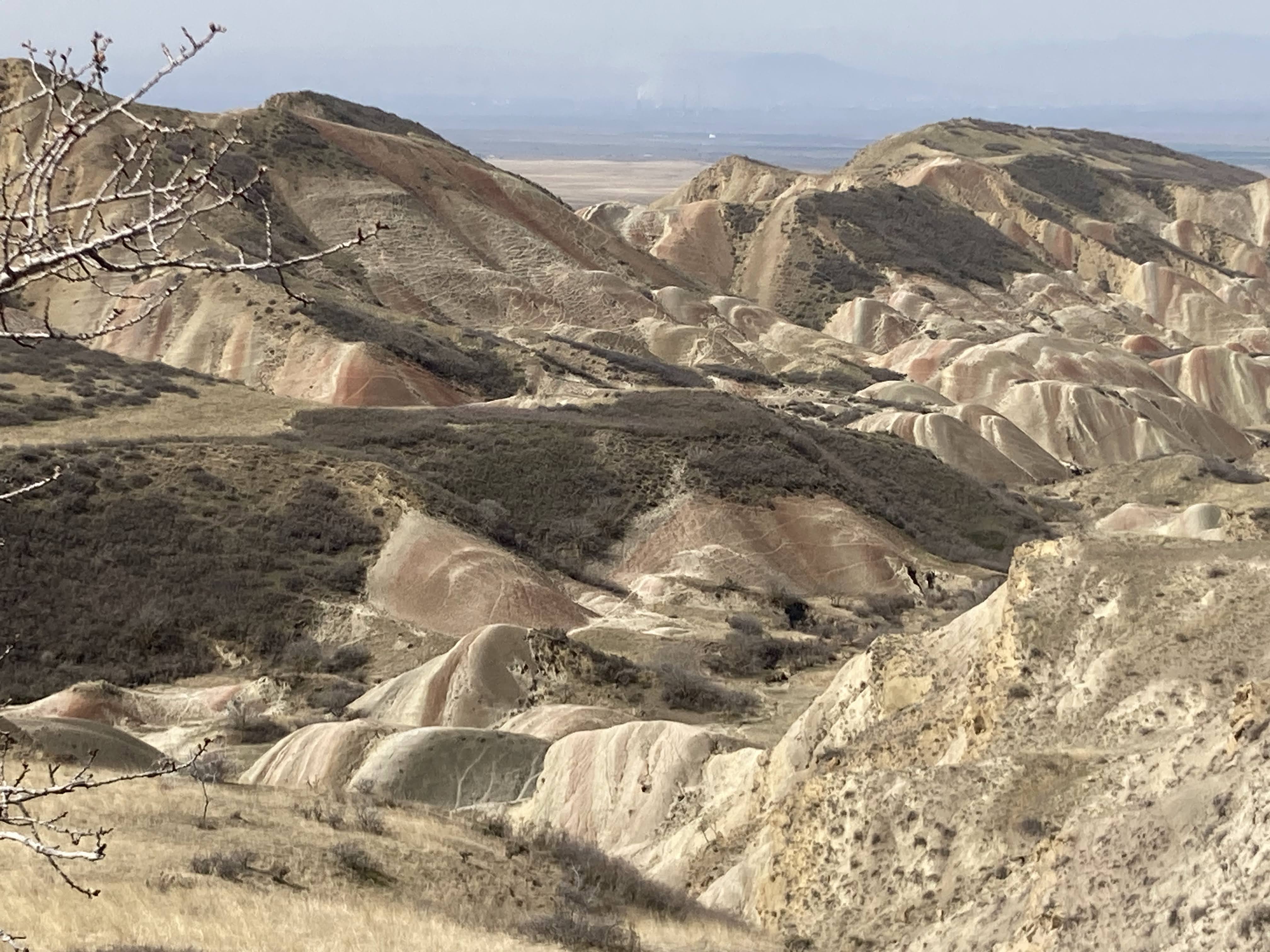

We were heading to Natlismtsemeli monastery when Ana pointed out a lone sheep nestled on the side of a hill, and said look, she’s just had a baby. And there was a kid, getting up on unsteady legs and falling down, and a collective aaaawwwww went up within our car. Seconds later, like in a movie scene, the shepherd appeared over the horizon. Ana explained that he is looking for the sheep, and the driver tooted the horn and pointed in the direction of the sheep, and he ambled off. A moment of pastoral perfection, if I’ve ever witnessed one! There I was, drinking in bucolic beauty and expanding my spirit.
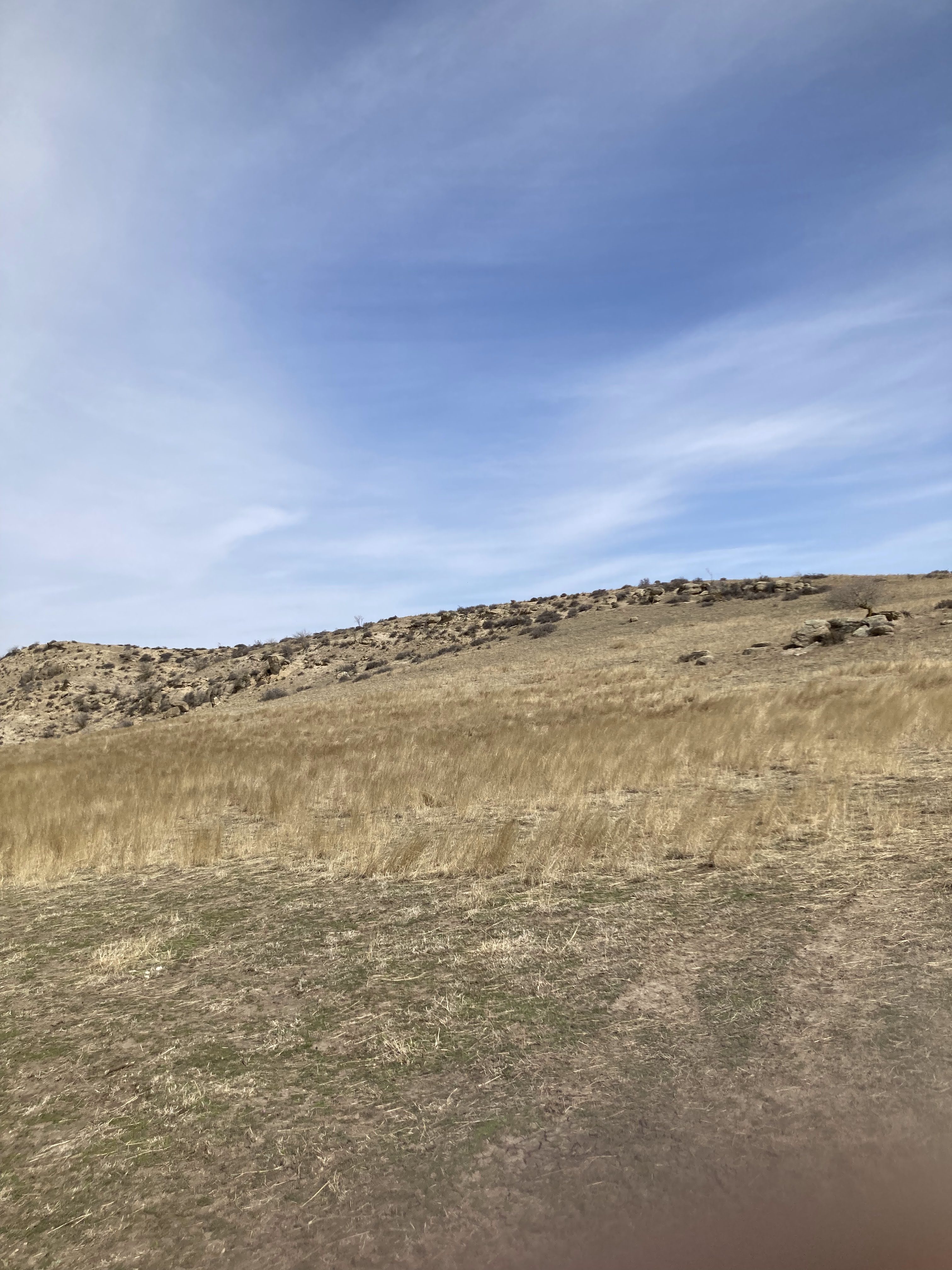
As I took in the vast expanse, the waving wheat coloured fields, I answered the question of “Why is there so much ‘The Little Prince’ themed merchandise in this country?” Because you cannot see this view and not recall the fox saying to the Little Prince, “You see the wheat fields over there? I don’t eat bread. For me, wheat is of no use whatever. Wheat fields say nothing to me. Which is sad. But you have hair the color of gold. So it will be wonderful, once you’ve tamed me! The wheat, which is golden, will remind me of you. And I’ll love the sound of the wind in the wheat…” The little tears that fell, were a tribute to my people. The ones I have tamed, the ones who have tamed me. There are uniquely only two of any of those people: My brother and I, my dad and I, my mum and I, my friend and I… and in the way that the colour of the wheat field would always remind the fox of the boy, there are those little pockets of things that would remind me of my people. Like the enamel pin of a reading dinosaur from my brother. Like the cotton cloud on my backpack with a silver lining that reminds me of my friend chiding me, “You have a habit of pulling out the silver lining and find the dark cloud inside” (Which I worked on, because my friend told me to). I suppose it is not possible to be in that expanse, see all that gold waving in those fields and not feel gratitude, loss and all the shades of the bittersweetness of all of living, bathed in auburn and azure. There I was, pruning out hate and sadness and filling those spaces with poetry.
In the yard, there is a good dog

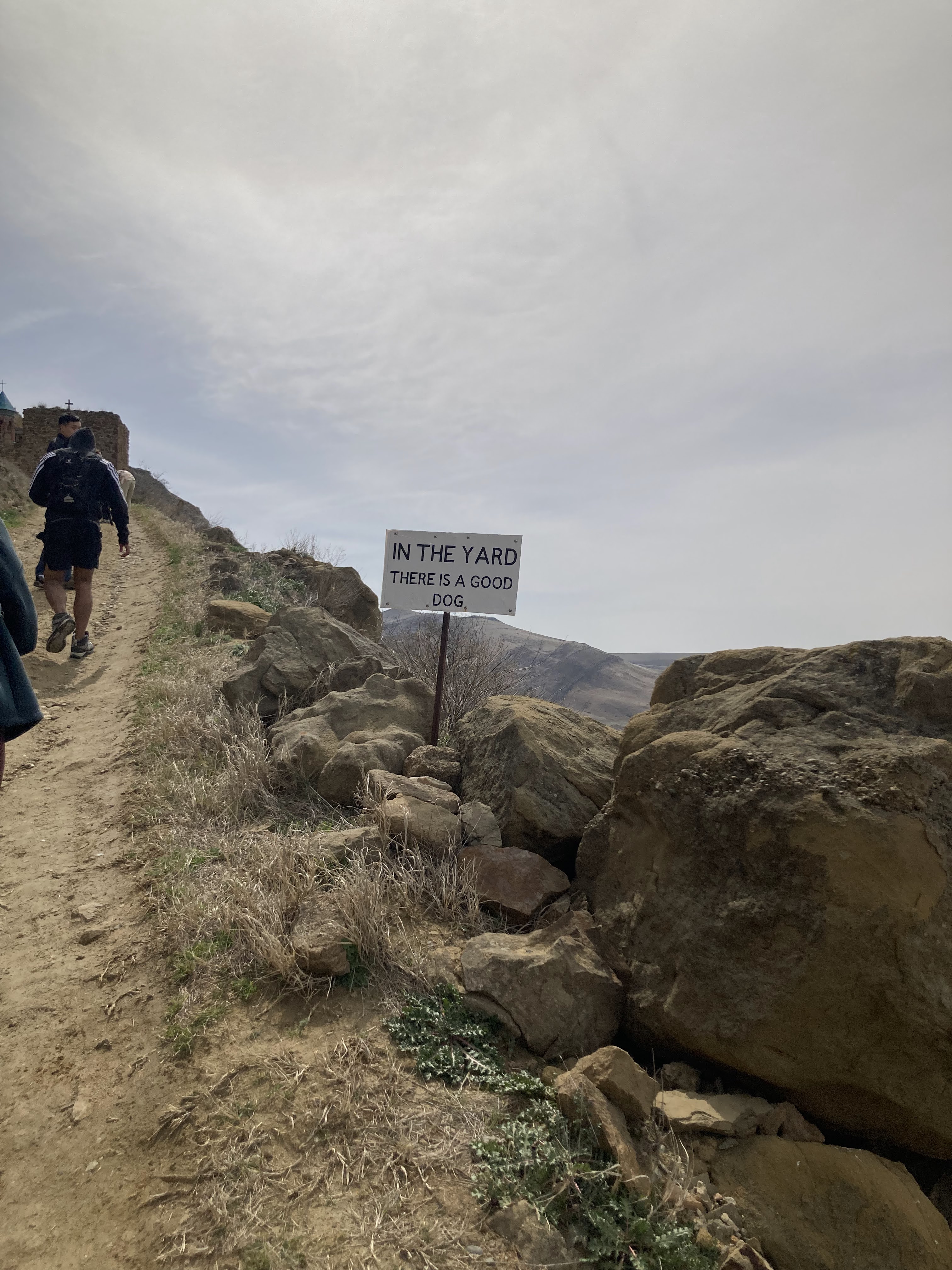
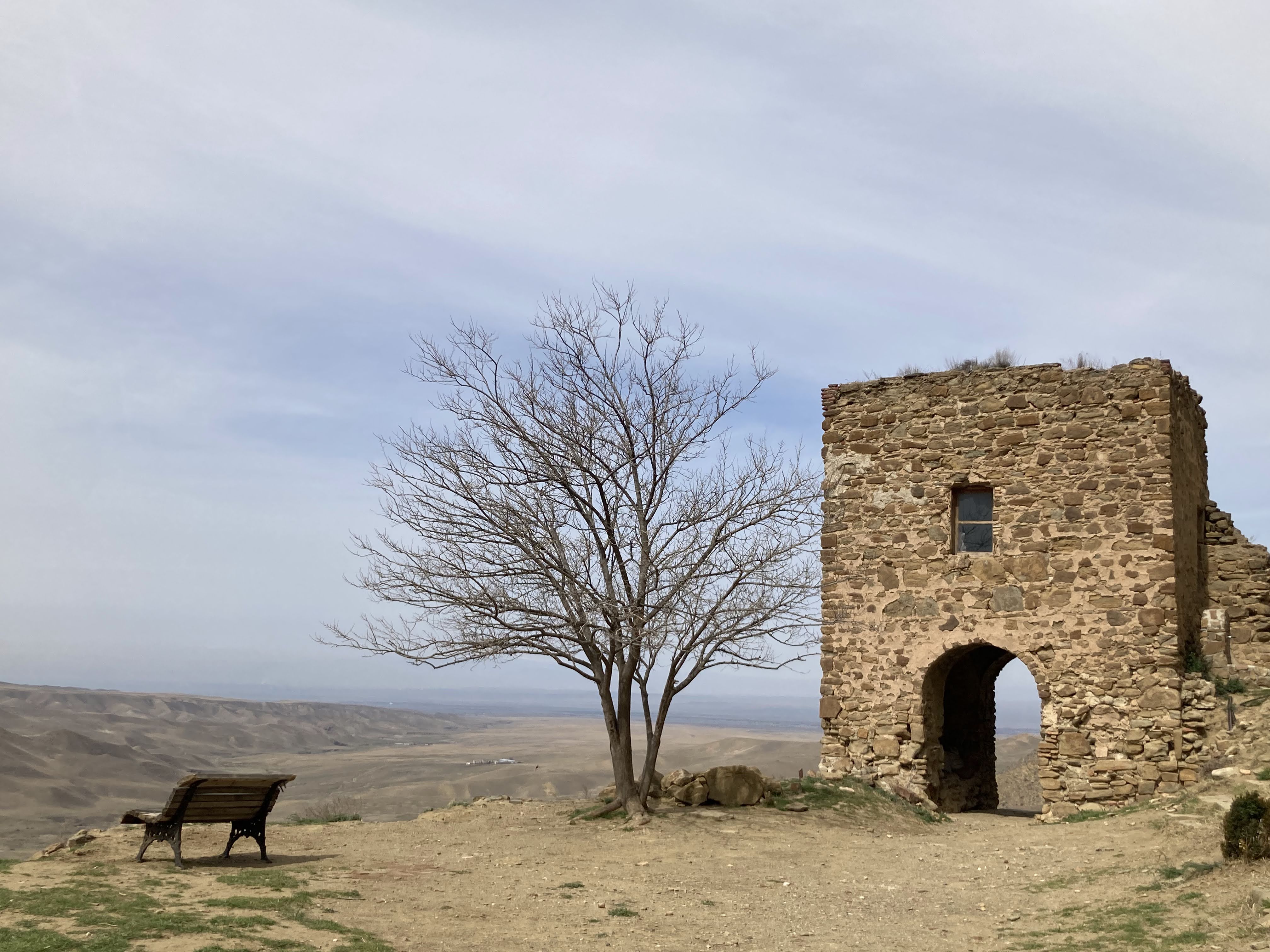

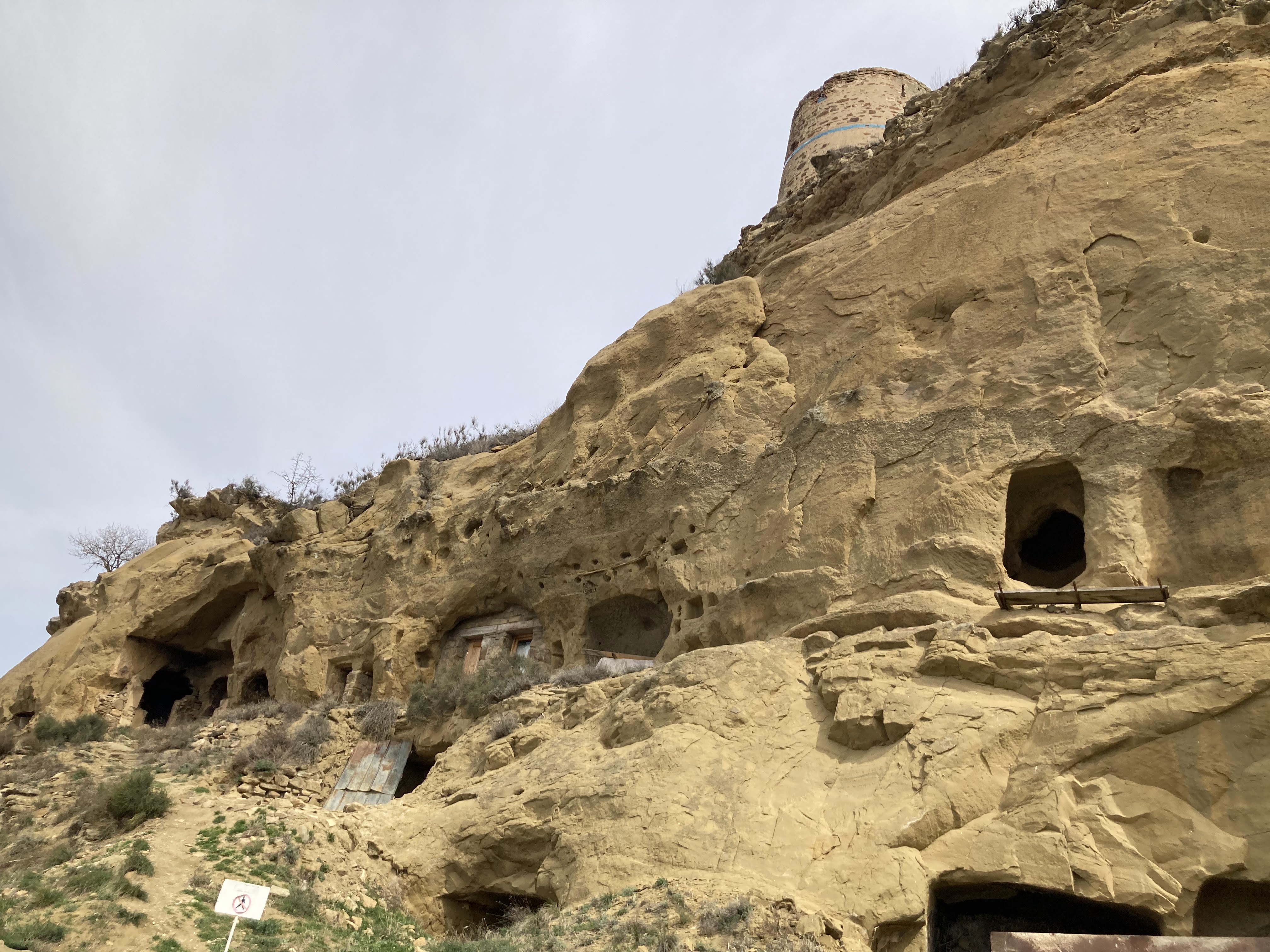

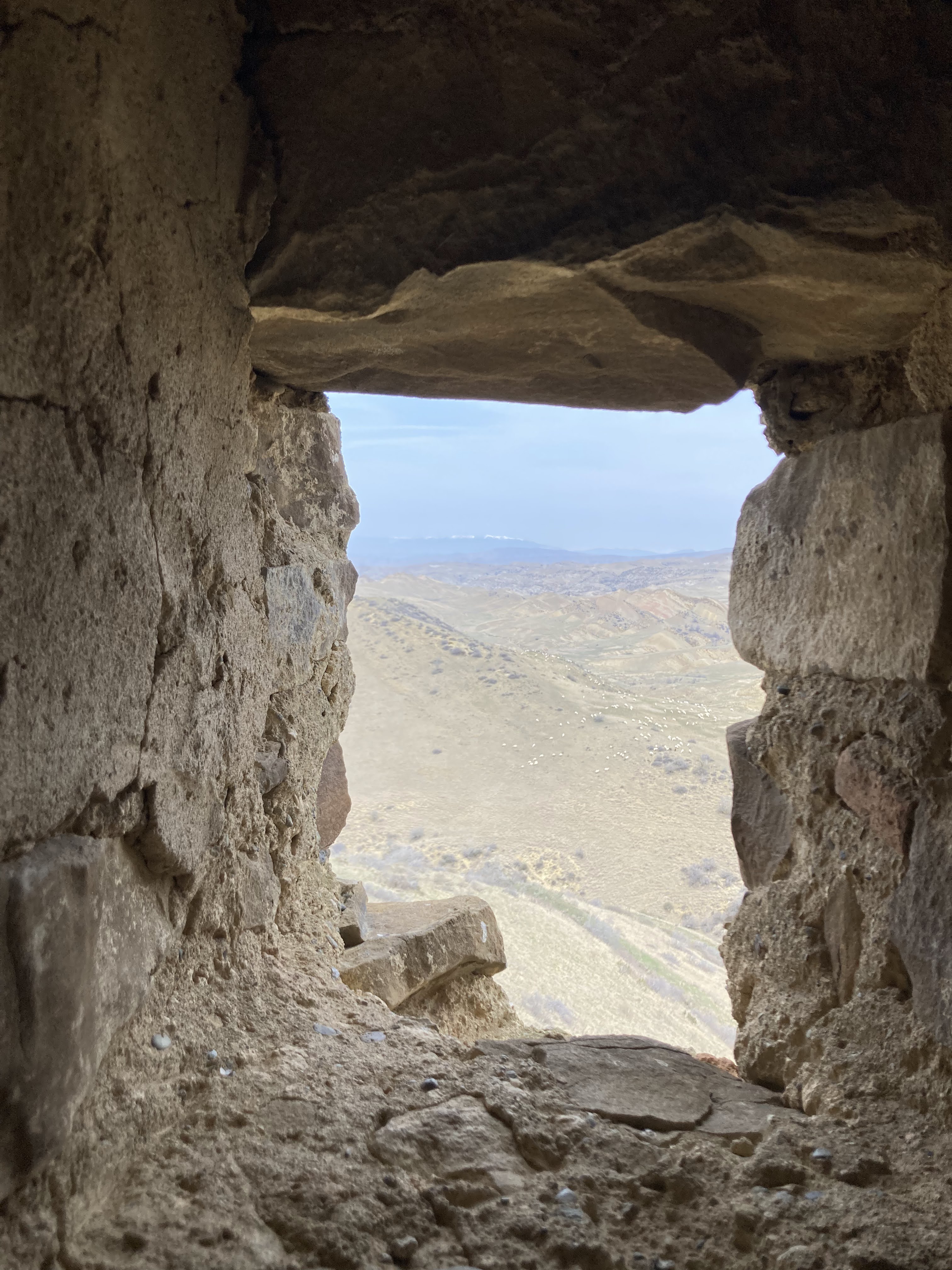

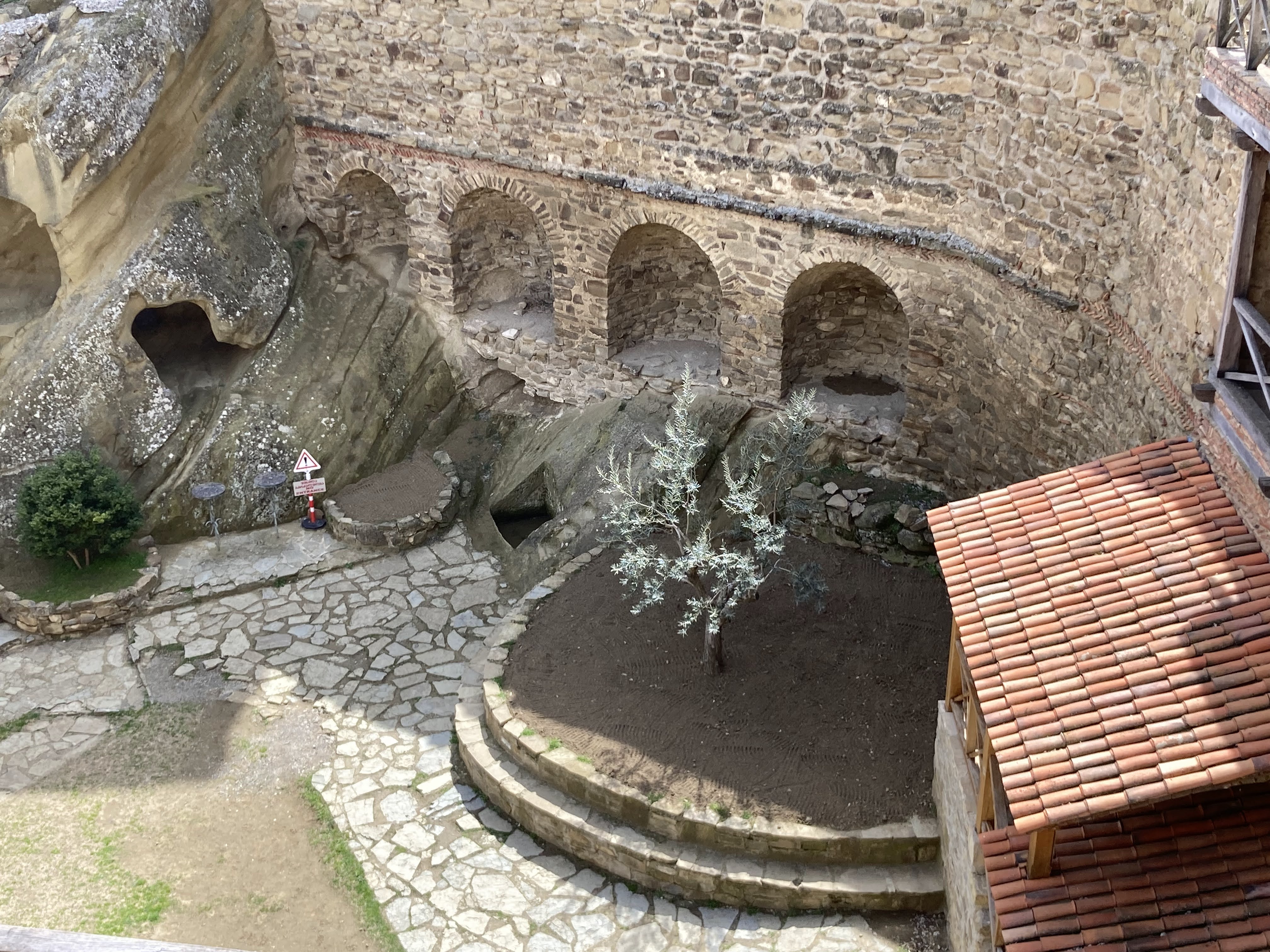
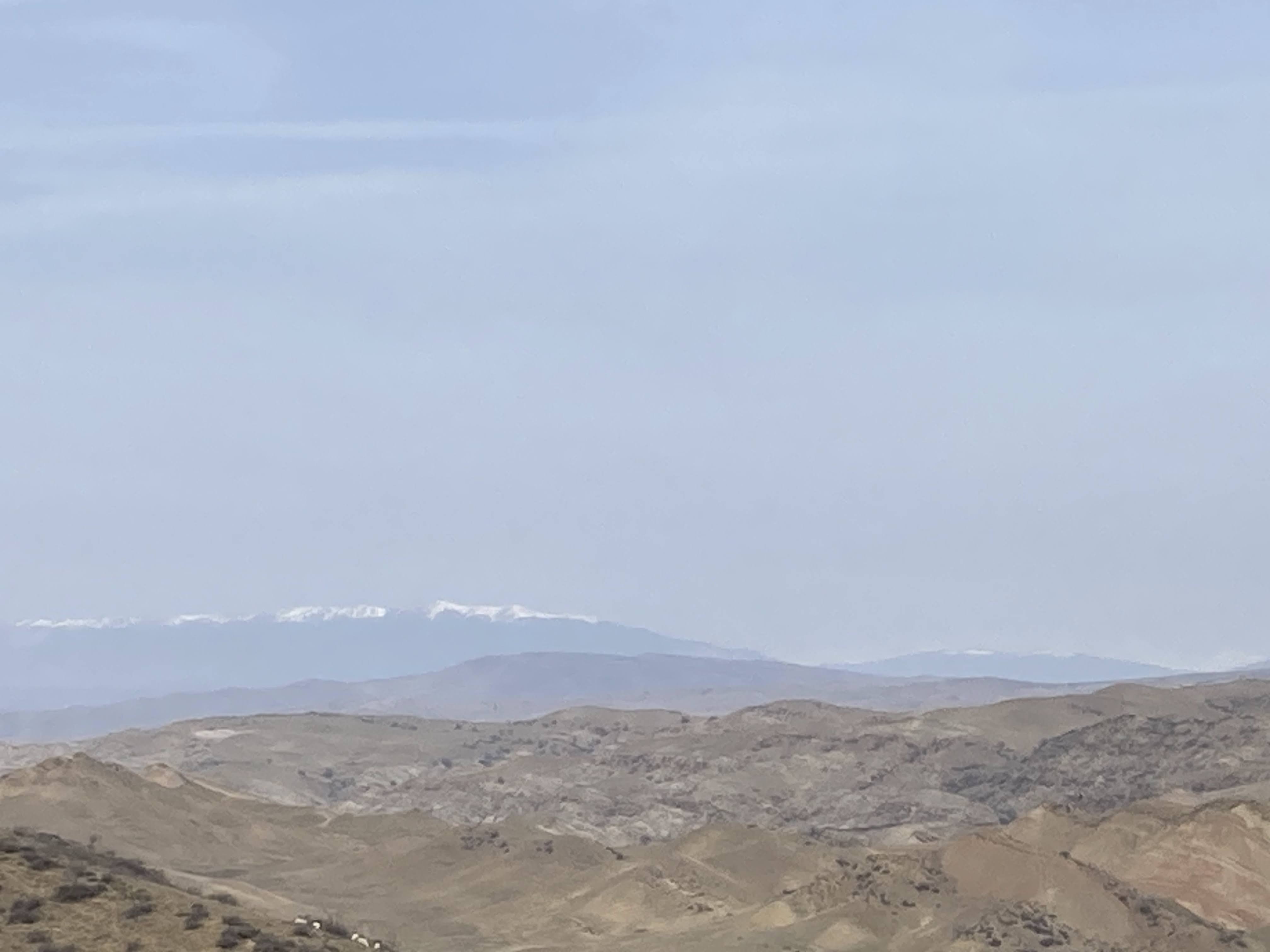
The monastery scrambles were completely worth the views and the looks at the monks living in seclusion, if not solitude. The dogs (The two good dogs in the yard) were a wonderful welcome (Even though one was constantly sniffing out my energy bars and trying to take it from my bag one way or other, he was super duper gentle)
Then I found the hole in the ground where lived a Hobbit. That was a little bit of magic in the middle of the steppes.
Wine country for non-drinkers

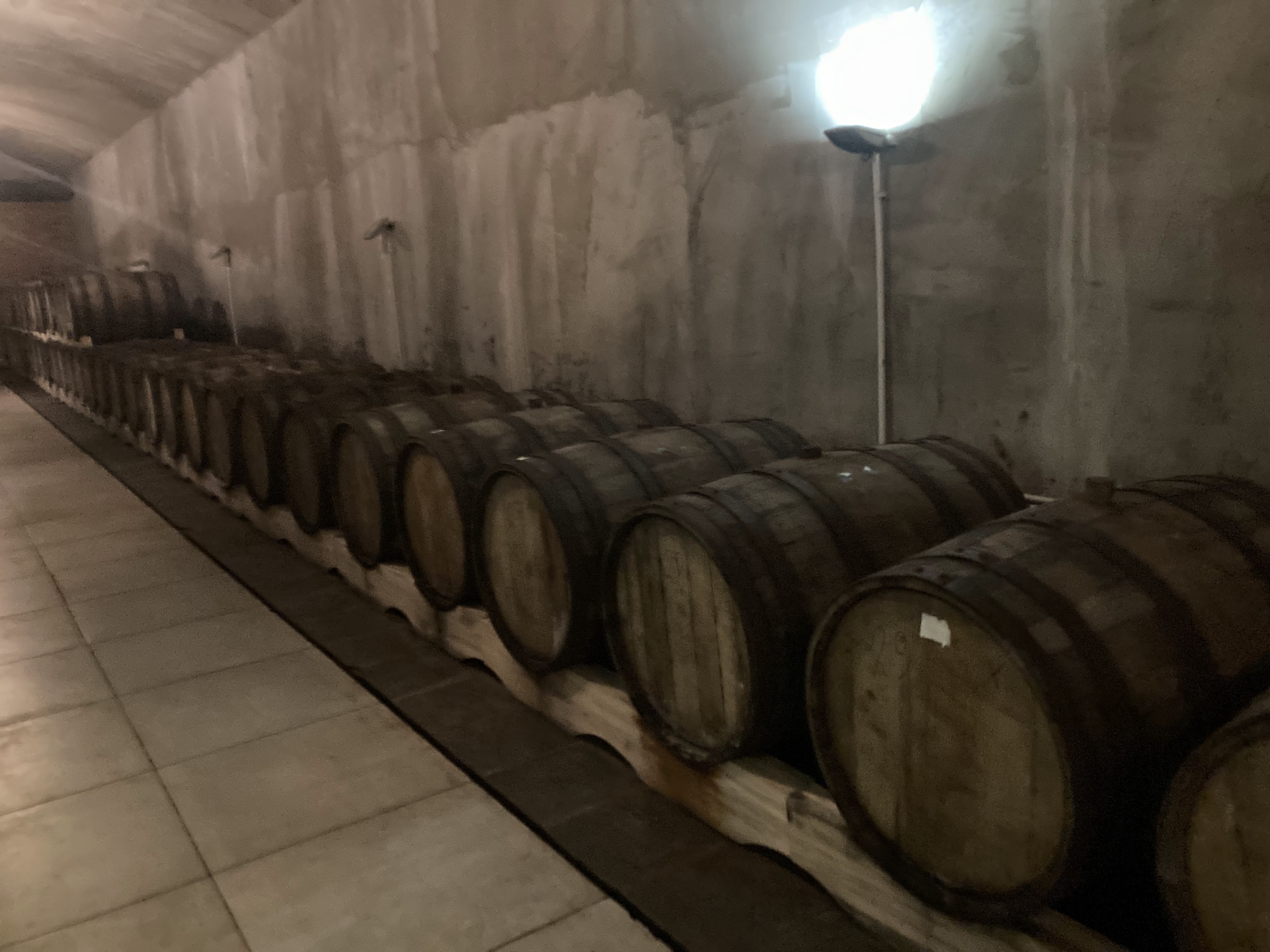

Kakheti, the wine country beckoned next. For a non-drinker, to go on a wine tour might sound odd but I wanted to understand the wine culture of this country with the tag of being the oldest wine growing region on the planet. I’d also read this book called For the love of wine by Alice Feiring, and had a lowdown on the struggles of the vintners, the history, the organic vs. natural vs. neither conversations, the process including making wines in kvevris, ageing them, chacha and other derivatives etc.
I had signed up for what was one of the big indulgences of this trip with Eat This! Tours . Our driver and guide Vazha (Pronounced not like a Tamilian would, which caused me no end of trouble) We collected four young Danes, then a couple – one Brit and his partner, Estonian.
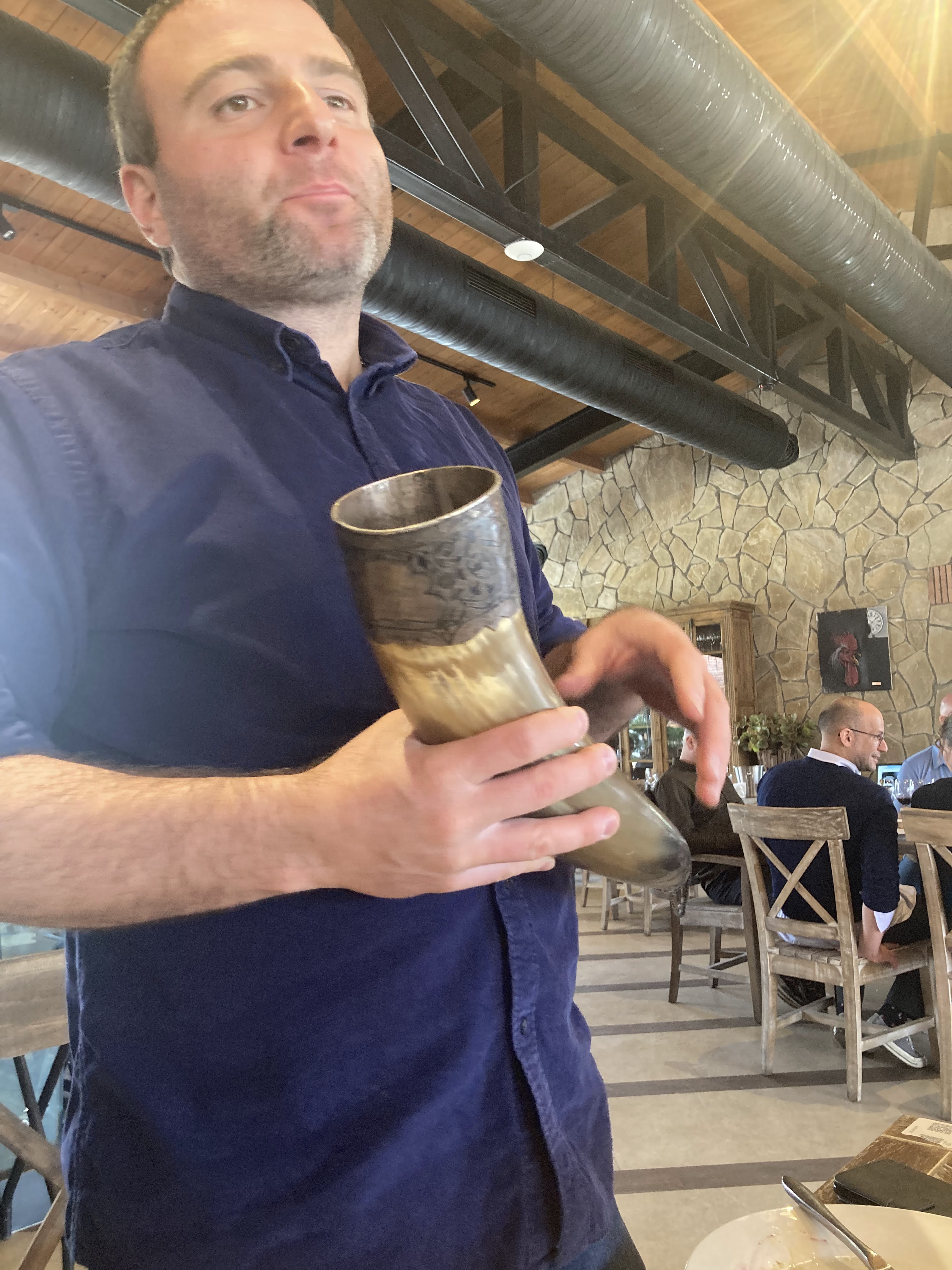
Vazha said that the average Georgian man drinks 2-3 bottles of wine at a traditional dinner and how they aren’t good at ageing wines except for special occasions, such as his grandfather ageing a qvevri for his wedding. He also showed us the drinking horn and spoke about how hosts passed on the full horns to men who were up for the challenge, then they have to chug it down and the host empties it on top of his own head to see if anything is left.
We also spoke about how the wine tradition almost died during Soviet times when focus was on quantity of production of cheap wines for the masses and how wild grapes growing on hillsides and many many families hiding their grapes from the Soviets for generations saved all the varietals.
This tour was not like the regular winery visits. The first one was a medium sized, family owned winery called Giuaani Wines in Manavi. They produce some 30,000 bottles a year and run the place as a resort too. They did some fabulous Georgian food + wine pairings. Even a wine philistine like me was charmed and understood the point of the pairings.


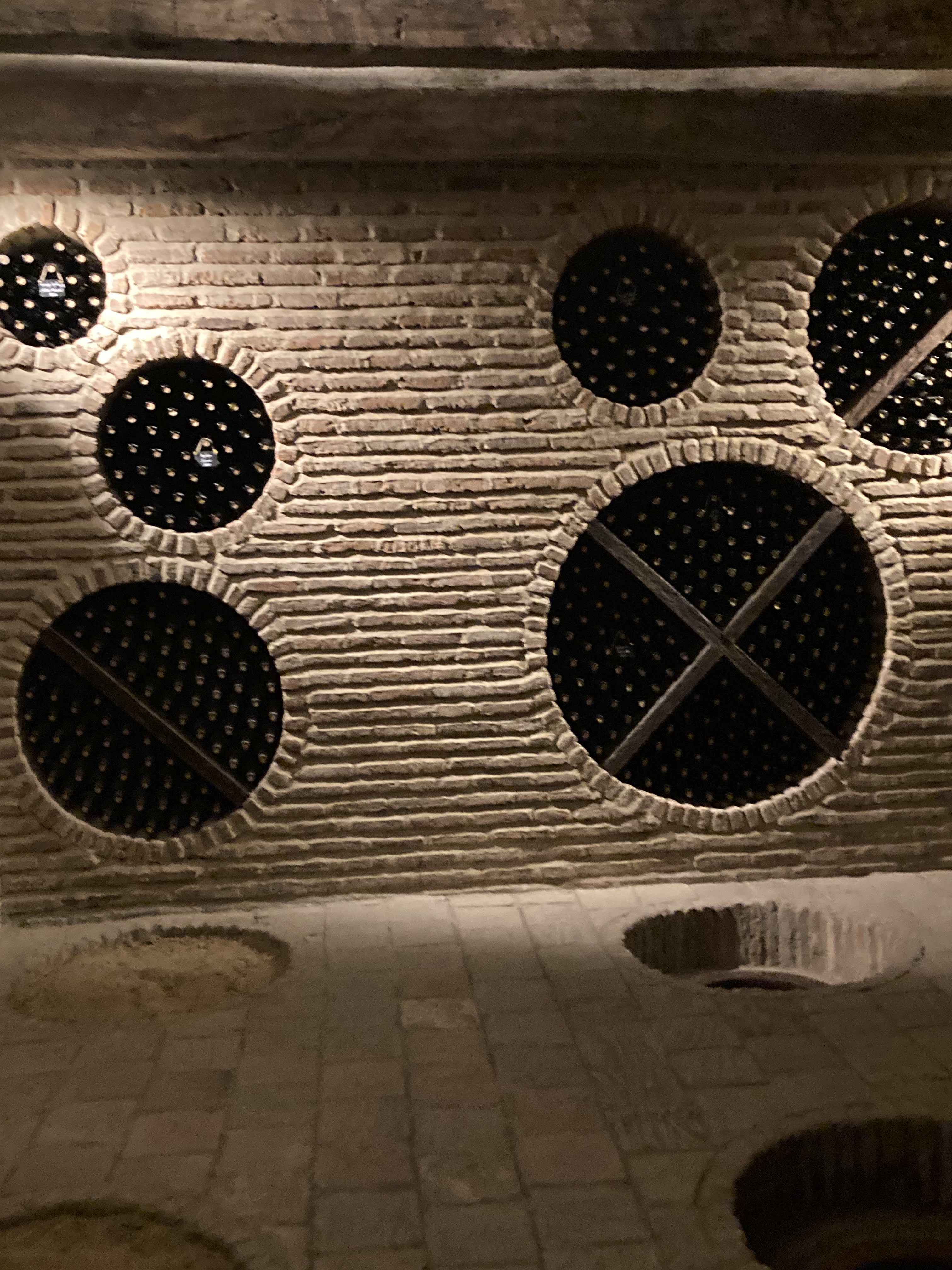
The second winery, at 3,000 wines annually was Kerovani winery that produces 3000 wines a year. Archil Natsvlishvli, the owner gave us the tour and we tried the wines under the expert guidance of his uncle. With an unerring eye, Archil brought down appropriate books for us at the table, to look through while there. I got one called Tasting Georgia that piqued my interest enough to add to my library.
For a good Caucasus

Next stop, the touristy village of Signaghi, which Vazha avoided most of by setting off at a fast clip to the Signaghi wall built in the 1700s be King Erekle the II to ward off Dagestani invaders from yonder up those mountains.
The supra
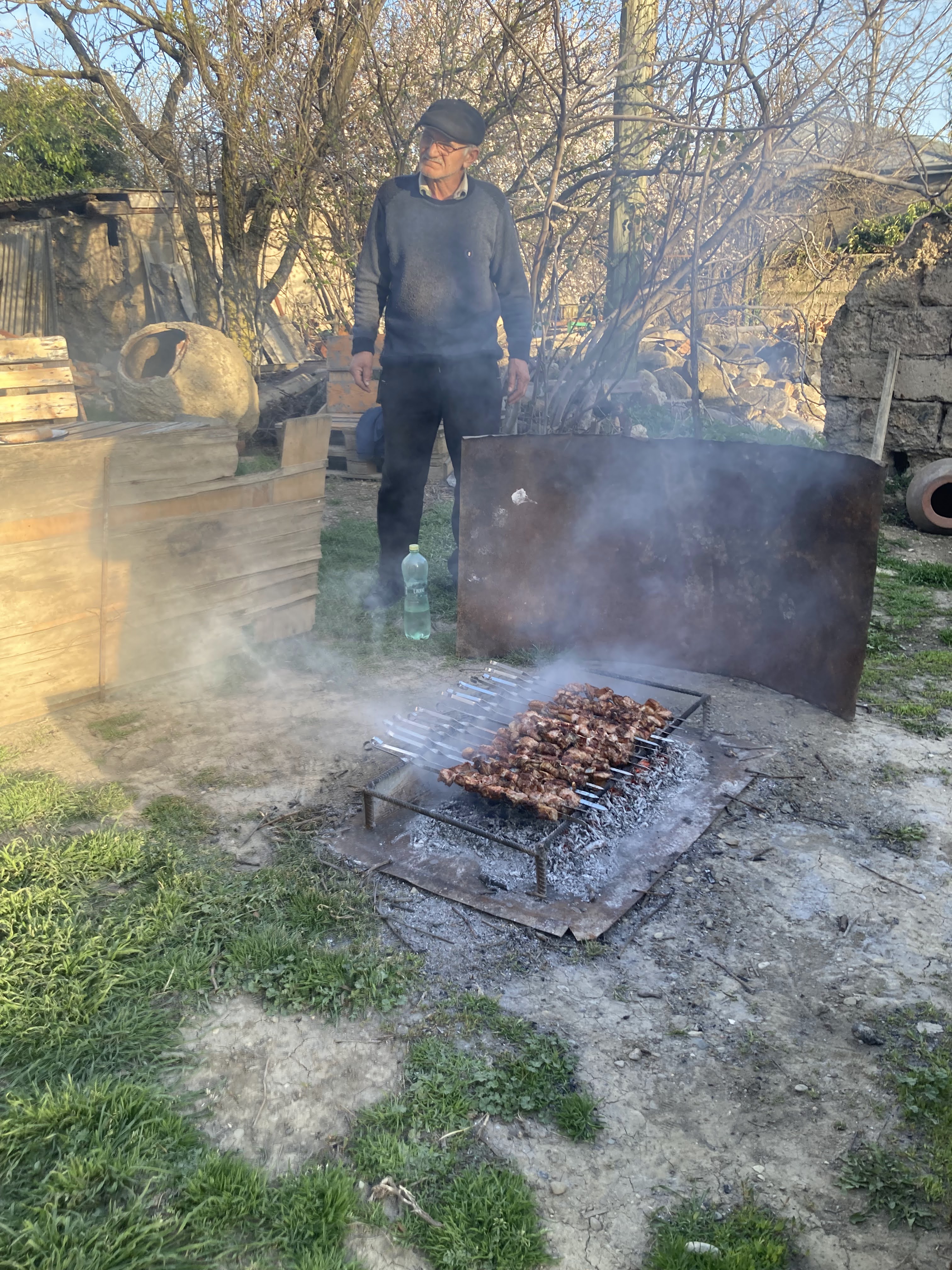
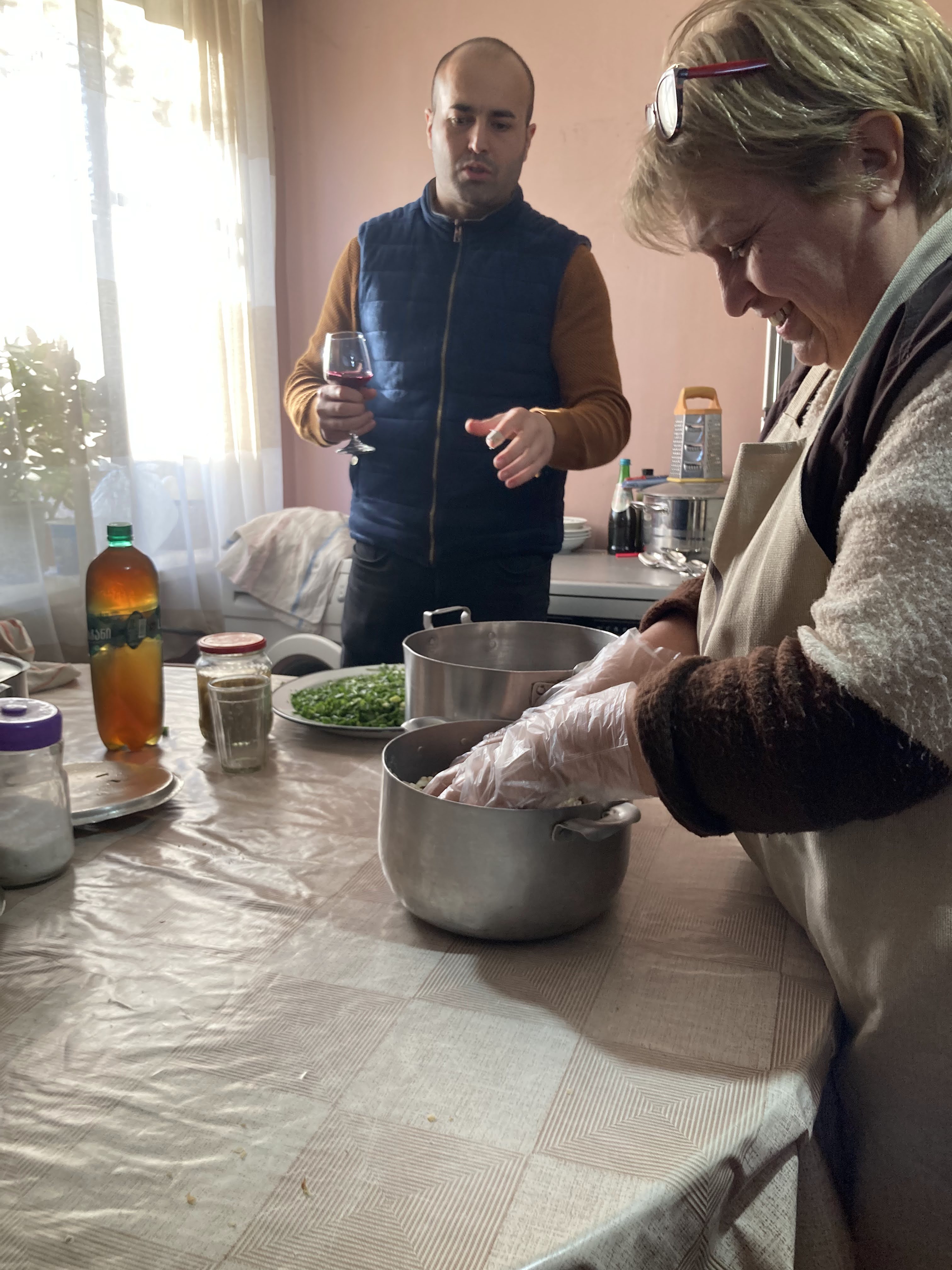

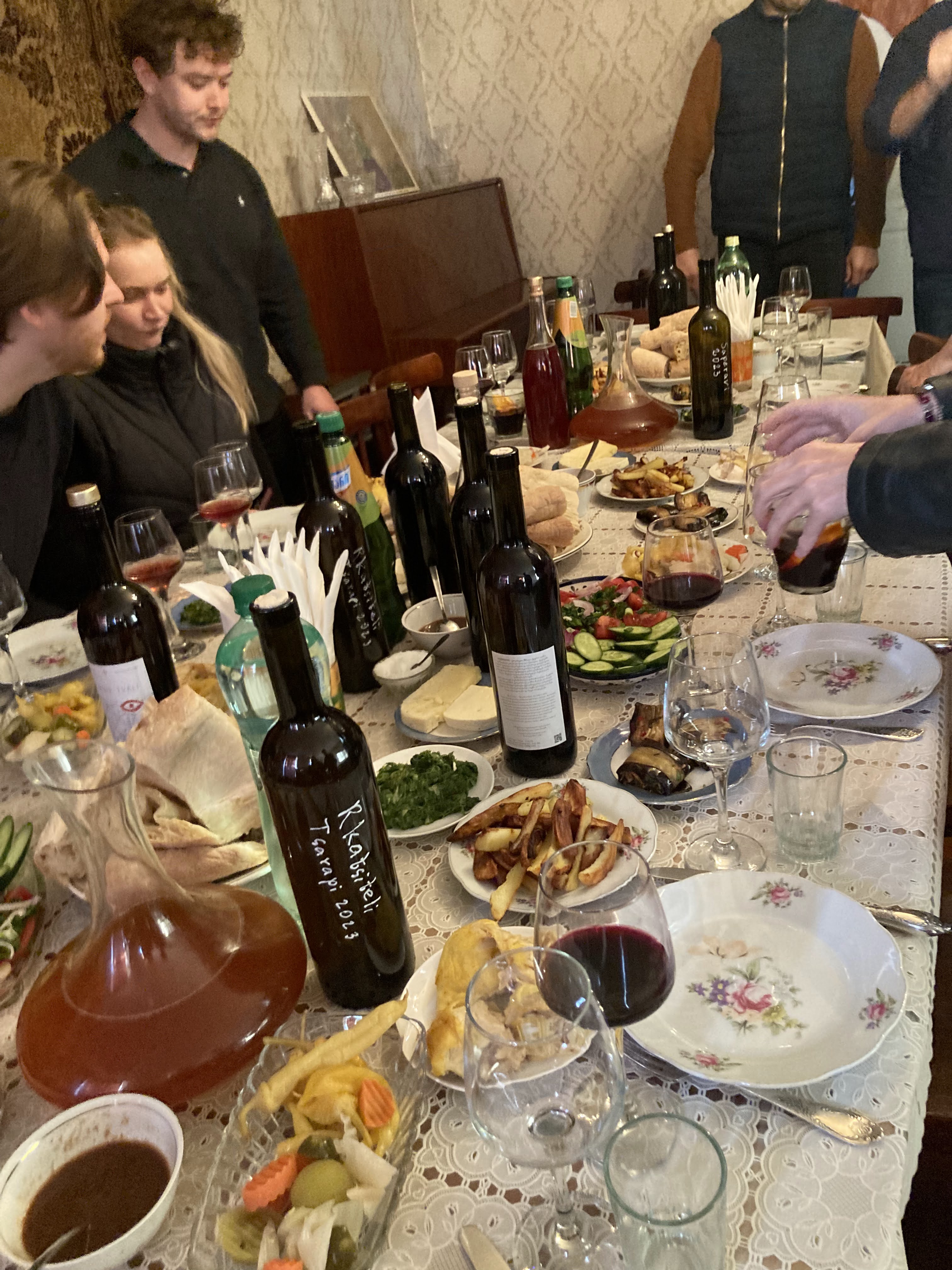

As daylight dimmed, we headed to the home of Bacho, who runs Burjanadze cellar, that produces about a 1000 bottles a year but these are wines. you can only buy at his winery and nowhere else. His father was getting some pork barbecued on dried grape vines. His mother was making chakapuli (veal with tarragon) and insisted on showing us how.
In a traditional supra, the toastmaster or tamada raises various toasts and generally discourages small talk so the table talks to each other. It took some effort and doing but Bacho was able to get a sense of camaraderie going. His dad who used to run a music school gave the ivories the tickling of their lifetime, while his grandmum, aged 88 and he joined in with strong voices, into many polyphonic songs, followed by anthems of his dad’s youth – a bit of Pink Floyd and a bit of Chuck Berry.
Bacho said, interestingly, that there is no drinking to get drunk in traditional Georgian setups. You drink as much as you can hold. You are going to others houses, so there will be no bad behaviour. You drink, you quietly walk back home after your polite goodbyes. That sounded very charming to me.
It gave me the chance to understand the ways and values of community up close, ask questions of Bacho and his dad. And also raise a toast to friends, the family we make, who trade in laughter. There I was, being at home with strangers and inviting them into my brand of warmth
To face unafraid all the plans that we’ve made



Snowy times ahead, with another Gotrip cab ride with the very professional Irakli, I headed towards the Georgian Military Highway and all its joys, and on, to the ski slopes of Gudauri. I commented to Irakli about how amazing that in two hours from heart of town, we can be amid snow and the same trip would take me 24 hours in my country. He was apologetic about how compact his country is and I had to explain that this is a rare treat, and how I love it.

I couldn’t shake off wondering how the hotel in Gudauri would be. Once I got there and checked in, all worries were laid to rest. Tina and Amiran, my hosts were very kind, very warm as we communicated using Google translate. Tina said how her daughter knows English but since this is the end of the season, she’s gone back home to Tbilisi. Amiran would drop me to the slopes with an enthusiastic “Let’s goooo” that reminded me of Afsha. He encouraged me to learn to ski too.


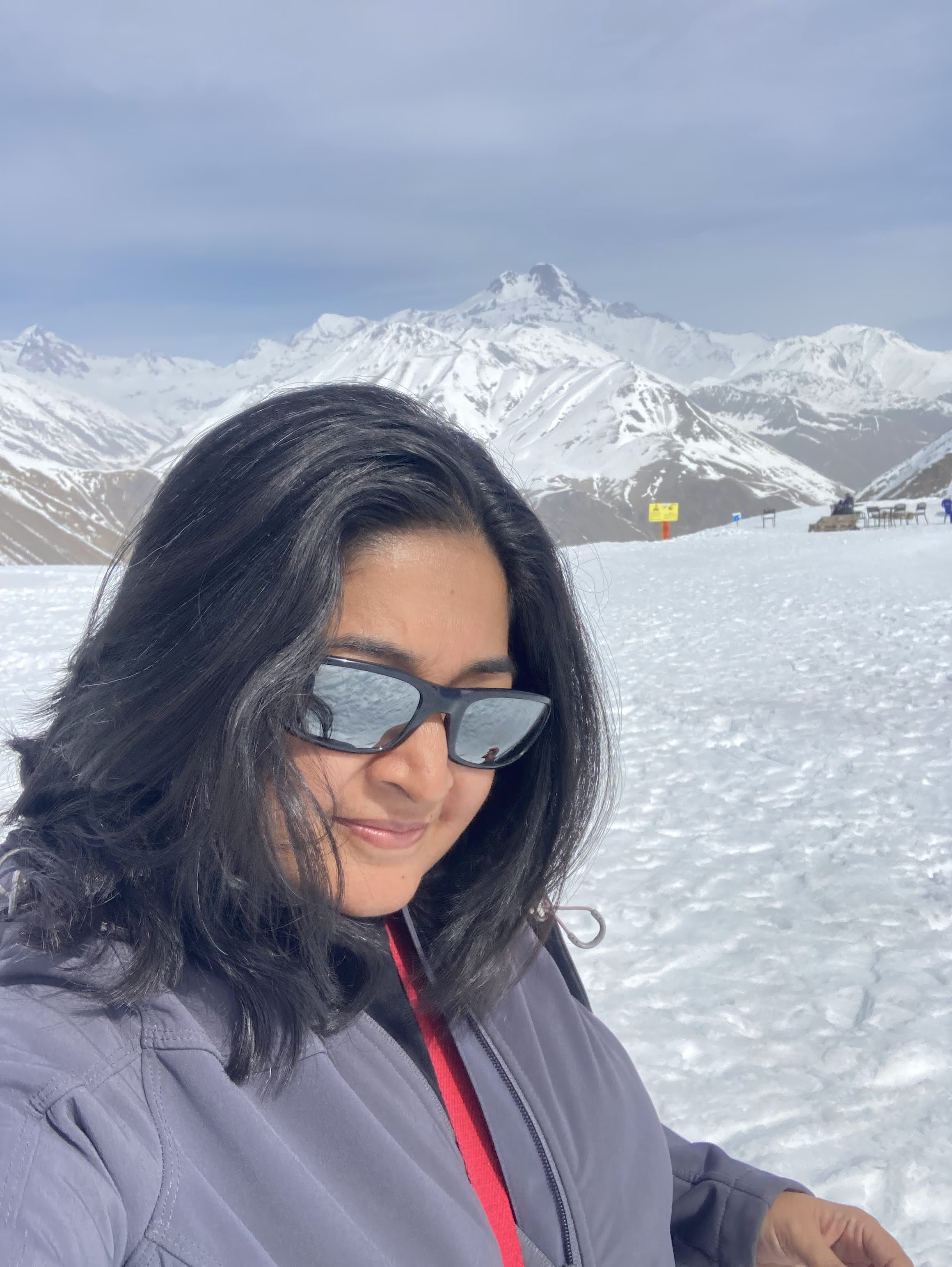
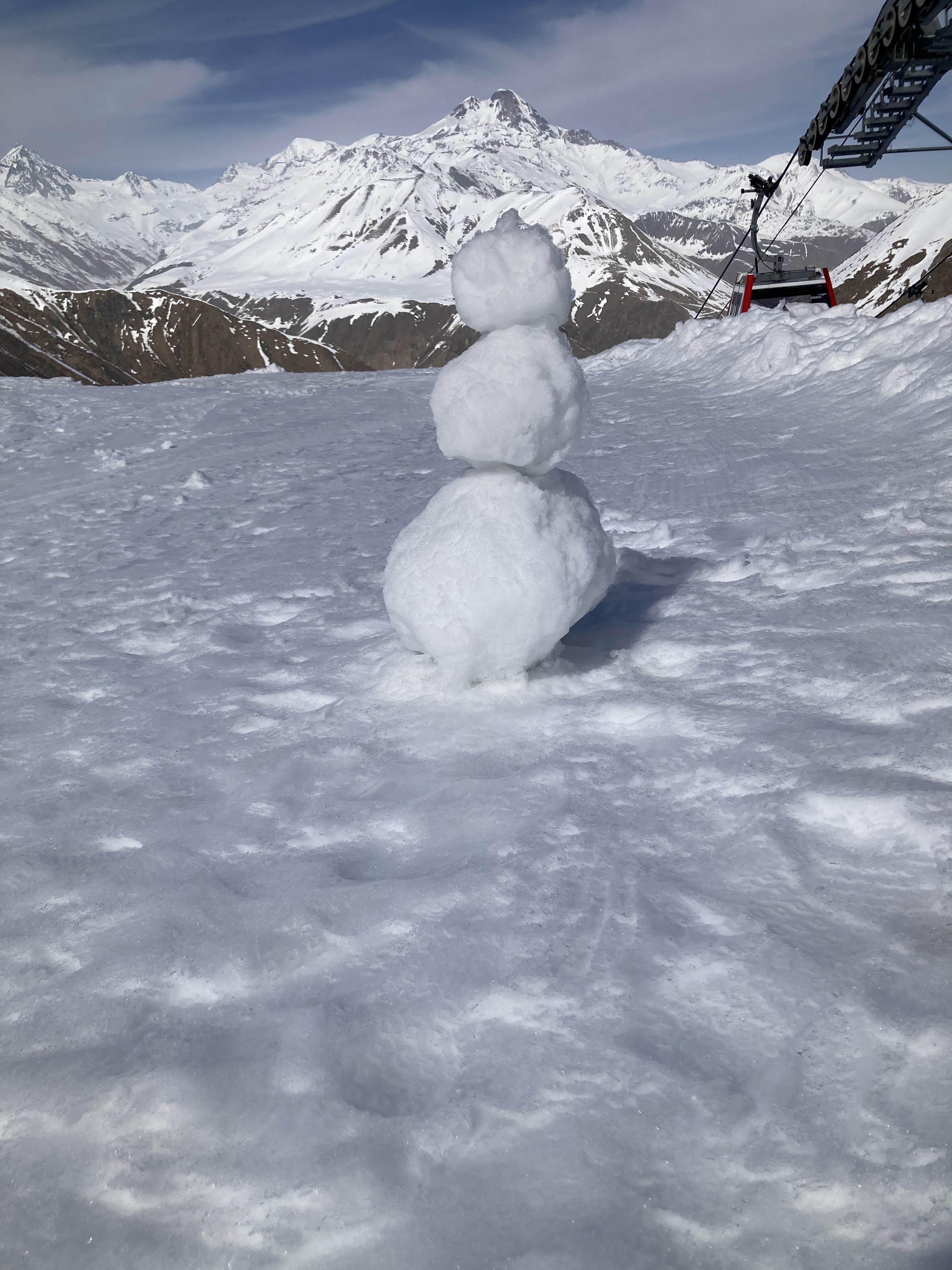
I was increasing risky behaviour gradually. On the first day, I hung about by the slopes, watched the entire operation, and signed up with Ilya to teach me. He confidently said with a laugh, if you fall more than three times, I’ll give you half the money back. After the second fall in two minutes, he was breaking my many subsequent falls and feeling bad for him, I said please don’t give me the money back, just let me fall. Turns out the money thing was a joke I didn’t get, but falling on the snow is still hard on the butt. So, after about 280 falls, I walked away with no skiing skills to speak of.
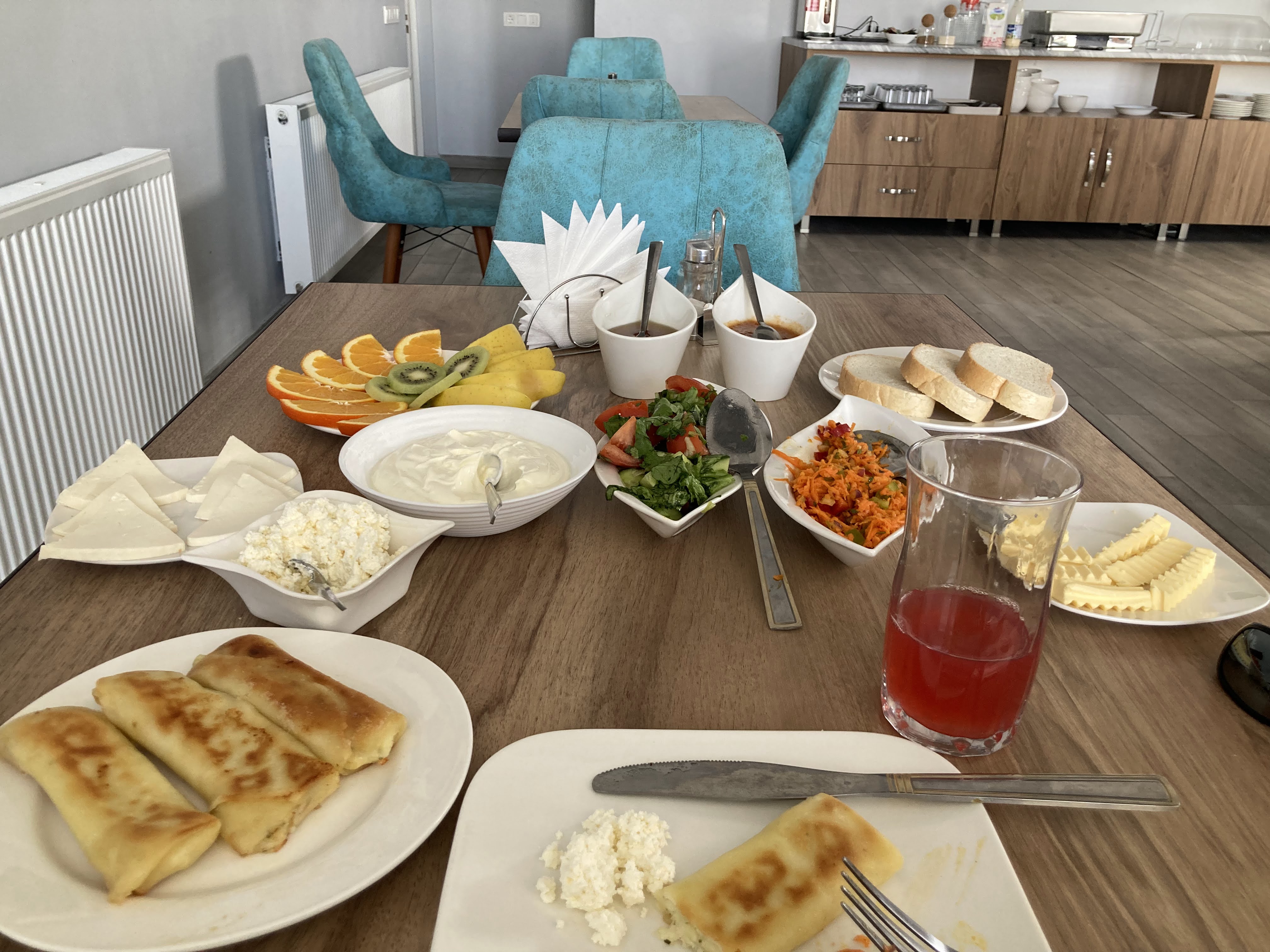
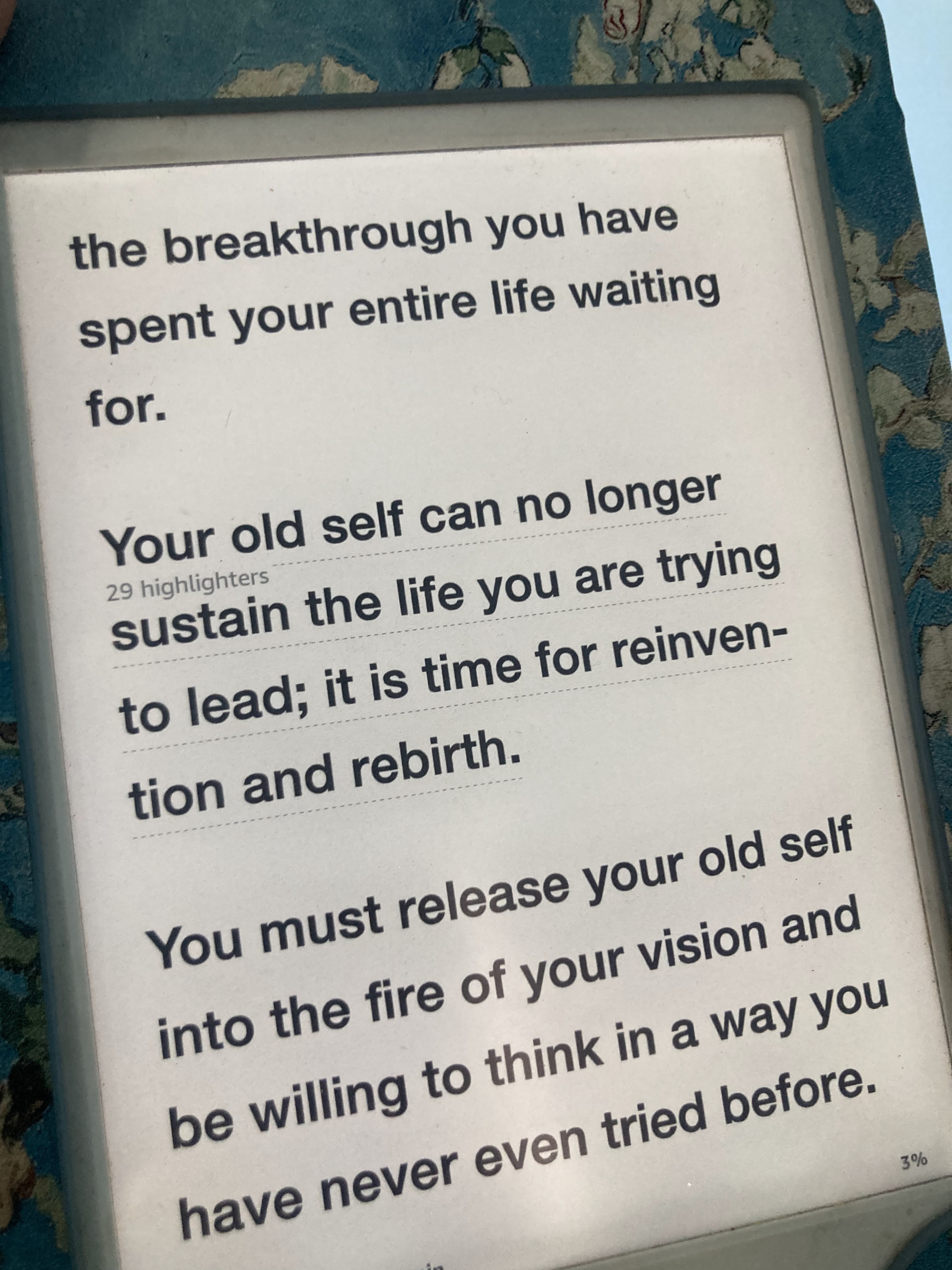
I was also reading very apposite stuff about self-sabotage and women in middle-age finding their personal power. It really set the tone for going bravely where I had not gone before.
On the next day, after a nice brekker, I took the daypass for the gondola to Kobi and back. Kobi is about 250km from Gudauri, but the cable car goes through the mountains and gets you there in under an hour. This was me going off to a tiny town known for non-regulated cabs with exorbitant fares. At Kobi, the solitary gent present offered to ferry me for a king’s ransom. We haggled and made that into a game and once I laughed, he laughed, we set off. In my honour, he even played some English rap.
There was no traffic on the roads and the few hamlets in between were quiet. For city born and bred me in the most populous part of the planet, this was scary, to put it mildly. Besides a photo of the number plate sent hastily to my friend back home and my live location, I had no insurance. I reminded myself that the world was not out to get me, that people are not mean and the Georgian men I’ve interacted with so far have all been perfectly nice. Sure enough, the trip was uneventful. At Kazbegi, he shifted me to an old-timer who offered to get me to Gergeti Trinity church; and after an ATM stop, he passed on the task to a car with snow tyres. The young man here said we’d get to the top of the mountain, to the church – which was postage stamp sized from where we could see – in ten minutes. I was sure the young man didn’t understand the idea of time – but in 9 minutes and counting there were were, at the church complex. There I was, testing and resting in my power.
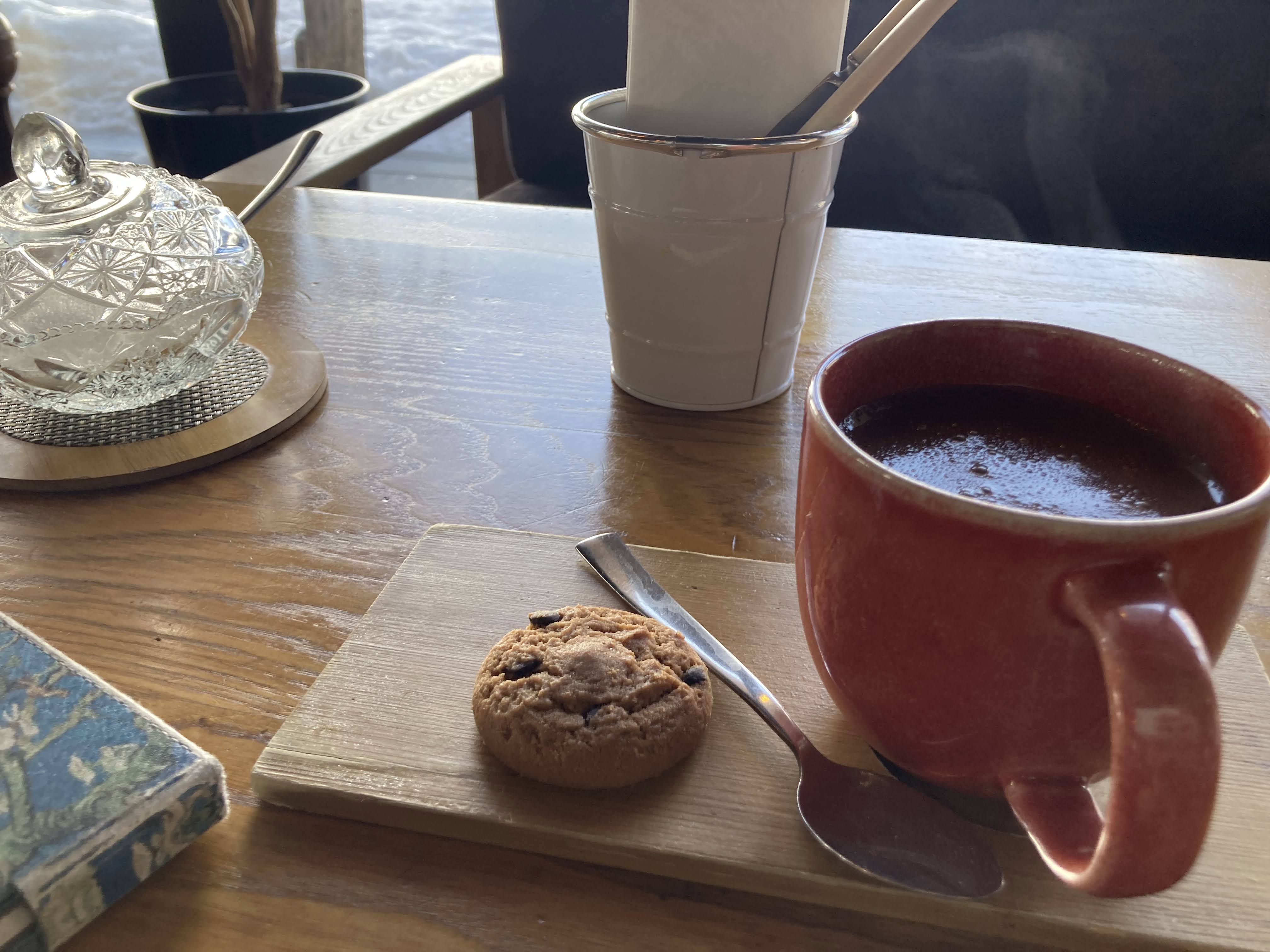
The views up close of Mt. Kazbeg were stunning, and I was ready to head back. I asked the young man who drove me there, Davit, if he could get me to Rooms Hotel, wait and drop me off to the Kobi gondola. He said he lives a minute away, so can get his lunch while I got mine, and for me to call him when I was ready. So, I raised a toast to Afsha who told me to have a hot chocolate with views of Mt. Kazbeg, and had lunch there, chilled with a book and in an hour, Davit collected me, warmed up and spoke about life at Kazbegi, his upcoming BnB and this time, as we got to Kobi uneventfully, I didn’t feel any of the concern that rode with me on the way out. Apparently, thinking the world is okay is that easy. Huh. No obsessive checking maps, no churning tummy, no waiting to exhale. What is this chilled out life? There I was, being okay with the world and myself.
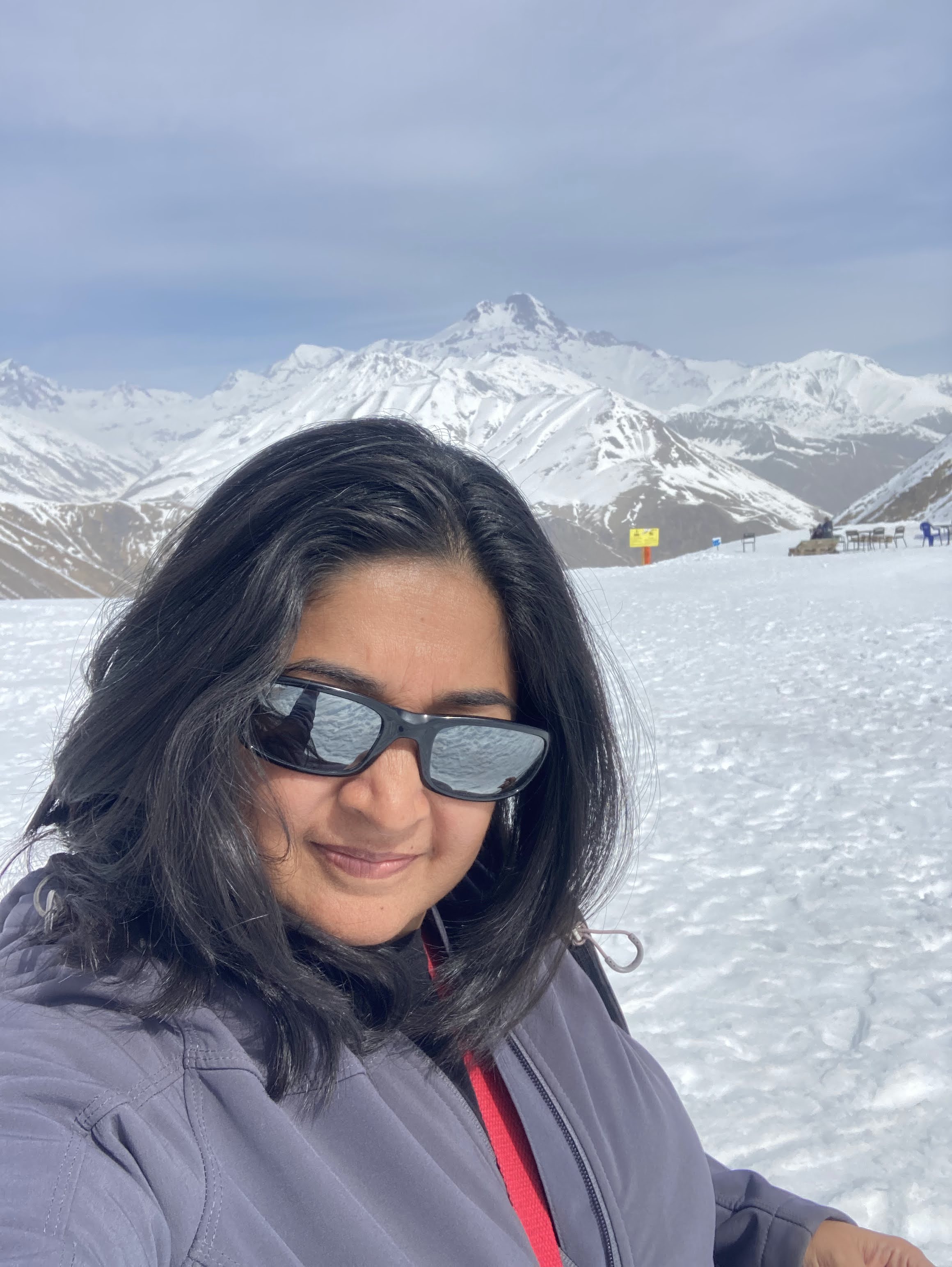


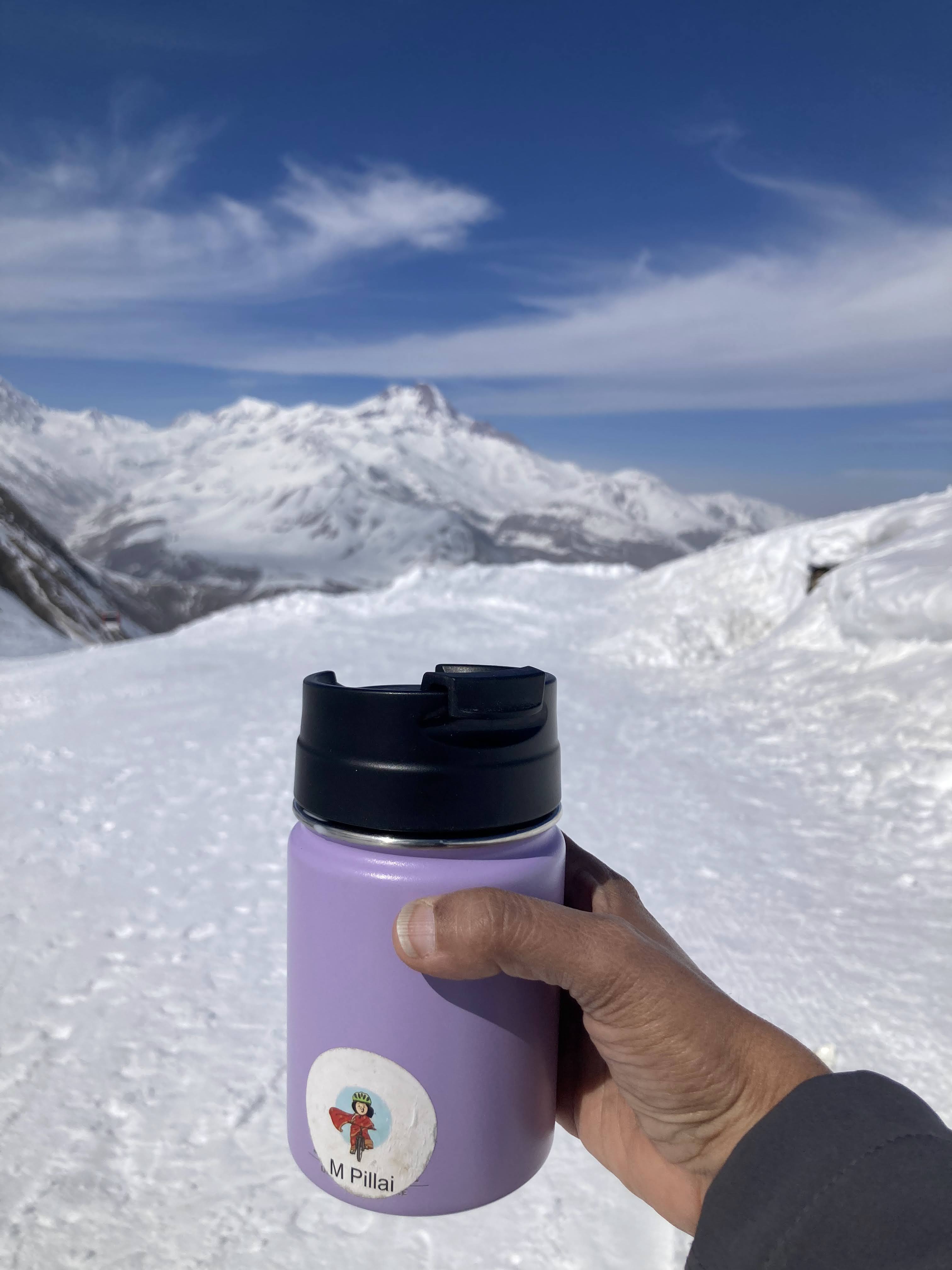
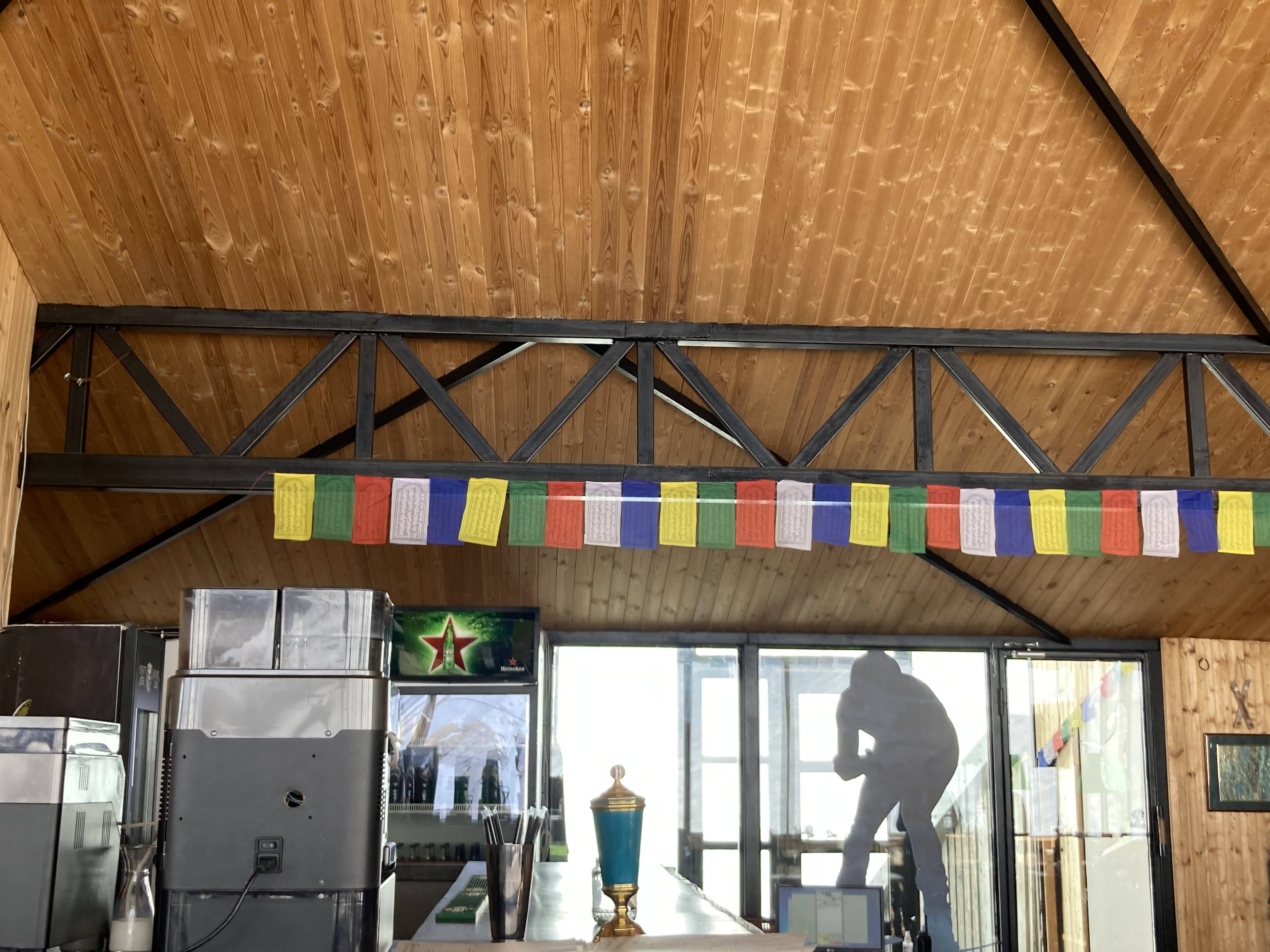
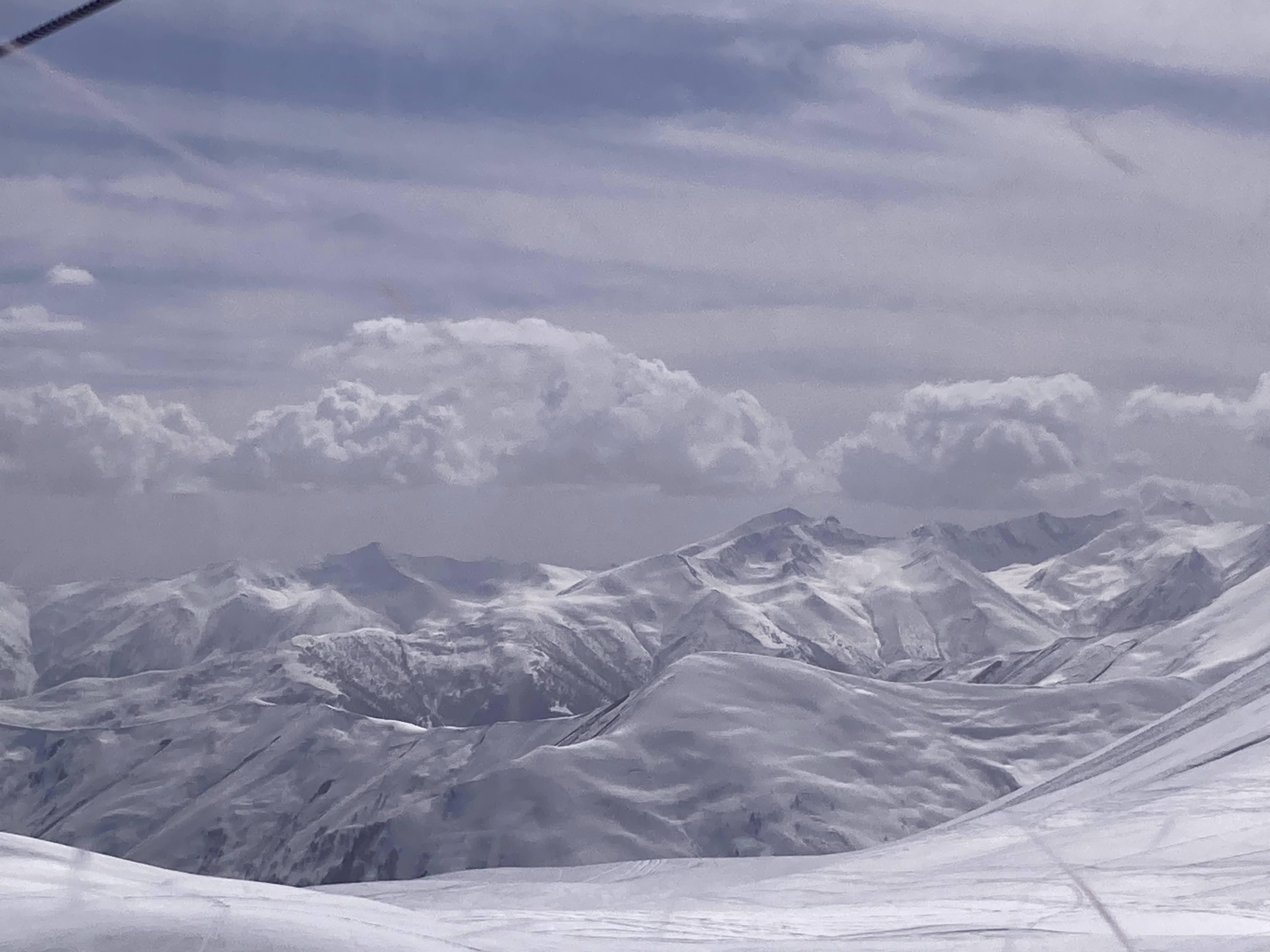
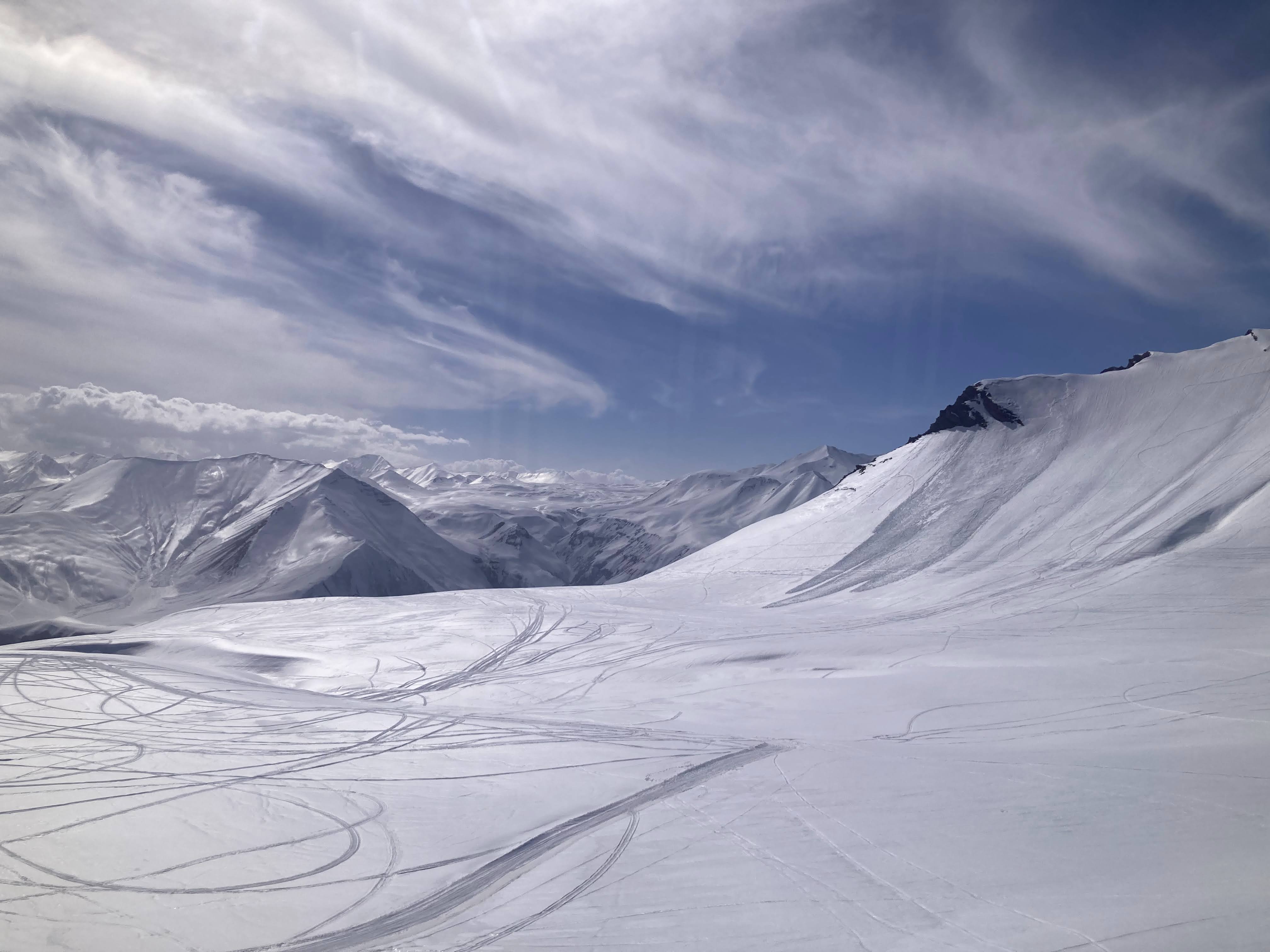
The gondola ride back was magical. I had set myself a task to go out into an unknown place, explore and return. Not that I haven’t done stuff like this before. I haven’;’t ever done it without being on full alert and anxious. What a difference! With that behind me, I was feeling positively light headed. So, I sang to myself in the gondola, took 9 million pictures of the snowy mountains and at the Truso station, I stopped and got myself a coffee to toast Mt. Kazbeg.
I was beginning to learn why I yearned to visit this place: everything I’d read spoke about warm people. They’re in the middle of a historically conflicted area and have seen their fair share of destruction and reconstruction. And yet, there is an easygoing sort of living in the moment behaviour that’s almost part of their makeup.
Some people are easy with their smiles or need just a Madloba (“Thanks” in Kartveli) like the lady at Pushkin Park’s visitor centre or the cheerful baristas or the chap selling tickets for the gondola; others need a little conversational push, like Irakli, Davit, Tina and Amiran, language no barrier. Yet others are positively chatty, partly because it’s their work and partly because they are so excited to tell you about themselves, like Ana and Zura and Vazha and Eka. Sure, the wine is a binding factor, as is the supra. I recalled an instance at the caravanserai where the lady in charge of the museum. She must’ve been in her 60s and was a little sullen. Then someone walked in and her face was bathed in smiles. The guy who walked in was of the same age category. They both exchanged some conversation, then he left, taking two others with him, and beckoning to her. She explained that it was her old friend and they always hang out at the restaurant opposite after work, get some wine together and then head home, and have dinner and wine with neighbours who are also friends. After work, she said, was time for friends. Everyone spoke of community. The younger city folks sometimes spoke despairingly about losing their community. Be it a community of two or twenty, that is what put a twinkle in their eyes and a spring in the Sakartvelo spirit.
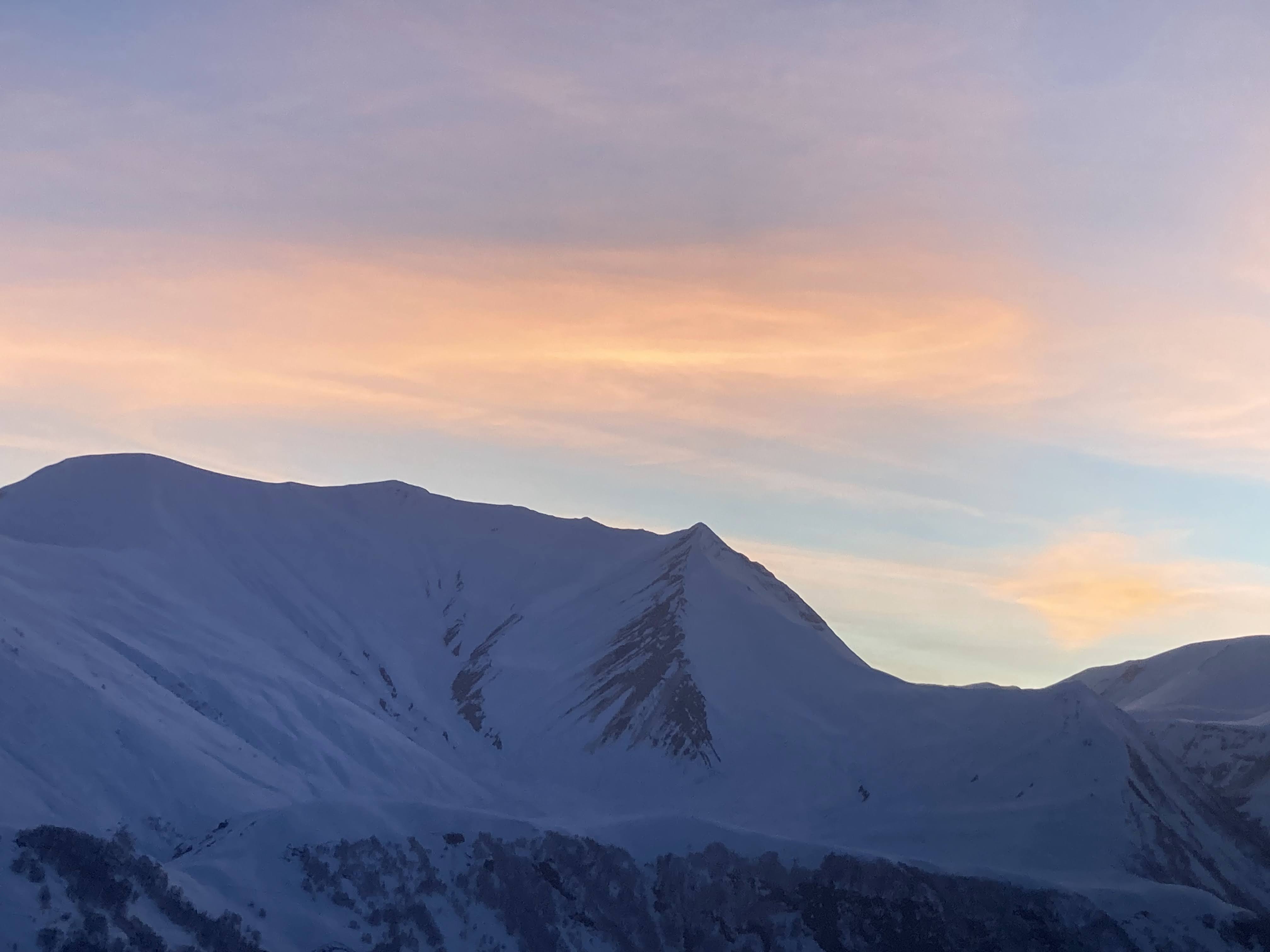
Back at Dandelion, I got one last magical sunset, and the next day, it was back to Tbilisi. This is one place where the story ends. Where I made happen the “I am okay”, (I am worth spending time attention and money on myself, am allowed dreams and adventures.) and “The world is okay” (The world is neither safe nor unsafe by itself, and I have the judgment to evaluate how to make it less unsafe for myself, to a degree and will choose to go into places where I can make that happen).
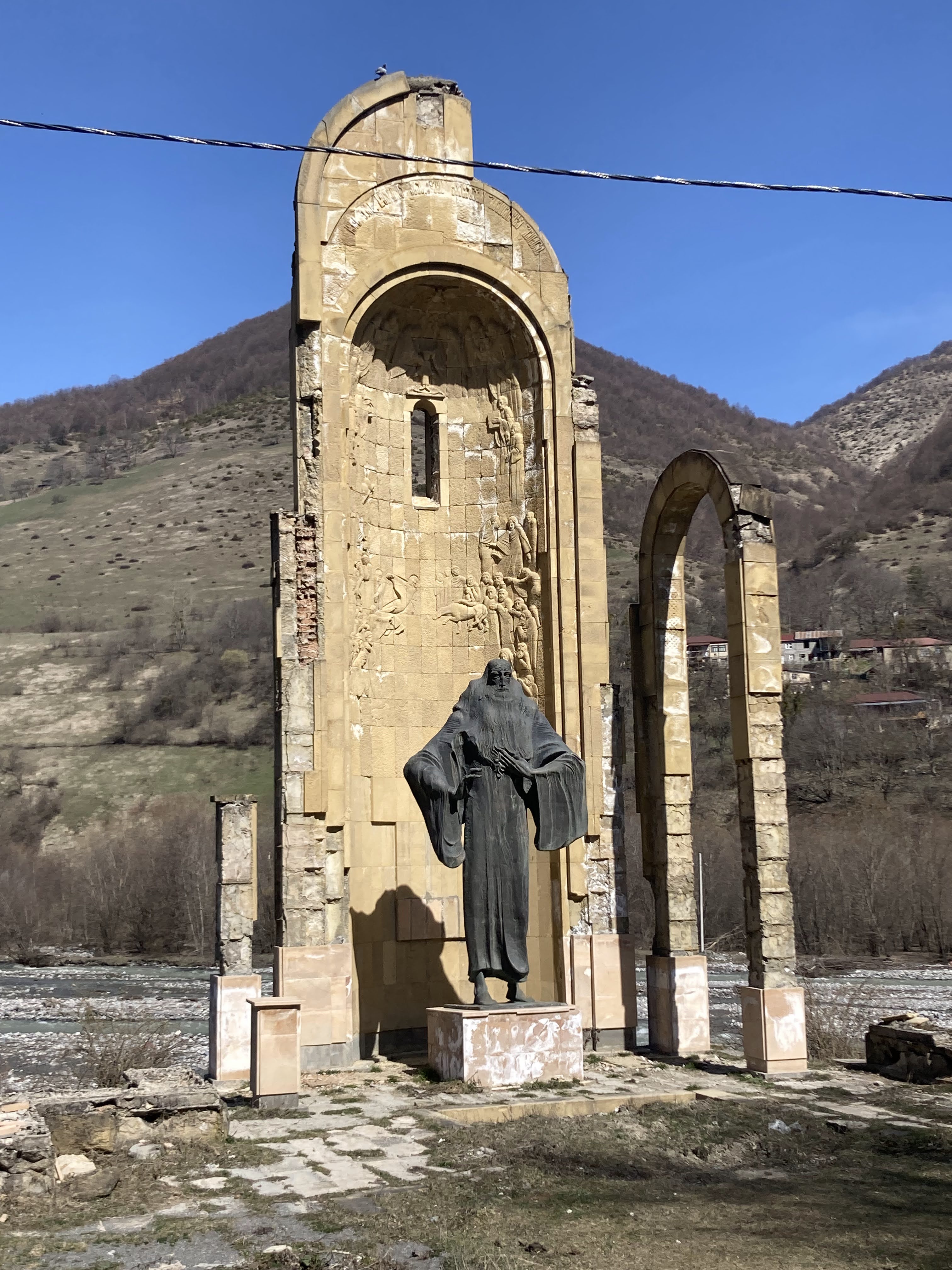
The ride back with Irakli was chattier, and I stopped at the haunting statue of Orbeliani and took some orange water from the Nadibani spring (The water which has minerals, turned orange overnight. Unfortunately, no pictures). Enjoying views of the the 300 Aargvelis – warriors who made a stand against Persian armies in the 1700s, the Ananuri fortress and Jvari monastery.
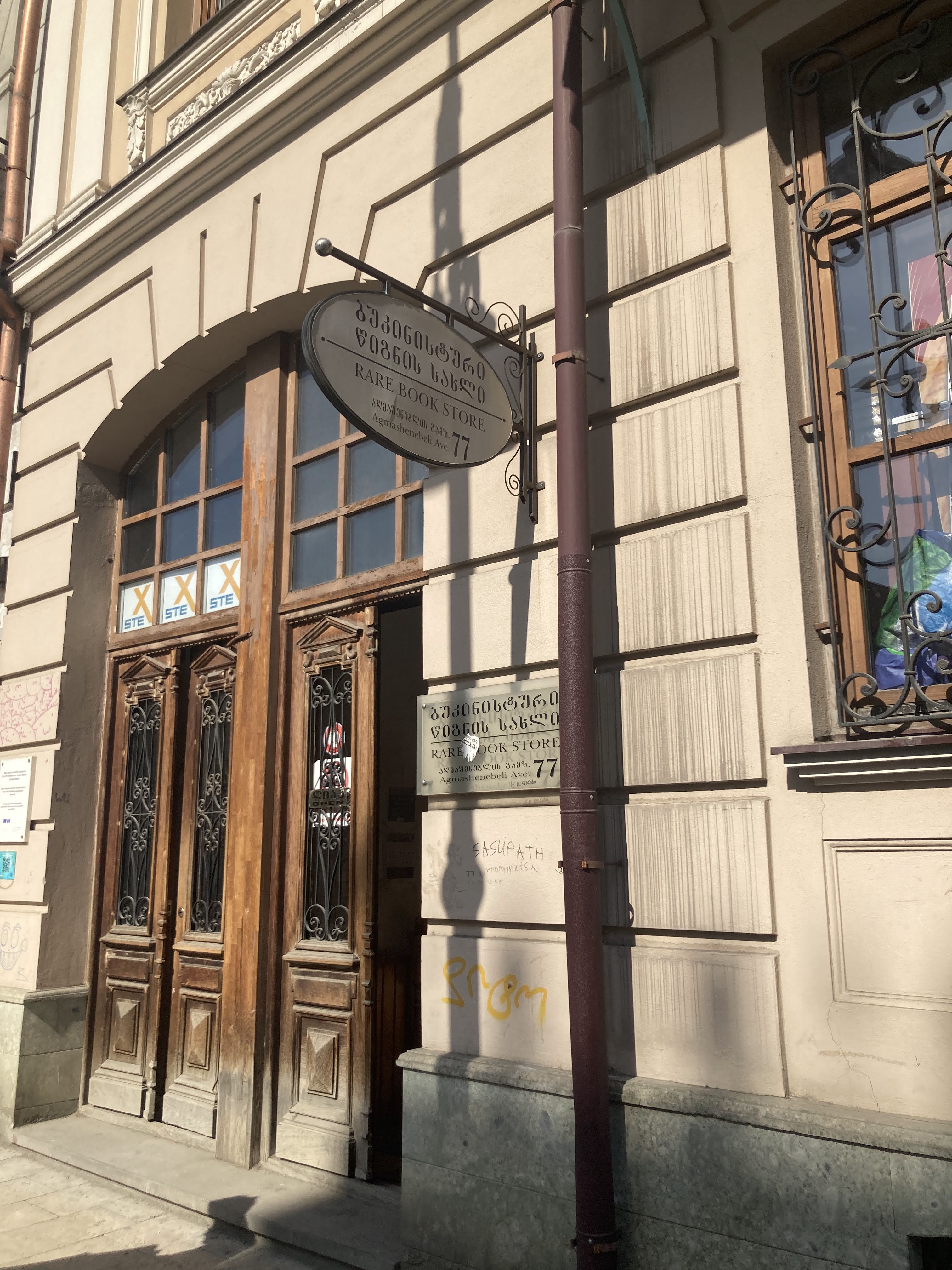
Back at Tbilisi and Fabrika. I stepped out to enjoy the hep Marjanishvili street. At this cute little place called Green Coffee, these young baristas upsold me their special and magical coffee and asked if I’d like to add a dash of love, luck or happiness. That, plus a rare book store drop in, plus a trip to the Dry Bridge market for flea market goodies and old Soviet medals and what have you, and I felt ready to turn my gaze homeward, and towards what’s next.


The last day there was uneventful, save for a trip to an unexpectedly nice wine cellar to buy some amber qvevri wines for folks back home.
The entire trip back, I kept thinking about how relatively easier it is to come back home than it is to go forth. The process is the same but there is something that made it feel easier. I know that to feel excited to go back, even when there isn’t a space to call your own, though you know that you are heading into some difficult situations that need navigation and energy, that is real privilege. There I was, at more beginnings, at more endings and loving the heck out of all of them.

“You deserve this”, my brother had said when I was headed out. Near tears, I said to him that I understand and accept that it my head but it’s a feeling-less place in my heart when anyone says I deserve anything. He looked at me with faraway eyes and said, “yeah, I understand that. Me too” This trip therefore ended up being an exploration of what I need to learn to deserve for myself and bring back some lessons for the other child of trauma that grew up with me, my very precious and very darling brother, who is breaking generational trauma at national scale through sports. The medium sometimes chooses us. His is sport at large scale. Mine is conversations one-on-one. Both of us feel were put on earth to bring out the best in ourselves and in others. What a privilege to be on this journey!
With a vulnerable head nod to the fates, I return, hopefully to a new age and stage of life.
 There and back again